Showing posts with label Poland. Show all posts

Tuesday, 20 January 2026

National Courts, Judicial Independence, and the Risk of Getting It Wrong


Darren Harvey, Senior Lecturer in Law, Kings College London

Photo credit: Lukas Plewnia, via Wikimedia Commons – see also  www.polen-heute.de

Introduction

Much has been written in praise of the Court of Justice’s role in promulgating legally binding obligations pertaining to judicial independence on the basis of Article 19(1) TEU. To ensure effective legal protection in the fields covered by Union law, Member States must ensure that all national courts which may rule on the interpretation or application of Union law meet the requirements of independence, impartiality and previous establishment by law.

But might there be a trap door built into the rather impressive stage that the Court has been constructing in recent years? I happen to think so. Simply stated, my concern is this – what happens when national courts try to interpret and apply the manifold legal principles flowing from the CJEU’s judicial independence case law and get things wrong?

The stakes have recently been raised by the CJEU’s confirmation in AW “T” that provisions of national law may need to be declared null and void as a matter of domestic law whenever they infringe EU judicial independence standards. This includes lower-instance courts being obliged to find decisions of hierarchically superior national courts to be null and void.

Thus, in the name of protecting the rule of law, one now faces the very real prospect of national courts (either in good or in bad faith) expunging measures from their domestic legal systems on the basis of an erroneous application of EU judicial independence standards.

The Risk of National Courts (incorrectly) Policing Judicial Independence

The recently decided Daka case offers a good illustration of the concerns at play here. The case concerned decisions taken by the President of a national court to re-assign judges from one chamber to another chamber of that court. Those re-assignment decisions were taken without the consent of the re-assigned judges, did not contain any reasons and did not seem to be open to judicial challenge. Furthermore, the appointment of the court President issuing the relevant decisions was itself incompatible with Article 19(1) TEU. These factors prompted a national court, composed of re-assigned judges, to refer questions on the compatibility of the above with Article 19(1) TEU. In response, the CJEU surprised commentators (here and here) by finding that the re-assignment decisions of the non-independent court President were compatible with judicial independence standards flowing from Article 19(1) TEU.

But what if, instead of seeking guidance from the CJEU, the national court in Daka had concluded, not unreasonably in my view, that the re-assignment decisions were contrary to EU standards of judicial independence? In light of the abovementioned development in AW “T.” , a national court in a position similar to that in Daka might plausibly conclude that that national measure must be declared null and void.

The problem, however, is that we know that in Daka itself such a finding would have been incorrect as a matter of EU law. And it is here, I submit, that a possible trap door becomes partially visible. The problem stems from the role that EU law requires national courts to play in defending judicial independence on the ground in the Member States. According to settled case law, “the guarantees of access to an independent and impartial tribunal previously established by law, and in particular those which determine what constitutes a tribunal and how it is composed, represent the cornerstone of the right to a fair trial. That right means that every court is obliged to check whether, as composed, it constitutes such a tribunal where a serious doubt arises on that point…such a check is an essential procedural requirement, compliance with which is a matter of public policy and must be verified of the court’s own motion,.” There is also an “inextricable link” between the requirement of access to a court or tribunal previously established by law and the guarantees of independence and impartiality of judges. Finally, the requirements of judicial independence flowing from Article 19(1) TEU are capable of direct effect and must, therefore, be dutifully applied by national courts. It follows that the main responsibility for ensuring compliance EU judicial independence standards lies with national courts, whether in relation to their own independence, or the independence of other courts.

Consider in this regard the recent judgment on whether Article 19(1) TEU precluded national rules on setting national judicial salaries. In that case, the CJEU set down several very detailed principles that must henceforth be considered when national authorities enact rules for setting national judicial salaries. These principles also form the basis of any subsequent judicial review. They are intended to be applied by national courts to national rules and practices. Accordingly, what would prevent a national judge from incorrectly applying those principles in a future case and deciding, as a result, that national rules on judicial salaries must be disapplied or even declared null and void? And what if that national judge erroneously finds a violation of Article 19(1) TEU in such a case, without ever having referred the matter to Luxembourg? Crucially, the wide-ranging scope of application of Article 19(1) TEU means that virtually all national laws and practices touching upon the organization of justice within the State could now suffer a similar fate. Thus, far greater disruption can be caused to national legal orders by a misapplication of EU judicial independence principles than in other areas of EU law. There is a world of difference between a national court erring in its application of EU law governing free movement of workers, say, and the same national court erring in its conclusion that the national supreme court lacks independence under Article 19(1) TEU standards, with all the consequences that that may now entail.

It is worth dwelling on what those consequences might now be for national justice systems. As Dougan points out, disapplication is an individual remedy provided by a national court to resolve a particular dispute. Once disapplied, the national law in question remains in existence and operation for all other purposes. In contrast, declaring a provision of national law to be null and void is a remedy of general effect and application. The relevant national provision, once nullified, ceases to exist, including for all other purposes. Thus, Dougan notes that nullity is “a very different, more robust and more far-reaching, response to incompatibility than disapplication.” The former “carries potentially widespread and more penetrating implications within and across the national legal system, for example as regards the impact on other relationships, and for other powers or actions, as well as for third parties.” Admittedly, the circumstances in which this novel remedy of nullity will be required as a matter of Union law remain uncertain. Nonetheless, there would appear to be more at stake for the functioning of national justice systems in a world where national courts may declare measures of national law to be null and void.

One must also be attentive to an altogether more worrying prospect that, I believe, is now in play here. In the name of EU judicial independence standards, lower-instance courts may utilise these developments to disapply or invalidate judgments of hierarchically superior national courts. It is perfectly foreseeable that, in some national legal orders, first instance courts and tribunals will be far more susceptible to having their independence eviscerated by the ruling executive than apex courts in that state. In circumstances where the constitutional or supreme court remains independent, but the lower courts do not, Article 19(1) TEU, coupled with the primacy principle, can now be used (in bad faith) by those captured lower courts to effectively neutralize decisions of their (independent) superior courts that would otherwise be binding upon them. Again, this can be done (disingenuously of course) in the name of upholding EU standards of independence.

Case C‑448/23, Commission v Poland (Polish Constitutional Tribunal) as a Possible Solution?

Now, the response here might be to fall back on the classic doctrines of EU law. The risk that national courts might err in their application of EU law has always been a structural feature of the EU legal system. There is nothing novel or surprising about EU law disrupting national judicial hierarchies. The above may be nothing more than an extension of Simmenthal to the rule of law context.  Moreover, tools such as Article 258 TFEU infringement proceedings and actions for state liability in damages serve to mitigate against these risks. It may also be possible to appeal against a judgment of a national court that allegedly misapplies Article 19(1) TEU, and for any appellate court to subsequently refer the matter to Luxembourg. However, all these corrective mechanisms have shortcomings that will be familiar to readers of this blog.

It is with this in mind that we can turn, in closing, to the recent CJEU judgment concerning the Polish Constitutional Tribunal. In my view, the judgment makes some important points about the role of national courts in ensuring compliance with Article 19 TEU standards, particularly in light of the problem I have identified above. The judgment hints in places (paras 102-120) at a solution to those problems that would centralize review in Luxembourg. The Court stresses that it has exclusive jurisdiction to give definitive and binding interpretations of EU law, including the requirements flowing from Article 19(1) TEU. Then, “in order to ensure the uniform application of EU law in all the Member States, as is required by Article 19(1) TEU, those requirements cannot depend on the interpretation of provisions of national law, or on the interpretation of provisions of EU law by a national court, which does not correspond to that of the Court (para 210, emphasis added). Thus, Article 267 TFEU sets up a system of judicial dialogue between national courts and the CJEU with the aim of securing the uniform interpretation of EU law. “This is consequently the path that a national court must take when it has doubts as to the compatibility of national law with a provision of EU law requiring interpretation of the latter.” (para 212, emphasis added). Moreover, the obligation upon national courts to disapply any national rule that is inconsistent with Article 19 TEU arises “in the event of an established infringement of the second subparagraph of Article 19(1).” (para 115, emphasis added). Finally, the obligation to declare provisions of national law to be null and void is said to arise when “a national court or tribunal which has referred a question to the Court for a preliminary ruling” and subsequently “concludes that it is apparent from all the conditions and circumstances” that national law is incompatible with Article 19(1) TEU (para 120).

To my mind, these passages hint in the direction of finding that national courts must refer questions to Luxembourg whenever they harbour doubts as to the compatibility of national law with Article 19 TEU standards. How else would a national court ensure that it did not arrive at an interpretation of Article 19(1) TEU that does not correspond to that of the CJEU? How else might a national court determine that there had been an “established infringement” of Article 19(1) TEU before disapplying or nullifying the infringing provision of national law? Such a centralized solution, if confirmed, would essentially extend the Foto-Frost obligation to refer to Luxembourg questions of validity of national law when they arise in relation to Article 19(1) TEU. Such a solution would certainly mitigate against the risks of national courts causing major disruption to the organization of national justice systems whenever they incorrectly apply EU judicial independence standards. However, it would sit uncomfortably with the structure and wording of Article 267 TFEU, which affords lower-instance national courts with a discretion to refer (or not refer) questions of interpretation to Luxembourg. It would also sit uncomfortably with the obligation that direct effect and primacy place on all national courts to give full and immediate effect to Article 19(1) TEU standards by disapplying inconsistent provisions of national law. The alternative reading is that determinations of whether national rules and practices comply with Article 19(1) TEU standards remains a task that is primarily for national courts, most of whom are not obliged to refer such matters to Luxembourg.

Conclusion

The above is an attempt to articulate what I take to be a difficulty in the law of judicial independence as it currently stands. There is always a risk in such endeavours that one is identifying a problem that does not really exist. Perhaps there is no trap door built into the stage. It is also possible that the problem identified does exist, but is not as significant or difficult to solve as the above analysis might suggest. To be corrected on either of these points would be very helpful. It would mean that the stage rests on a firmer foundation than first feared. Alternatively, the above analysis might well be on to something. If that proves to be true, it will at least offer the consolation of being persistently troubled about the right sort of thing.

Wednesday, 30 April 2025

Skirting the Fault Line? AG Richard de la Tour’s Opinion in the Wojewoda Mazowiecki case: EU law requires registration of same sex marriages only when no alternatives exist


Helga Luku, PhD researcher, University of Antwerp

Photo credit: Jakub Halun, via Wikimedia commons

On the 3rd of April 2025, Advocate General (AG) Richard de la Tour delivered his Opinion in C-713/23, Wojewoda Mazowiecki, concerning the recognition and entry in a civil register of a foreign certificate of marriage between persons of the same sex. While aiming to comply with the division of competences between the EU and Member States, AG Richard de la Tour took a pragmatic approach by opining that the EU law does not oblige Member States to register foreign same-sex marriage certificates when they provide alternative means to ensure recognition and protection of same-sex couples. However, where no alternative form of recognition exists, Member States are obliged to register foreign same-sex marriage certificates in their civil registry.

Facts of the case

In 2018, Mr Jakub Cupriak-Trojan, a Polish and German national,  and Mr Mateusz Trojan, a Polish national, got married in Berlin. They currently reside in Poland. After their marriage, Mr Cupriak-Trojan decided to add to his birth name, in accordance with German law, the surname of his spouse. Upon the request of Mr Cupriak-Trojani, the Head of Civil Registry Office of Warsaw reflected this change in his birth name in Poland as well.

In 2019, the Head of the Civil Registry Office of Warsaw, where the birth certificates are held, refused to transcribe the German marriage certificate of Mr Cupriak-Trojan and Mr Trojan on the grounds that Polish law does not allow same-sex marriages and the transcription of such a certificate would be contrary to the fundamental principles of the Polish legal order. This decision was upheld by other Polish authorities and courts until the case reached the Supreme Administrative Court of Poland.

The latter subsequently referred a preliminary question to the Court of Justice (ECJ) asking whether EU law (Articles 20, 21 TFEU, Article 21(1) of the Charter of Fundamental Rights of the EU and Directive 2004/38) should be interpreted as precluding Member States from refusing to recognise a same-sex marriage and transcribe a foreign marriage certificate into the national civil registry when it prevents those persons from residing in that Member State as a married couple, on the ground that the law of the host Member State does not provide for same-sex marriage?

Opinion of Advocate General Richard de la Tour

The analysis of the AG Richard de la Tour started in the classical way by pointing out that under the current state of EU law, the status of persons is a matter falling within the competence of the Member States and EU law does not affect that competence.  However, when exercising that competence, Member States must comply with EU law, particularly with the free movement rights of Union citizens.

AG Richard de la Tour opined that the absence of any recognition in one Member State of the marital relationship established between two persons of the same sex registered in another Member State creates a restriction on the exercise of the right deriving from Article 21(1) TFEU. Thus, the applicants who are both Union citizens and whose situation falls within the scope of EU law must be able to reside and move freely within the territory of the Member States as well as when they return to their Member State of origin, while being recognised as married persons.

Referring to Article 7 of the Charter and its alignment with Article 8 ECHR, the AG invoked the case law of the European Court of Human Rights (ECtHR). The latter has interpreted Article 8 ECHR as requiring Member States to ensure legal recognition and protection of same-sex couples by putting in place a ‘specific legal framework’. While putting that conclusion in the EU law context, the AG Richard de la Tour reasoned that it is for the Member States, where they do not provide for, or even prohibit, the institution of marriage between persons of the same sex in their national law, to establish appropriate procedures for the recognition of ties established in another Member State.

At this juncture, the AG framed an important question: under what conditions, according to EU law, can a Member State be required to register a same-sex marriage in its civil registry, even if its national legal framework neither permits the conclusion of such marriages on its territory nor provides for the registration of same-sex marriages concluded in another Member State—regardless of whether one of the spouses holds the nationality of the Member State in question?

In the view of the AG Richard de la Tour, as long as Polish national law does not offer any alternative form of recognition for same-sex couples, it is consequently obliged to transcribe the foreign marriage certificate into its civil register. The obligation to register a foreign marriage certificate does not apply where the marriage’s effects are otherwise ensured, and it is for each Member State to define the appropriate means of guaranteeing the right to respect for the private and family life of same-sex couples.

In conclusion, AG Richard de la Tour held that Articles 20 and 21(1) TFEU, in light of Article 7 of the Charter, do not require a Member State to transcribe a same-sex marriage certificate lawfully issued in another Member State, provided that alternative forms of recognition are available. However, they preclude national laws or practices that deny any form of recognition of such marriages solely because same-sex marriage is not permitted under domestic law.

Comment

Once again, the Court of Justice has been called to address the contentious issue of same-sex marriage recognition within the European Union. In the present case, Wojewoda Mazowiecki (C-713/23), the ECJ is asked whether a Member State must record in its civil registry a same-sex marriage legally concluded abroad, even if national law does not recognise such unions.

At first glance, the facts echo those of Coman in 2018 (on the application of free movement law to same sex marriages, discussed here), but the present case is different, as both applicants- a same-sex couple- are Union citizens. As such, their right to move and reside freely within the EU is not contingent upon the recognition of their marriage for the purpose of family reunification under free movement provisions.

Notably, this element (i.e. both of them being Union citizens) influenced the Opinion of AG Richard de la Tour, which did not centre its analysis on free movement rights but rather anchored its reasoning in the fundamental right to private and family life, guaranteed by Article 7 of the Charter. When interpreting Article 7 of the Charter and Article 8 of the ECHR, AG Richard de la Tour drew upon the case law of the ECtHR -(Przybyszewska and Others v. Poland, Fedotova and Others v. Russia, Orlandi and Others v. Italy and Formela and Others v. Poland) - which has established that contracting States are required to provide a "specific legal framework" for the recognition and protection of same-sex unions. Nevertheless, the ECtHR does not impose a direct obligation on Member States to recognise same-sex marriages.

A few key points in the Opinion of AG Richard de la Tour are particularly significant for understanding the broader legal implications of the case.

Firstly, the right of same-sex spouses to lead a family life without encountering administrative obstacles relates specifically to the exercise of rights provided for spouses by national legislation (para. 43). Meanwhile, as regards rights deriving from EU law, a Union citizen does not have to prove that he or she has the status of married person in order to move and reside freely within the territory of the Member States (para.42). Thus, the applicants’ approach may be interpreted as an attempt to reinforce their reliance on free movement rights by invoking additional protection and benefits granted to spouses under national law. This understanding is further supported by their request during the hearing of the case to have their marriage certificate transcribed into the civil register, thereby enabling them to prove their status as spouses, specifically in Poland. Rightfully, one may ask whether the issue of recognition of such a same-sex marriage would have reached the ECJ if Polish law had provided an alternative form of recognition, such as registering them as a civil union, given that the latter would result in the downgrade of their relationship status and rights. AG Richard de la Tour appears to overlook this issue in his Opinion.

Secondly, the Opinion of AG Richard de la Tour in this case seems to reflect a fragmented approach towards the recognition and registration of civil status elements. He interpreted the ECJ’s case law as distinguishing between familial ties – such as marriage and parenthood – which must be recognised only for the purpose of exercising EU-derived rights, and identity-related matters – such as name or gender changes – which, following the Mirin judgment, must be recognised and entered into civil registers without such a limitation (para. 28, 29, 30). The ECJ has held that ‘like a name, gender defines a person’s identity and personal status’, and the refusal in one Member State to recognise changes to them obtained by a Union citizen in another Member State is liable to cause ‘serious inconvenience’ for that citizen at administrative, professional and private levels. When comparing the ECJ’s approach in the Mirin and Coman rulings, it can be implied that familial statuses, like marriage and parenthood, go beyond the personal sphere and may entail broader normative frameworks, including national conceptions of family law. Consequently, Member States have been afforded greater discretion in regulating and recognising these statuses within their legal systems. Nevertheless, this fragmentation appears both ambiguous and somewhat inconsistent. Although both identity-related matters (such as changes in name or gender) and familial statuses (like marriage and parenthood) remain under the competence of Member States, the non-recognition of either can create serious inconveniences for Union citizens, potentially violating their rights under Article 21 TFEU.

Lastly, AG Richard de la Tour advocated for a clear distinction between, on the one hand, the obligation of the Member States to offer some form of recognition to same-sex couples (derived from the ECtHR case law) and, on the other hand, the obligation to transcribe a foreign same-sex marriage certificate into the civil register. He supports the latter obligation only in situations where no alternative legal framework exists, as is the case in Poland (para. 55). In his view, disregarding this distinction and requiring automatic registration of such marriage certificates would lead to an interpretation of freedom of movement and residence of Union citizens as a right that can be exercised without limit in matters of personal status (para.56). At this point, I concur with his viewpoint, as EU law does not provide for such an expansive interpretation. According to him, it would imply a purely fundamental rights-based approach detached from any link to EU free movement provisions, and such a position would contravene Article 51(2) of the Charter. As noted by the AG Richard de la Tour, the ECJ has refrained from adopting such an expansive view even in cases when the best interests of the child were at stake (para. 58). It is obvious that AG Richard de la Tour aimed to strike a balance between fundamental rights of individuals and the division of competences between EU and Member States- a fault line that has repeatedly tested the ECJ and other EU bodies. However, his proposed solution raises questions, such as whether the transcription of foreign marriage certificates implies full recognition of same-sex marriage-which, in my view, it does- and, if so, whether this could lead to reverse discrimination.

It now falls to the ECJ to deliver its ruling and determine whether to adopt the Opinion of AG Richard de la Tour.


Friday, 24 March 2023

Anti-discrimination and labour rights: CJEU confirms protection from discrimination (including on grounds of sexual orientation) covers self-employed workers


Chiara De Capitani, linguist agent at the European Commission and PhD candidate and honorary fellow in European law at the University of Naples “L'Orientale”. The information and views set out in this article are those of the author and do not necessarily reflect the official opinion of the European Commission.

Photo credit: Silar, via Wikimedia Commons


Introduction

In TP « (Monteur audiovisuel pour la télévision publique)», Case C-356/21 (the present case) the EU Court of Justice (ECJ) analyses a case dealing with the protection of self-employed individuals providing goods and services, discrimination on the basis of sexual orientation and its balancing with the right to freedom of contract.

Building on the previous HK v Danmark and HK/Privat case (Case C-587/20), this landmark ruling has been celebrated (Covington & Burling LLP; Countouris, Freedland and Stefano; Lasek-Markey) for its progressive interpretation of the protection provided by EU anti-discrimination law but, most of all, for its broad definition of which ‘workers’ are protected by it, “making labour law fit for all those who labour” (Countouris, Freedland and Stefano). Indeed, this case covers the situation of self-employed workers (whose rights lack clarity at EU level) but also of workers that may not fall into that category but ‘provide goods and services’.

Facts of the case

From 2010 to 2017, J.K. (the applicant) entered into a series of consecutive short-term contracts with TP, a public television channel in Poland, as a self-employed individual. During this time, J.K. worked on editing material for trailers and features that were later used in TP's promotional materials. He worked under the supervision of W.S. He worked two one-week shifts per month with another journalist, as assigned by W.S.

In August 2017, TP was planning to reorganize its structure and transfer J.K.'s tasks to a new unit. Two new employees were appointed to handle the reorganization and to assess the associates who would be transferred.

At meetings in October and November of that year, J.K. received a positive evaluation and was listed among the associates who passed the assessment. On November 20th, J.K. and TP entered into a one-month work contract. On November 29th, J.K. received his work schedule for December, which included two weeks of service.

However, on December 4th, J.K. and his partner published a Christmas music video promoting tolerance towards same-sex couples on their YouTube channel. Two days later, on December 6th, TP cancelled J.K.'s first week of service, and on December 20th, J.K. was informed that he would not be required for the second week as well. As a result, J.K. did not perform any service in December and was not paid for it. Subsequently no new contract for specific work was established between him and TP, and the decision to end the work collaboration was made by the employee(s) responsible for carrying out the reorganization.

J.K. filed a case at the District Court for the Capital City of Warsaw (the referring Court) seeking compensation, claiming that he was the victim of direct discrimination by TP due to his sexual orientation. He alleges that the probable reason for the cancellation of his work periods and the termination of his employment with TP was the publication of the previously mentioned Christmas music video on YouTube. TP argues that the case should be dismissed, as there is no guarantee of contract renewal in its practice or law.

The referring Court is uncertain to which extent self-employed workers are covered by the scope of the ‘Equality Framework’ Directive and has doubts about the compatibility of Polish Equality Law with the directive.

Analysis

Absence of analysis as to whether there was discrimination

Recital (15) of the ‘Equality Framework’ Directive states that:

The appreciation of the facts from which it may be inferred that there has been direct or indirect discrimination is a matter for national judicial or other competent bodies, in accordance with rules of national law or practice […].

Following this and since the referring court based its request for a preliminary ruling on the premise that J.K.'s sexual orientation was the reason behind the refusal by TP to conclude the contract, neither the opinion of Advocate General Tamara Ćapeta (the AG) nor the ECJ analyse whether the applicant has actually been discriminated against or not.

This is regrettable as the case itself raised several interesting elements previously not addressed by the ECJ.

For one, the fact that the applicant’s shift was cancelled (and subsequently his contract not renewed) merely two days after his publication of a video aimed at promoting tolerance towards same-sex couples is quite suspicious and bears some resemblance with the Hakelbracht ruling (Case C‑404/18). In that ruling, the ECJ clarified that the protection against retaliation afforded by the ‘Gender Equality Directive’ applies to all employees who have informally supported a person who has been discriminated against. In that case, a company had dismissed an employee only eight months after she had objected to their refusal to hire a woman based on the latter’s pregnancy, a fact that the referring court in that case presumed to be retaliatory behaviour and that the ECJ duly noted in its ruling (para 24).

This presumption is all the more legitimate as J.K had worked regularly for seven years for the public television channel, TP.

Additionally, the decision to end the work collaboration was made by the newly recruited employee(s) responsible for carrying out the reorganization of the television channels’ structure only a couple of months after the applicant had received a positive evaluation and was listed among the associates who passed the assessment for said reorganization.

Furthermore, in its request for a preliminary ruling, the referring court notes that one or two days after the publication of the Christmas video a meeting took place which was attended by – among others – the applicant’s immediate supervisor W.S. and the employees responsible for carrying out the reorganization. While the meeting focused on the creation of content for Christmas to be broadcasted, one of the employees responsible for carrying out the reorganization made a sarcastic joke about the fact that “(Channel 1) already had a spot and its own Santas”. After the meeting, one of the employees responsible for carrying out the reorganization (possibly the same who made the sarcastic joke) gave instructions to W.S. to suspend the applicant and assign his shifts to another person.

The joke during a meeting expressly referring to the applicant’s video promoting tolerance towards same-sex couples (where a man dressed as Santa kisses another man) and following request to suspend him might hint to a correlation between the suspension (and following non-renewal) of the applicant’s contract and his sexual orientation.

So far the ECJ currently has ruled on three cases (Feryn, Case C-54/07; Asociaţia Accept, Case C‑507/18, Associazione Avvocatura per i diritti LGBTI, Case C-507/18 – which I discussed here)  where an employer or a person perceived as being capable of exerting a decisive influence on the recruitment policy of an employer stated that they would not hire a person from a protected category. In these three cases, these statements were always public. In this specific case, it would have been interesting for the referring Court to ask the ECJ clarifications as how to assess situations where statements made privately implying prejudice are followed by a termination decision.

Finally, the referring court reported that the employees and associates of the editorial office where the applicant performed his tasks within the defendant’s organisation were aware of the applicant’s sexual orientation and that the defendant (TP) has argued that “the applicant’s sexual orientation was common knowledge”. This argument resonates in part with the Lee v. the United Kingdom European Court of Human Rights ruling (Application no. 18860/19) where the defendants (a bakery) had argued that they had employed and served gay people in the past and that their refusal to provide a good was not based on the applicant’s sexual orientation but on their refusal to put a pro-same sex marriage slogan on a cake. In the author’s opinion, this could have led to interesting reflections not only as to the discrimination of the present cases’ applicant on matters of employment, but also its implications as a possible retaliation to his right to freedom of expression in producing a video aiming at tolerance towards same-sex couples.

Scope of the protection afforded against discrimination in relation to access to employment

The first question the ECJ and the AG try to answer is whether Article 3 (1)(a) of the ‘Equality Framework’ Directive covers situations such as the one in the present case. According to said provision, the directive applies to ‘conditions for access to employment, to self-employment or to occupation’. Both the ECJ and AG proceed with examining what ‘conditions for access to employment, self-employment or to occupation’ entail: since the directive does not refer to national law to define this concept, it must be given an autonomous and uniform interpretation across the European Union.

The Court starts by noting, following its previous reasoning in HK v Danmark and HK/Privat, that the usual meaning in everyday language of ‘employment’, ‘self-employment’ and ‘occupation’ must be construed broadly and “cover conditions for access to any occupational activity, whatever the nature and characteristics of such activity” (para 36). In HK v Danmark and HK/Privat the Court had found that the post of sector convector of an organisation of workers constituted a real and genuine professional activity (para 35). Therefore, the applicant in that case was protected by the ‘Equality Framework’ Directive against discrimination on grounds of her age, even though her post was a political post (decided with elections by the members of that organisation) (paras 36–39).

The Court reaches a similar conclusion in the present case, noting that it was not the intention of the EU legislature to restrict the application of the ‘Equality Framework’ Directive solely to positions held by individuals classified as ‘workers’ according to Article 45 of the Treaty on the Functioning of the European Union (TFEU). As a matter of fact, whereas the ‘Equality Framework’ Directive was adopted on the basis of the (current) Article 19 (1) TFEU conferring the EU the power to combat discrimination, Article 45 TFEU only protects workers “as the weaker party in an employment relationship” (HK v Danmark and HK/Privat para 34, present case paras 40-43). In fact, the Court reiterates, the ‘Equality Framework’ Directive applies to “all persons […] whatever the branch of the activity and at all levels of the professional hierarchy” and was adopted to eliminate all discriminatory obstacles in the field of employment” (HK v Danmark and HK/Privat paras 29, 34, present case paras 38, 43).

What constitutes ‘work’ and its intersection with ‘provision of goods and services’

The Court, while noting that a wide range of occupational activities are protected by the ‘Equality Framework’ Directive, proceeds to highlight activities falling out of the scope of that directive which are “the mere provision of goods and services to one or more recipients” (para 44).

Furthermore, the Court adds that, to fall under the scope of the directive, occupational activities must:

be genuine,

be pursued in the context of a legal relationship that is

characterised by a degree of stability (para 45).

The Court does not further define these three requirements but applies them to the present case (while leaving it for the referring court to decide whether the applicant satisfies these criteria): J.K prepared personally specific work for the public television, depended on the assignment of his shifts and had received a positive evaluation (para 46). In other words, the Court finds, J.K pursued a genuine and effective occupational activity on a personal and regular basis for the same recipient, which enabled him to earn (at least in part) his livelihood (para 47).

The fact that the three criteria above seem to apply to the present case creates a situation where his ‘occupational activity’ with the company does not even need to be classified as ‘employment’ or ‘self-employment’ to fall under the scope of the directive (para 47).

This broad interpretation of the scope of the directive is highly welcome and will likely protect a lot of self-employed individuals and providers of goods and services that are currently left out in an overly de-regularised and flexible labour market. The shift of focus from the AG and the Court from the conditions of employment decided by an employer to, rather, the personal aspects of the work provided by the worker have been greeted favourably by academics (Countouris, Freedland and Stefano).

Nevertheless, the exclusion by the court of “the mere provision of goods and services” from the scope of the directive is not very clear and seems to rebut its previous finding that “any occupational activity, whatever the nature and characteristics of such activity” is covered by the scope of the directive. Coupled with the requirements that an occupational activity “be genuine”, “pursued in the context of a legal relationship” and that said relationship must be “characterised by a degree of stability” seem to exclude from the scope of the directive several occupational activities whereas currently, as the AG finds, “non-standard forms of work have increased, causing fragmentation in the labour market” (para 63).

Firstly, the definition of ‘services’ in Article 57 TFEU provides that they “shall be considered to be “services” within the meaning of the Treaties where they are normally provided for remuneration”. This creates – for the author – a presumption that the payment of these services implies the existence of an occupational activity. The AG underlines in her opinion that a person may be simultaneously self-employed and a provider of goods and services since “as recipients of their goods or services, we ‘buy’ their work and the end product of that work at the same time” (para 41).

Secondly, the Court does not further define in particular what constitutes a “genuine” occupational activity and while the author agrees that the existence of a legal relationship and its level of stability do create a presumption of an existing occupational activity, it is unclear why the lack thereof should be excluded from its scope. With regards to the “level of stability” required of the legal relationship, it is interesting to note that the AG believes that in the present situation the “continuity of work” of the applicant (who had worked for seven years for TP) does not make any difference: “previous working relationships are unrelated to applying for a job and succeeding in concluding a contract” (paras 95-97).

Conversely, the AG opinion provided a far-reaching definition of what may constitutes “work”. She argues that the ‘Equality Framework’ Directive aims at protecting access to work from discrimination “in all the different forms in which work can be offered” (para 61). For her, work refers both to the activity and the result of that activity and the way in which someone approaches the same occupational task vary widely:

A person can earn his or her living by working for only one or for multiple ‘employers’; for longer or shorter periods of time; part-time or only seasonally; at one place, or at different places; using his or her own tools or somebody else’s. Likewise, work can be agreed on the –basis of time (for example, 20 hours per month), or on the basis of the tasks to be performed (for example, painting six walls white) (para 64).

Therefore, she adds, different legal frameworks should not be relevant for the application of the directive as long as the person engages in “personal work” (para 66). She further adds that whether a potential employer ‘buys’ the work or the ‘goods and services’ provided by a person, a company’s refusal to conclude a contract because of a discrimination ground unrelated to the worker’s capacity to perform the work prevents their access to that particular job and, therefore, limits their access to work (paras 79-80):

There is no problem accepting that such discrimination should not be allowed if [the person providing the work was] seeking traditional employment. Why should the same not apply in all other situations where [that person] was offering [his/her] work on the basis of contracts for goods or services concluded with [them] as a person, or on the basis of contracts for goods or services concluded with [their] company, but promising [their] personal work? (para 81)

Finally, she highlights that exempting the personal provision of goods and services from the purview of the ‘Equality Framework’ Directive could create a loophole that would allow companies or individuals to bypass anti-discrimination laws by opting to purchase goods or services instead of employing a service provider (para 85). This would be contrary to the useful effect of that directive, she finds.

Both the Court and the AG come to the conclusion that the ability to enter into a contract for specific work may be an essential factor for someone like the applicant to effectively pursue their professional activities and that, thus, such ability may fall under the scope of ‘conditions for access’ to self-employment (present case para 50, AG opinion paras 80, 88).

Termination

The Court and AG proceed to examine whether Article 3 (1)(c) applying the protection conferred by the ‘Equality Framework’ Directive to “employment and working conditions, including dismissals” applies to the present case.

That provision does not explicitly mention ‘self-employment’ but the AG and the Court’s findings described above on Article 3 (1)(a) apply here as well (present case paras 53,54, AG opinion para 101): since the ‘Equality Framework’ Directive was adopted to remove all discriminatory obstacles, its terms must be construed broadly:

It follows that the protection conferred by [the directive] cannot depend on the formal categorisation of an employment relationship under national law or on the choice made at the time of the appointment of the person concerned between one type of contract and another (present case para 55).

While the Court recognises that the concept of ‘dismissal’ is usually applied to the termination of an employment contract it agrees with the AG that Article 3 (1)(c) also covers the unilateral termination of any activity covered by Article (1)(a) of that directive (present case paras 60-62, AG opinion para 102).

Exceptions on grounds of public security, public order, prevention of criminal offences and protection of the health and rights and freedoms of others

Article 2 (5) of the ‘Equality Framework’ Directive lays down exceptions to the application of the directive which “must be interpreted strictly” (present case para 71, AG opinion para 105): where national measures are necessary for public security, for the maintenance of public order and the prevention of criminal offences, for the protection of health and for the protection of the rights and freedoms of others.

Furthermore, while the Directive mandates that discrimination on the grounds of sexual orientation in employment is prohibited, Poland's transposition of the directive only extends this prohibition to sex, race, ethnic origin, and nationality with respect to freedom of contract.

The AG and the Court proceed to balance the rights enshrined in the ‘Equality Framework’ Directive with the freedom of contract granted by the Polish domestic law and Article 16 of the Charter of Fundamental Rights of the European Union (‘Freedom to conduct a business’). An analysis of the aims of said Polish law (protection against discrimination) coupled with the fact that freedom of contract is not an absolute right leads the Court and AG to the conclusion that freedom of contract has not been disproportionately limited by the ‘Equality Framework’ Directive.

Conclusions

This landmark ruling will likely have a significant impact on EU equality and labour law alike.

Firstly, all grounds of discrimination currently recognised by secondary EU law will benefit from this ruling. Indeed, the scope of application of all EU Equality Directives that have similar wording to that of the ‘Equality Framework’ Directive will be impacted (Countouris, Freedland and Stefano) by the Court’s definitions of ‘conditions for access to employment, to self-employment or to occupation’, ‘self-employment’ and ‘occupational activity’.

With regards to LGBTIQ+ rights specifically, while the ruling will have a clear-cut impact on bisexual and homosexual individuals, it is not clear what its impact could be as regards other members of the LGBTIQ+ community. Indeed, existing EU gender equality legal framework anchors transgender and intersex equality within the binary concept of sex, likely excluding non-binary persons (European Commission, Directorate-General for Justice and Consumers, Brink, M., Timmer, A., Dunne, P., et al., pp. 53-54). Furthermore, existing provisions on gender identity have covered only individuals who intend to undergo or have undergone gender reassignment surgery (European Union Agency for Fundamental Rights, p.46).

It also remains to be seen whether categories of individuals that are protected by Article 21 of the Charter of Fundamental Rights of the European Union but not by the scope of the directive (discriminations based on social origin, genetic features, language, political or any other opinion, property, birth) can be considered to be afforded the same protection.

Secondly, with regards to labour law, the focus on the person doing the work and the ‘personal’ work they provide instead of the contract the employer has negotiated with them will hopefully be further analysed by the AG and the Court in future rulings.

Furthermore, as noted by the Court, the protection afforded by the directive “extends to the professional relationship concerned in its entirety”. While the present case concerned the conditions for pursuing and terminating an activity, the author believes it safe to assume it affords protection to workers also while performing their ‘occupational activities’ under the scope of the directive. For instance, other sections of Article 3 (1), may afford protection against discriminatory retaliation with regards to promotions, vocational guidance and training and pay.

Tuesday, 4 January 2022

The EU must not become a lawless zone – appeal of European academics


For a brief moment, the situation at the Polish-Belarusian border has attracted public attention. The images of thousands of refugees from Iraq, Syria, Yemen and elsewhere, who were lured by the Belarussian President Lukashenko and assembled on the Belarusian side of the border in inhumane conditions, sparked outrage among European audiences. Geopolitical analyses have been put forward, political and repressive responses have been formulated (sanctions, border militarization).


But today, the humanitarian drama continues on both sides of the border, and no adequate response has been found. Since September 2021, the Polish government declared an emergency zone along its border with Belarus. Migrants who enter the EU by crossing the Polish-Belarusian border have found themselves in a dangerous militarized area to which doctors, journalists, and representatives of NGOs do not have access. In the Białowieża Forest, one of the last remaining old-growth forests in Europe, men, women, and children are dying of hypothermia, thirst, hunger, and lack of access to lifesaving medical aid. 


Polish border guards systematically ignore their requests for asylum and return them to the Belarusian side of the border. The practice of refoulement is prohibited even in times of crisis by the 1951 Geneva Convention relating to the status of refugees (article 33), the European Convention on Human Rights (art. 3) and its Protocol 4 (art. 4), as well as the Charter of Fundamental Rights of the European Union (articles 18 and 19), all of which the European Union and its Member States have a duty to respect. 


Forced by Belarusian soldiers to cross the border, some families have been sent back more than ten times or separated, which has exacerbated the intolerable human dramas taking place in the border areas. On the 19th November 2021, the Commissioner for Human Rights of the Council of Europe, Dunja Mijatović, called for access to humanitarian aid, including international assistance, and reiterated the urgency of stopping the systematic violation of human rights in the border areas. NGOs such as Grupa Granica or Human Rights Watch have published thorough reports on these violations. The MEP Pietro Bartolo, otherwise known as Lampedusa’s “migrant doctor”, reported "massive violations of human rights, of the rule of law, of conventions", "an atmosphere of terror", and "a humanitarian disaster". 


On December 1st, 2021, The European Commission responded by proposing (based on Article 78 § 3 of the Treaty on the Functioning of the European Union) that the Council adopt emergency measures to enable the EU Member States concerned to manage the crisis. However, instead of reaffirming the fundamental nature of the right to apply for asylum, the proposal effectively authorises the Polish, Lithuanian and Latvian authorities to apply the accelerated border procedure to all asylum applications. It thus makes it less likely that the asylum requests of these populations in dire need of protection will be considered and supports the legalisation of mass expulsions. Yet, the events we are witnessing are not a "migration crisis". The few thousand people at the border are a small group whose presence has been politically instrumentalised and dramatised. Although this situation poses no proven "emergency", the creation of the no-go zone in Poland threatens the daily life and economic subsistence of tens of thousands of locals who reside in the border area. 


The Commission’s proposal is a threat to all EU citizens. Supporting such illegal measures empowers authoritarian governments to establish lawless zones in Europe. The European Union, which was founded on the rule of law and on the defence of fundamental rights, simply cannot compromise with these principles. 


The EU’s very future is playing out today in the Białowieża Forest. We call on the Council of the European Union to renounce the legalisation of these derogations from treaties that require Member States of the EU to protect human rights. We call on the European Union to lead with a humane response to the humanitarian crisis that is playing out on the borders with Belarus, and for immediate actions to be taken to protect vulnerable individuals and to respect the right of asylum.


This is not a question of giving lessons about morals to any particular country. A number of EU countries can be criticised for their failings in respecting fundamental rights. Countries do have a right to control their borders. But in the face of illegal and inhumane practices that persist and increasingly become institutionalised, it is urgent to restate the law’s universal and fundamental rules. We, citizens of the EU, must affirm and defend these rights because, in a democracy, only the law can protect us against arbitrary decisions.


First signatories


Joana Abrisketa (Titular de Derecho Internacional Público, University of Deusto)

Michel Agier (Directeur d'études, EHESS)

Anca Ailincai (Professeure, Université Grenoble Alpes)

Denis Alland (Professeur, Université Panthéon-Assas, Paris 2)

Nuria Arenas (Associate Professor of Internacional Law, University of Huelva)

Idil Atak (Associate Professor, Ryerson University, Toronto)

Géraldine Bachoue (Associate Professor, Université de Pau et des pays de l'Adour)

Ségolène Barbou des Places (Professeure, Université Paris 1 Panthéon-Sorbonne)

Jan Barcz (Professor, Kozminski University, Warsaw)

Pavel Barša (Professor, Charles University, Prague)

Paul Bauer (Faculty of Social Sciences, Charles University, Prague)

Annette Becker (Professor em., Université Paris Nanterre)

Valentin Behr (Researcher, Institut d'études avancées de Paris)

Mounia Bennani-Chraïbi (Professeure ordinaire, Université de Lausanne)

Marcel Berlinghoff (Researcher, Institute for Migration Research and Intercultural Studies (IMIS), Osnabruck University

Annett Bochmann (Wissenschaftliche Mitarbeiterin, Universität Siegen)

Yasmine Bouagga (Senior researcher, CNRS)

Stefanie Börner (Professor, Otto-von-Guericke-Universität Magdeburg)

Laurence Burgorgue-Larsen (Professeure, Université Paris 1 Panthéon-Sorbonne)

Sebastian Büttner (Assistant Professor, Friedrich-Alexander-Universität Erlangen-Nürnberg)

Tiziana Caponio (Associate Professor, University of Turin)

Jean-Yves Carlier (Professeur, Université Louvain La Neuve)

Aurore Chaigneau (Professor, Université Paris Nanterre)

Isabelle Chort (Professeure, Université de Pau et des pays de l'Adour)

Dimitris Christopoulos (Professor, Université Panteion d'Athènes).

François Crépeau (Professor, Université McGill)

Karolina Czerska-Shaw (Assistant Professor, Jagiellonian University)

Dorota Dakowska (Professeure, Sciences Po Aix)

Mathilde Darley (Senior researcher, CNRS)

Emilio De Capitani (Professeur, Department of Law at Queen Mary University of London)

Marion Detjen (Researcher, Bard College Berlin)

Laurent Dornel, (Associate Professor, Université de Pau et des pays de l'Adour)

Marie-Elizabeth Ducreux (Senior Researcher, EHESS)

Estelle d'Halluin (Maîtresse de conférences, Université de Nantes)

Pauline Endres de Oliveira (Research assistant, Justus Liebig University)

Anuscheh Farahat (Professor, Friedrich-Alexander-Universität Erlangen-Nürnberg)

Julian Fernandez (Professor, Université Paris 2)

Kamila Fiałkowska (Researcher, Centre of Migration Research, University of Warsaw)

Thibaut Fleury Graff (Professeur, Université Paris-Saclay)

Karolina Follis (Senior Lecturer, Lancaster University)

Naika Foroutan (Professor, Humboldt-Universität zu Berlin)

Étienne François (Professeur ém., Université Paris 1 Panthéon Sorbonne et Université libre de Berlin)

Heidrun Friese (Professor, Chemnitz University of Technology)

Thomas Gammeltoft-Hansen (Professor, University of Copenhagen)

Paula García Andrade (Professor, Comillas Pontifical University)

Lucyna Gebert (Professeure, Sapienza Università di Roma)

Petia Georgieva (Associate Professor, New Bulgarian University)

Mihai Dinu Gheorghiu (Professeur em., Alexandru Ioan Cuza University of Iasi)

Camille Goirand (Professeure, Université Sorbonne nouvelle)

Cristina Gortázar Rotaeche (Professor, International Law, Pontifical University Comillas)

Jan Gross (Professor of history emeritus, Princeton university)

Barbara Grabowska-Moroz (Researcher, Central European University, Budapest)

Paul Gradvohl (Professeur, Université Paris 1 Panthéon-Sorbonne)

Łukasz Gruszczyński (Associate Professor, Koźmiński University, Warsaw)

Carolus Grütters (Researcher, Centre for Migration Law, Radboud University, Nijmegen)

Halina Grzymała-Moszczyńska (Professor, Uniwersytet Jagielloński)

Joanna Grzymała-Moszczyńska (Researcher, Uniwersytet Jagielloński)

Laetitia Guilloud-Colliat (Professor, Université de Grenoble)

Elspeth Guild (Professor, Radboud University Nijmegen, Netherlands, College of Europe)

Virginie Guiraudon (Directrice de recherche, Sciences Po Paris)

Gábor Halmai (Professor, European University Institute)

François Héran (Professeur, Collège de France)

Sabine Hess (Professor, Institute for Cultural Anthropology, University of Göttingen and director of the Center for Global Migration Studies)

Béatrice Hibou (Research Professor, CNRS)

Béatrice von Hirschhausen (Directrice de recherche, CNRS)

Christian Ingrao (Directeur de recherche, CNRS)

Yasemin Karakaşoğlu (Professor, University of Bremen, Member of Rat für Migration e.V.)

Niilo Kauppi (Directeur de Recherche CNRS, Université de Strasbourg)

Audrey Kichelewski (Associate Professor, Université de Strasbourg / IUF)

Marta Kindler (Assistant Professor, University of Warsaw)

Tomasz Kitliński (Researcher, Margherita von Brentano Zentrum, Freie Universitaet Berlin)

Witold Klaus (Professor, Institute of Law Studies, Polish Academy of Sciences)

Dimitry Kochenov (Professor, Central European University)

Jerzy Kranz (Professor, Kozminski University, Warsaw)

Ireneusz Krzemiński (Professor, University of Warsaw)

Katarzyna Kubin (Jun. Res., School of Oriental and African Studies, University of London)

Katarzyna Kubuj (Senior Researcher, Institut of Law Studies, Polish Academy of Sciences)

Lidia Kuzemska (PhD in Sociology, Lancaster University)

Pascale Laborier (Professor, Université Paris Nanterre)

Evelyne Lagrange (Professor, Université Paris 1 Panthéon-Sorbonne)

Martine Leibovici (Associate Professor ém., Université de Paris)

Stephan Lessenich (Professor, Goethe-Universität Frankfurt am Main/Institut für Sozialforschung

Danièle Lochak (Professeure ém., Université Paris Nanterre)

Kamil Łuczaj (Wyższa Szkoła Informatyki i Zarządzania, Rzeszów)

Benoît Majerus (Professor, Université du Luxembourg)

Izabella Main (Associate Professor, Université de Poznan)

Alexis Marie (Professeur, Université de Bordeaux)

Alfio Mastropaolo (Professor em., University of Turin)

Steffen Mau (Professor, Humboldt Universität zu Berlin)

Rostane Mehdi (Professeur, Sciences Po Aix)

Anne-Sophie Millet-Devalle (Professor, Université Côte d'Azur)

Georges Mink (Directeur de Recherche Émérite, ISP-CNRS)

Caroline Moine (Maîtresse de conférences, Université Paris-Saclay)

Małgorzata Molęda-Zdziech (Associate Professor, Warsaw School of Economics, SGH)

Tamás Molnár (Visiting lecturer, Corvinus University of Budapest)

Laura Montanari (Professor, Université d'Udine)

Janusz Mucha (Professor, University of Białystok)

Laure Neumayer (Professeure, Université de Picardie Jules-Verne) 

Dariusz Niedźwiedzki (Professor, Instytut Studiów Europejskich, Uniwersytet Jagielloński)

Józef Niżnik (Professor, Institute of Philosophy and Sociology, Polish Academy of Sciences)

Eeva Nykänen (Professor, University of Eastern Finland)

Claus Offe (Professor em., Humboldt Universisty and Hertie School, Berlin)

Michelle Pace (Professor, Roskilde University)

Francesco Palermo (Professor of Comparative Constitutional Law, University of Verona)

Etienne Pataut (Professeur, Ecole de droit de la Sorbonne, Université Paris 1 Panthéon-Sorbonne)

Laurent Pech (Professor, Middlesex University London)

Thomas Piketty (Professor, Paris School of Economics)

Sébastien Platon (Professor, Université de Bordeaux)

Jean-Yves Potel (Researcher ém. Université Paris 8 Vincennes-Saint Denis)

Swanie Potot (Senior researcher, CNRS)

Jenny Preunkert (Gastprofessorin, Universität Duisburg-Essen)

Dominika Pszczółkowska (Associate Professor, University of Warsaw)

Karine Rance (Associate Professor, Université Clermont Auvergne)

Thomas Ribémont (Associate Professor, Université Sorbonne Nouvelle)

Cécile Robert (Professor, Sciences Po Lyon)

Sophie Robin-Olivier (Professeure, Ecole de droit de la Sorbonne, Université Paris 1 Panthéon-Sorbonne)

Anja Röcke (Gastprofessorin, Humboldt Universität)

Tilmann Röder (Academic coordinator, Freie Universität Berlin)

Paolo Ruspini (Associate Professor, Roma Tre University)

Robert Rydzewski (Researcher, Centre for Migration Studies, Adam Mickiewicz University)

Philippe Rygiel (Senior professor, Ecole Normale Supérieure de Lyon)

Guillaume Sacriste (Associate Professor, Université Paris 1 Panthéon-Sorbonne)

Wojciech Sadurski (Professor, University of Sydney & Uniwersytet Warszawski)

Sylvie Sarolea (Professor, Université Catholique de Louvain)

Dana Schmalz (Senior Research Fellow, Max Planck Institute for Comparative Public Law and International Law, Heidelberg/Berlin)

Camille Schmoll (Associate Professor, EHESS)

Gesine Schwan (Prof. em., former president of European University Viadrina)

Caterina Severino (Professor, Université de Toulon)

Michael Shafir (Professor ém., Université Babeș-Bolyai, Cluj-Napoca)

Angela Siebold (Researcher, Goethe-Universität Frankfurt)

Despina Sinou (Associate Professor, Université Sorbonne Paris Nord)

Serge Slama (Professeur, Université Grenoble Alpes)

Lieneke Slingenberg (Associate professor Vrije Universiteit Amsterdam)

Thomas Spijkerboer (Professor of Migration Law, Vrije Universiteit Amsterdam)

Justyna Struzik (Assistant Professor, Jagiellonian University)

David Szymczak (Professeur, Sciences Po Bordeaux)

Przemyslaw Tacik (Assistant Professor, Jagiellonian University)

Bérangère Taxil (Professor, Université d’Angers)

Romain Tinière (Professeur, Université Grenoble Alpes)

Anna Triandafyllidou (Professor, Ryerson University)

Elsa Tulmets (Europa Universität Viadrina)

Jan Váška (Assistant Professor, Charles University, Prague)

Antoine Vauchez (Directeur de recherche, CNRS)

Jakob Vogel (Professor, Sciences Po Paris / HU Berlin)

Izabela Wagner (Professor, Collegium Civitas / Institut Convergence Migration / EUI)

Adam Walaszek (Professor, Jagiellonian University)

Edith Wendt (Lecturer, Universität Heidelberg)

Catherine Wihtol de Wenden (Directrice de recherche, CNRS)

Aleksandra Winiarska (Assistant Professor, Uniwersytet Warszawski)

Frank Wolff (Privatdozent, IMIS, Universität Osnabrück)

Anna Wyrozumska (Professor, University of Lodz, Poland)

Frédéric Zalewski (Associate professor, Université Paris Nanterre)

Marjoleine Zieck (Professor of International Refugee Law, University of Amsterdam)


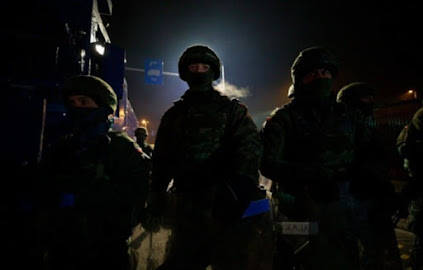
Photo credit: Kancelaria Premiera via Flickr – Creative Commons licence