Showing posts with label Regulation 1049/2001. Show all posts

Thursday, 26 June 2025

‘WARNING. Confidential documents. Not to be disclosed to anyone’ (Part 2)


Päivi Leino-Sandberg (University of Helsinki)


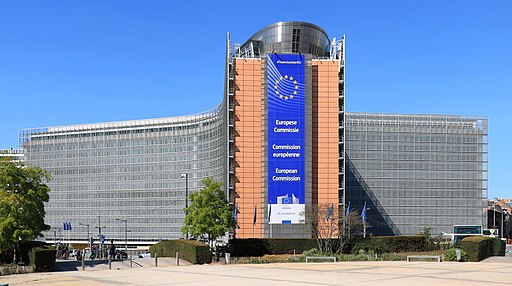
Photo creditEmDee, via Wikimedia Commons


The debate around the recent Pfizergate ruling has turned some problems around how the Commission applies citizens’ right to access its documents to public attention. But Pfizergate is not an isolated incident. It is a part of a pattern of long delays, the claimed non-existence of documents that remain nearly impossible to rebut, and lacking remedies, which this post seeks to illustrate through an example – my own request saga that lasted over two years.


In March 2023, I filed three access to documents (ATD) requests with both the Council and the Commission for the legal advice relating to:


-       the Proposal for a Regulation on the establishment of the Reform Support Programme. (COM(2018) 391 final);

-       the Proposal for a Regulation of the European Parliament and of the Council on the establishment of a European Investment Stabilisation Function (EISF Proposal). (COM(2018) 387 final);

-       the Proposal for a Regulation of the European Parliament and of the Council on a governance framework for the budgetary instrument for convergence and competitiveness for the euro area. (COM(2019) 354 final).


By the time of my requests, the legislative negotiations on the three instruments had long been abandoned. However, their key elements developed into the Recovery and Resilience Facility. The Council disclosed its legal advice in full, respecting the Turco jurisprudence, which establishes that legal advice in legislative matters should, as the main rule, be disclosed.


The request must have offered the Commission serious nightmares. First, it concerned legal advice. Second, it shows the Commission engaging in damage control, trying to limit the ‘harmful effects’ of legislative transparency on its own work. Third, the question of current and future mechanisms of fiscal distribution is politically sensitive, given the vast responsibility of the Commission for the allocation of the massive amounts of RRF funding and their legal fragility under the current Treaties.


In its initial decision, the Commission identified a number of documents relating to the final interservice consultation preceding the formal approval of the three legislative proposals. Much was ultimately blanked out. However, in respect of one of the proposals, COM(2019) 354 final, I received partial access to two documents that made it clearly visible that more would have existed.


First, the minutes of the Fast-track meeting of 8 July 2019 show that the Legal Service had requested the deletion of article 4(2), as a box in the margin indicates that ‘The SJ referred to its full set of drafting suggestions as well as observations in writing that had been made ahead of the FT ISC meeting.’


Second, the Commission provided the comments of the Legal Service in the form of track-changes regarding the ISC/2019/05372 on the proposal, which indicated that there were further suggestions that had been further elaborated in an email.


Neither of these documents were listed among the result of the Commission’s search or disclosed. It chose to approach my request in highly formalistic terms: as referring only to only the final stages preceding the formal approval of the Commission proposals and excluding all more informal correspondence, such as emails and ‘full sets of drafting suggestions’.


In my confirmatory request dated 31 May 2023, I pointed out how


It seems highly unlikely that the legal service or the legal units in the DGs had not provided any written legal advice beyond the documents identified by the Commission in its decision of 24 May 2023, and that the contribution of the legal service would be limited to correcting primarily technical details in the draft proposals at a stage when they are nearly finished. I kindly ask the Commission to verify this point.


I further clarified that my interest in the documents related to the Commission analyses on the applicable legal bases, since


as the Commission is well aware, some of these instruments are legally framed as cohesion policy instruments while others are understood as parts of the EU’s economic governance framework. I find it unlikely that no legal analyses would have been conducted in the Commission relating to the choice of legal basis for these instruments. The instruments also introduce a new interpretation of EU cohesion policy with constitutional importance for Union development in particular as regards spending. I find it unlikely that this change would not have been subject to careful analysis in the Commission legal service, and hereby request the Commission [to] reconsider its position on these aspects, as legal advice on these matters, given in the context of a legislative procedure, should be disclosed. […]


The Court has already confirmed in Miettinen that ‘the question of the legal basis is an essential question in the legislative process ‘; that ‘a proposal is designed to be debated, in particular as regards the choice of legal basis’ and that ‘in the light of the importance of the choice of legal basis of a legislative act, the transparency of the choice does not weaken the decision-making process, but strengthens it’.


In August I contacted the European Ombudsman about the Commission’s failure to reply in time to my confirmatory application. The Commission decision (C(2023) 5806 final) arrived on 22 August 2023, five months after my initial request was filed.


In the Commission, my reference to informal communication was found not acceptable as ‘the scope of review of an initial reply provided is restricted to the scope of the application made at the initial level and cannot be extended at the confirmatory level’. I could therefore not request ‘access to other documents’. I had already been provided ‘the relevant documents’ that referred to


any legal advice in the possession of the European Commission relating to [name of the proposal in question]’, the scope of the request was limited to legal advice on the proposals in question as such. Consequently, searches conducted concerned only such legal opinions and resulted in identifying documents related to replies given during the respective Inter-Service Consultations.


No further documents could be identified and no new documents needed to be created. The Commission was unconvinced about the existence of a public interest relating to the innovative legal interpretation that had enabled the EU to set up a financial instrument of €750 billion:


It is true, and cannot be disputed, that the public should be informed about how public money is spent. Such information made available to citizens reinforces public control of the use to which that money is put and contributes to the best use of public funds. Nevertheless, please note that this objective is already achieved by publishing comprehensive information on the EU budget, as well as the amounts allocated to the various areas with supporting explanations, which contributes to transparency in the use of public funds. No such link can be established regarding the full disclosure of the legal advice to which you are seeking access.


Finally, the Commission reminded me, if an institution claims not to hold any documents, there is a presumption of lawfulness attached to the declaration, unless the applicant can rebut it by relevant and consistent evidence. The Commission argued, the ‘mere suspicion that there must be a document does not suffice to put in question the presumption of legality of the institution’s statement’. As I had failed to ‘put forward any relevant or consistent evidence pointing which could lead to the rebuttal of the presumption’. However, I was welcome to file a new request for ‘additional documents’.


I consulted the Ombudsman’s office, given a recent EO recommendation that urged the Commission to ‘engage with requesters openly and constructively at all stages’. Moreover, how exactly could an applicant verify the existence of a document? One might think that a cross-reference in a Commission document disclosed by the Commission itself might also be enough to rebut the claim that no documents exist.


However, the Ombudsman announced she had now closed my case as the Commission had replied to my confirmatory application. I was advised that her services found a new request ‘the more appropriate course of action. We have asked the Commission to treat any such follow-up public access request promptly.’ 


New request of September 2023


I re-filed the request on 6 September 2023, specifying that I indeed requested access


to the Legal advice provided by the Commission legal service at the stage when what later came to me known as Commission legislative proposals COM(2018) 391 final, COM(2018) 387 final and COM(2019) 354 final were prepared in the relevant Commission DGs. This request relates to all stages of preparatory work preceding the respective Inter-Service Consultations and also covers informal advice offered in the form of e-mail messages or other informal corrspondence between the Legal Service and the DGs that were in charge of preparing the proposals and that may have influenced how the proposals were formulated.


On 16 October 2023 the Commission replied, regretting to inform me


that the Legal Service has not identified any document matching the terms of your request. Please note that, in line with the applicable rules, the Legal Service and the competent directorate generals of the Commission have carried out a thorough search in their corporate document management systems (Ref. Ares(2023)6974568).


Four days later, I filed a confirmatory application, referring to Article 21 of the Commission Rules of Procedure, which requires the Legal Service to be consulted on all drafts or proposals for legal instruments and on all documents which may have legal implications. I drew the Commission’s attention to a working paper published by a member of its Legal Service, Leo Flynn, in 2019 where he explains how cohesion policy had been firmly identified by the EU institutions as a way to fill the ‘gaps’ in the ‘incomplete policy side of EMU’. The Treaty constraints on that side were considered ‘challenging’ and ’limit the possibility for the Union institutions to adopt measures that are binding as to how the Member States conduct their economic policies’. I pointed out that under Article 17 a of the Staff Regulations Flynn must have recived prior authorisation, expressly or implicitly, to speak at the event in Maastricht and publish the subsequent working paper.


The Commission reply seemed to suggest that the Commission Legal Service had provided no written advice on this legal transformation, which according to Flynn's description, took place over several years. Alternatively, I argued, the Commission reply could be understood as claiming that while legal advice may or may not have been offered on the relevant legal questions at hand, no such advice can be currently found in the Commission's ‘corporate document management systems’. In this regard, I referred to the position of the European Ombudsman, also repeated in the Pfizergate context, namely that whether or not a document is registered in the Commission’s document management system but has no bearing on whether they fall within the scope of the public access rules.


The black hole of internal consultations and Ombudsman inquiry


Following the request, I was informed about an extended deadline caused by Commission’s internal consultations. I submitted another complaint to the Ombudsman in December. I also wrote to the Commission in December, reminding that the extended dead line had passed.


A new inquiry was opened by the Ombudsman a month later, leading to consultations and dead lines set for Commission responses. The Commission did not seem to respect them. The investigation stalled. My confirmatory request remained unaddressed. In March I reminded the Commission again.


Some weeks later, the Ombudsman website indicated that a preliminary inquiry outcome had been reached on 19 March 2024. I was not aware of its contents. This seemed at odds with Article 2(1) of the Ombudsman Statute that establishes a number of rights for the complainant. I had no idea what was going on with my file.


Article 41 of the EU Charter of Fundamental Rights establishes a right to good administration. It provides a  right to one’s own file and to get a decision ‘within a reasonable time’. With reference to these provisions, I formally requested information from the European Ombudsman about her communication with the Commission with a view to ‘learning how exactly the Ombudsman is dealing with my case, keeping in mind the Commission's blatant disregard of dead lines, which already constitutes a clear case of maladministration’.


The decision of the Ombudsman of 22 May disclosed nothing beyond my own descriptions of the matter (Ares(2024)3209423). Instead, I was informed that ‘we will share with you the Ombudsman’s proposal for a solution together with the Commission’s reply once we have received it. Thus, at this stage, disclosure of this document is prevented by the need to protect the Ombudsman’s ongoing inquiry’. According to the decision, she was not ‘able to identify an overriding public interest that could override the necessity of ensuring that the Ombudsman can effectively carry out her inquiry’.


To underline the point, the file was marked with ‘WARNING’, ‘Confidential documents’, ‘Not to be disclosed to anyone’. While I had not requested confidential treatment, the Ombudsman had decided my whole file – consisting of documents that should under established Court case law have been public - should be treated as confidential.


I learned from the Ombudsman’s final decision more than a year later that the Commission had by that time shared 13 documents as falling under my request. These documents had been inspected by the Ombudsman inquiry team. In the absence of any formal decision by the Commission, the Ombudsman had also written to the Commission to seek a solution, stressing that the case law in this area is clear and that there is, in principle, an obligation to disclose the advice of an institution’s legal service relating to a legislative proposal. As a result, ‘the Ombudsman proposed that the Commission should ‘consider granting the widest possible access to any documents it identifies at confirmatory stage’.


The Commission’s final decision


In practice, the Commission seems to have ignored also this recommendation entirely. Its final decision (C(2024) 3961 final) arrived in June 2024 – carfully timed to make a Court appeal as difficult as possible. It chose to disclose very little of the 13 documents it had identified to the Ombudsman already four months earlier. The documents are e-mail messages and other informal correspondence within the Legal Service and between the Legal Service and the Directorates-General that were in charge of preparing the proposals and that may have influenced how the proposals were formulated, prior to the preparation of these proposals.


The queries from DGs that the Commission disclosed demonstrate that the Commission lawyers were indeed working their ways around key Treaty constraints. However, the Commission redacted all the actual legal advice, because it ‘concern[ed] purely internal exchanges related not even to any draft versions of future proposals (and therefore not part of [any] legislative file) and thus should be as a rule protected as part of the institution’s “space to think”.’


When trying to distance its preparatory work from legislative work, the Commission builds on arguments that are factually inaccurate, given the timeline of the relevant legislative negotiations and other publicly available information. Deepening the EMU and modernising EU public finances are key strands in the debate on the future of Europe initiated by the Commission's White Paper of 1 March 2017, which specifically refers to the objective that “a euro area fiscal stabilisation function is operational” by 2025. Two of the legislative proposals I was interested in are included in the Reflection Paper on the future of EU Finances of 28 June 2017, the letter of intent accompanying President Juncker’s State of the Union Address 2017, and the Commission work programme for 2018. The two first proposals were approved by the Commission on 31 May 2018. The third one builds on the first two, as mandated by the December 2018 Euro Summit.


There is little doubt that by the end of 2017 the Commission was working on concrete legislative proposals. The documents identified by the Commission fall within the relevant timeframe and coincide with developments in the legislative processes where legal advice has been particularly needed, either when drafting the proposals or when concrete legal issues that emerged in the negotiations.


There is also a rather obvious contradiction in the Commission position. It carefully underlines how the requested documents ‘do not concern legal questions arising when legislative initiatives were being debated nor would its disclosure increase the transparency and openness of the legislative process’. At the same time, the Commission asserts various times that the documents should be protected because they are relevant to ‘ongoing’, ‘current’, and ‘pending’ legislative discussions and  ‘many current and future proposals’ including in the context of defence financing, ‘in particular in the context of the future MFF preparations’; or contain ‘internal discussions about the limits and scope of different legal bases (Articles 174 to 178 TFEU and 197 TFEU), including about legal bases that were ultimately not used, but which may be used in other future or present Commission proposals’.


I agree with the Commission that the opinions are highly relevant for ongoing and future legislative negotiations – this is indeed why I sought access to them. Moreover, the Court has already established that ‘the assertion that the requested document is relevant to a ‘wide range of current and future dossiers’ does not constitute a detailed statement of reasons’.


What makes the matter particularly pertinent is that in recent years, legal interpretations in the institutions have tended to fluctuate in response to functional demands. The Commission Legal Service likes to repeat that its advice should be ‘frank, objective and comprehensive’. But if its advice indeed lives up to decent professional standards, why would it need to remain confidential? Would not publicity rather help the Legal Service to make sure that in despite the functional pressures of Commission decision-making, its its advice remains ‘frank, objective and comprehensive’? What exactly is in that legal advice that makes it so compulsory to hold it secret?


Conclusions


When thinking about a possible Court appeal, I was contacted by Ombudsman services who were still working on my complaint relating to the Commission delay. I was offered the possibility to turn the initial delay in responding complaint to a case that addresses the substance of the Commission decision. In the end, I accepted and provided a number of comments on the Commission decision.


During the following ten months, nothing seemed to happen in the Ombudsman services. The file was finally closed with a decision by the new Ombudsman on 4 April this year. Contrary to what had been indicated, she ultimately refrained from substantive scrutiny of the decision, but expressed ‘doubts […] as to whether its position is fully supported by the relevant EU case-law set out in her solution proposal. The complainant’s extensive arguments in this regard do not seem to be without merit.’ Moreover, given the fact that my original request was made for more than two years ago, the Ombusdman found that


[t]here is nothing that could justify in this case what is manifestly a significant delay in replying to the complainant’s request and a clear failure by the Commission to comply with the time limits established by Regulation 1049/2001. This cannot be good administration.


It is possible that the Ombudsman’s involvement contributed to the Commission finally approving a decision in the case. However, it did nothing to convince the Commission that its position was in conflict with EU law. I am by far not the only one with this experience (see e.g. here, here, here).


The new Rules of Procedure of December 2024 make it explicit that while the Commission will implement judgments of the Court, ‘the Commission may upon assessment of the arguments provided by the European Ombudsman decide to grant further or full access to documents in the framework of the Commission’s reply to the proposal or recommendation’ (Annex, Article 15(2)). Under the Treaties, the Ombudsman cannot be given binding powers. But its authority to persuade seems seriously hampered as far the Commission is concerned.


This raises a rather basic question about whether there is any point for an applicant to appeal to the Ombudsman. Her lengthy and secretive process also risks the Ombudsman simply legitimating the Commission’s reluctance to deal with the request in an appropriate manner.


The Commission’s way of dealing with sensitive requests is not an incident. It is not an example of bureaucratic resistance but a policy that is systematically implemented to exclude democratic debate while matters are pending and to avoid accountability for politically charged actions.

‘WARNING. Confidential documents. Not to be disclosed to anyone’ (Part 1)


Päivi Leino-Sandberg (University of Helsinki)


Photo credit: Cancillería Ecuador via Wikimedia Commons


When conducting research, I often file requests for access to documents (ATD) under the EU’s access to documents regulation (1049/2001), primarily with the Commission and the Council, and use them as a source of empirical research. In this blogpost, I share some experiences from my recent requests. This post illustrates some of the general features of how ATD requests operate with the Commission and the Council today. The second part uses the example of one of my recent requests to illustrate the Commission’s increasing resistance to citizens’ right to access its documents as a way of enforcing public accountability, and how its policy of non-engagement also corrupts access to remedies. Making the Commission arguments and practices visible is one way of subjecting it to political accountability.


During the past twenty years or so, both have had their sensitivities to disclose what they deem as ‘internal documents’. Today the Council has a comprehensive public register that is helpful for identifying what you might be interested in. Equally importantly, when filing a request with a Council, the Council will respond. You are regularly informed about when your matter will be decided. Negative decisions will also explain why access was (perhaps partially) refused. I have in most cases received full access to the legal opinions, Presidency compromise proposals, court pleadings and various internal policy documents I have requested. While proactive transparency for legislative documents is still struggling to emerge, the Council is respectful of the applicants’ procedural rights.


The Commission is an entirely different story. Its public registers are far from comprehensive, which forces those interested in its documents to file requests. Fairly often the answer is that documents ‘do not exist’. Alternatively, instead of disclosing what you initially asked for, you are offered some documents that fall under your request but that are carefully selected by the Commission.


If asking for important information, there is a great likelihood that your request will simply fall in a black hole where the clear time limits (15+15 working days) set in Regulation 1049/2001 lose all significance. For months (or even years) nothing seems to move. You find yourself sending reminders through the Commission EASE system, which is frequently malfunctioning, and especially so when your own time limit for an appeal is running. Whereas the Commission’s deadlines for reacting to requests are endlessly flexible, those placed on the applicants are carved in stone.


Based on my experiences, the implementation gap between the Commission and the Council is widening. When I requested access to the legal advice relating to the new fiscal stabilisation mechanisms, the Council granted full access to all its opinions. The Commission did not – and this is a story I will share in part 2 of this blog.


When I asked for legal advice relating to the EU’s new unified funding and borrowing approach, no documents could be found. For the Council, this may well be true. However, the new Commission strategy is an important step towards becoming a European ‘treasury’’ – and something that in the Four and Five Presidents’ Reports on EMU Development for a decade ago was still counted among the long-term objectives requiring major Treaty reform. Against this background, it is unlikely that the Commission would have prepared the strategy without any engagement of its Legal Service – but this is difficult to rebut.


Over the years, the Court has been very understanding of the Commission’s wish to exclude many of its non-legislative documents from the scope of public access. While also rejecting some of the Commission’s standpoints (such as on impact assessment and legal advice), it has accepted to replace the duty to carry out a concrete, individual examination of the content of the requested documents by a general presumption of confidentiality. This enables the Commission to de facto leave a large part of its key activities outside public access, including state aid, control of concentrations / merger control proceedings, infringement proceedings, proceedings under Article 81 EC (now Article 101 TFEU), and pilot procedures. General presumptions are legally problematic under Regulation No 1049/2001 and the EU’s obligations under the Aarhus Convention.


Today, the Commission’s resistance to public accountability continues in two core areas of democratic decision-making: approval of EU legislation and the use of EU funds. Its policy is driven by the aim to make timely and informed debate impossible.


Instead of gaining access to original documents, the Commission refers you to formal communication offering a curated picture of its actions. This undermines the explicit objective of the Treaty-based citizens’ right to access documents. Under the preamble to Regulation 1049/2001,


Openness enables citizens to participate more closely in the decision-making process and guarantees that the administration enjoys greater legitimacy and is more effective and more accountable to the citizen in a democratic system.


The Commission’s lack of understanding of the relevance of these basic Treaty objectives for its own work have been visible in the way the Commission has responded to the requests concerning the implementation of the Recovery and Resilience Facility (RRF), which allocates nearly €700 billion of EU taxpayers’ money to national reforms and investments under light Commission guidance. Journalists have waited for answers to their requests concerning the plans for months and sometimes for years.


One example of a an enormously late Commission reply, given to investigative journalist Peter Teffer, explains how disclosure of various documents relating to the preparation of the Dutch Recovery and Resilience Plan ‘would open the door to undue external pressure on the decision-making process’. In the view of the Commission, ‘This could lead to speculation and serious interference with the Commission’s decision-making process. As a result, the Commission would be deprived of engaging in a constructive form of internal criticism, provided free of all external pressure’ (Ares(2024)5120311).


For the Commission, public debate of its policies is not understood as an inherent part of a democratic political system but a threat to its decision-making. In the face of the righteousness of its own cause, democratic rights of critical observers start looking like a nuisance.


There are many responses of the same kind. The Commission also insists that key RRF documents should be kept confidential until 2026 when the final disbursements have been made. Its reluctance to apply transparency has led to a highly critical inquiry by the previous European Ombudsman.  


The previous Ombudsman also voiced broad and fundamental concerns about the Commission’s increasing lack of engagement with her inquiries, leading to growing frustration when the Commission services simply refused to comply with the Court’s case law. 


‘We now need to embed citizens’ participation across the EU’ is something that Ursula van der Leyen declares in her Political guidelines for 2024-2029. Yet, the Commission has never been a believer in participatory democracy. In legislative matters, documents are strategically disclosed so late that negotiations have already come to an end. It is difficult to think of any European Citizenship Initiatives with legislative impact. The recent Omnibus debate – also subject to an ongoing Ombudsman investigation - illustrates the tendency of the Commission to replace broad consultations of civil society with guidance from the industry.


One of my own recent interests has concerned how the practical scrutiny of national Recovery and Resilience Plans, introduced by the European Council in 2020 to ensure that the adequacy of the Commission’s assessment of the fulfilment of milestones and targets in national plans, has been organized in the Economic and Financial Committee (EFC), an EU body set up by Article 134 TFEU and consisting of senior officials from the Member States, the Commission, and the ECB. 


EFC documents are officially Commission documents. But given the difficulties involved in receiving a decision within a decent timeframe from the Commission, I filed my request for


‘any EFC internal rules or guidelines that govern the preparation of its opinions under the RRF, including possible amendments’ with the Council, presuming that the documents would also be in its possession. It consulted the Commission, which opposed disclosure. However, the Council decided to disclose the relevant guidelines in full following my confirmatory appeal.


The documents demonstrate that due to time limits and information asymmetries, Member State scrutiny of national spending under the RRF is a myth. The Commission is the only EU actor that conducts negotiations with the Member States on what should be in the plans and receives documentation from them. The Commission also monitors, based on Member State documents, how the milestones and targets are implemented. The Council, the EFC and also the European Parliament are all dependent on the small amount of information they receive from the Commission, supporting its proposal. Given the information asymmetries and short timeframe, the scrutiny by the Council  or the EFC is a mere formality. They do not have the time, the resources, the local knowledge needed to assess national plans or even the inclination to challenge the way another Member State spends its share of the funds. But for the Commission, it has been useful to be able to refer to how it does not take decisions alone, thus placing the responsibility with the EFC or the Council.


They are of course also requests that are dealt with reasonably smoothly in the Commission. When I asked for the Commission pleadings in case C‑166/07, EP v Council, I received them promptly, exactly 15 working days from my request. When I for some years ago asked for ‘documents relating to the meeting between Margarethe Vestager and members of the Court in Luxembourg on 28 November 2022’, I received an answer ‘only’ five weeks later. I was surprised, given that there might be questions about why the Competition Commissioner meets members of the Court, unless this is to discuss the Commission agenda in ongoing and future cases.


However, systemic delays are today commonplace. As the European Ombudsman noted in March 2023 when closing her investigation relating to the problems,


long delays frequently occur in cases that are of significant public interest.


The effect of such delays in some instances is to render the information obtained no longer useful for research or journalistic purposes. The delays may also prevent citizens from having their say at relevant times in decision making.


At the confirmatory application stage, legal deadlines are missed in 85% of cases. The lengthy delays may deter people from making access to document requests. The Ombudsman found these delays to be systemic and constitute maladministration.


The European Parliament later approved a resolution on the issue, where it


Stresses that, if the Commission does not address the systematic and significant delays in its processing of requests for public access to documents by the time the new College of Commissioners is established, Parliament will consider using all available parliamentary instruments to address the matter; recalls that Parliament has the right to bring action against the Commission before the Court of Justice of the EU on the grounds of infringement of the Treaties, including Article 15(3) TFEU on the right of EU citizens and residents to access documents;


But political accountability seldom reaches very far in the EU, and the Commission is well aware of this. But being an unelected body with very weak direct accountability to the voters, participatory democracy is by and large the only mechanism for the general public to hold the Commission accountable. Any effort from the Commission to frustrate that channel should simply not be tolerated.


When the new Commission took office, it not only cut further on its transparency practices, but also formalised them in its Rules of Procedure. Its new internal rules allow destroying documents, create new general presumptions of secrecy with nearly unlimited temporal scope also for all ‘opinions of the Legal Service’ irrespective of whether they are given in a legislative or non-legislative context. Under the Turco jurisprudence, legal advice in legislative matters benefits from the presumption of full disclosure.


The new rules make it explicit that the Commission does not apply the Court’s case law relating to legislative transparency to its own documents[PS5] [PL6] . The ‘documents directly accessible to the public’ are limited to ‘legislative proposals as of their adoption’, ‘accompanied by the impact assessment and the Regulatory Scrutiny Board opinion’, thus excluding all preparatory documents preceding the formal approval of the proposal. This formulation ignores the Grand Chamber ruling in case C-57/16 P, where the Court identifies the Commission as a ‘key player in the legislative process’ and underlines the importance of timely disclosure of legislative preparatory work in the Commission, given its importance for how legislative proposals are formulated.


The debate around the recent Pfizergate ruling has brought some of these problems to the surface. It concerned the reluctance of the Commission to identify and disclose the text messages concerning the EU vaccine purchases between the Commission President and Pfizer CEO Albert Bourla. The Court rejected the Commission arguments, underlining that formal registration of a document is not a precondition for public access, and that the institutions must maintain and preserve documentation concerning their activities.


Under existing case law, citizens are advised to trust the institutions:


where an institution states that a document does not exist in the context of an application for access, the non-existence of that document is presumed, in accordance with the presumption of veracity attaching to that statement.


In Pfizergate, the applicant, New York Times, could verify based on interview transcripts that the requested documents had at least existed. The Court accepted this as evidence that could be used for rebutting the presumption of veracity. But fairly often such evidence is difficult to come by. Moreover, how do you trust an Institution that openly disregards legal obligations relating to citizens’ rights?


Before the Court, the Pfizergate facts had already been referred to the European Ombudsman whose findings the Commission ignored. And when losing the case in Court, the Commission press release indicates the intention of engaging in malicious compliance - doing the absolute minimum required without devoting any effort to thinking what it could actually do better. The Commission Press Release was quick to note that the ruling did “not put into question the Commission's registration policy regarding access to documents” but only required it to provide a “better explanation”. Since then, it has indicated that it has no “specific timeline" for replying to the Times. Therefore, the question is not just about some text messages that went missing, but about how the the Commission’s non-engagement policy also corrupts access to remedies.


In part 2, I share a true story to illustrate the anatomy of an ATD request with the Commission.


Monday, 22 April 2024

Access to documents: an important victory for transparency in ClientEarth v Council


Dimitrios Kyriazis (DPhil, Oxon), Assistant Professor in EU Law at the Law School of the Aristotle University of Thessaloniki.

Photo credit: Bela Geletneky, via Wikimedia Commons


In ClientEarth v Council (Joined Cases T-682/21 and T-683/21), the General Court (GC) heard an action for annulment brought by ClientEarth AISBL (and Ms Leino-Sandberg) against a decision by the Council of the EU refusing access to certain documents requested on the basis of the Public Access to Documents Regulation (1049/2001) and the Aarhus Convention Regulation (1367/2006). The GC found against the Council and annulled its decisions refusing access.

This judgment is important for a variety of reasons. First, it sheds light on the proper application of transparency requirements for EU institutions. Second, it does not allow the EU’s legislative process to remain opaque. Third, it reaffirms the correct standards for providing sufficient justifications to EU decisions.

In this post, the background to the dispute is initially set out, as well as the pleas in law raised. Then, the GC’s key dicta are analysed. Finally, the post concludes with an assessment of the ruling’s broader ramifications. 

Background to the dispute and pleas raised

Lodging actions for annulment under Article 263 TFEU, the applicants, ClientEarth AISBL and Ms Päivi Leino-Sandberg, sought annulment of the decisions contained in the letters with reference numbers SGS 21/2869 and SGS 21/2870 of the Council of 9 August 2021, refusing them access in part to document 8721/21. This document was issued by the Council’s legal service and contained its legal opinion on the then proposed amendment of the EU Aarhus Regulation.

To provide some context, Regulation (EC) No 1367/2006 (“Aarhus Regulation”) was adopted by the EU in late 2006 in order to comply with the requirements of the Aarhus Convention, i.e. the Convention on Access to Information, Public Participation in Decision-making and Access to Justice in Environmental Matters.

In March 2017, the Aarhus Convention Compliance Committee (‘the Aarhus Committee’), which was set up in order to verify compliance by the parties to that convention with the obligations arising therefrom, found, inter alia, that the EU was not in compliance with Article 9(3) and (4) of that convention regarding access to justice by members of the public and recommended that the EU Aarhus Regulation be amended. Its two main concerns were as follows. First, the Aarhus Regulation should not be restricted to acts of individual scope with legally binding and external effects adopted under environmental law, but that it had to be extended to all acts running counter to environmental law. Second, the mechanism should not be open only to certain NGOs entitled to make use of it, but must also be open to ‘members of the public’.

In October 2020, the European Commission published a proposal to amend the Aarhus Regulation, and the Aarhus Committee issued advice on the Commission’s proposal stating that, notwithstanding certain concerns that remained to be addressed, the proposal constituted a ‘significant positive development’. In May 2021, the Council’s legal service issued an opinion relating to the Commission’s proposal and the advice of the Aarhus Committee in document 8721/21. This is the document Client Earth requested full access to a few days later. The Council only partly granted their request, giving them access to only certain paragraphs of the document. Client Earth then made confirmatory applications pursuant to Article 7(2) of Regulation No 1049/2001 and in August 2021, the Council adopted the (now challenged) decisions, by which it determined the applicants’ confirmatory applications. While confirming its previous decision to refuse full access to the requested document, the Council granted additional partial access to some more paragraphs of that document.

The applicants brought an action for annulment against said Council decisions refusing them full access. In support of its action, ClientEarth relied on four pleas in law, under which the Council committed several errors of law and a manifest error of assessment.

The first three pleas were based formally on errors of law, while the fourth one was subsidiary in nature. We will follow the order which the GC followed in its judgment, thus examining the second plea first, then the first one, and finally the third one. Only the key legal dicta are repeated and analysed.

Second plea in law (paras 26-87)

The applicants’ second plea in law alleged that the Council committed an error of law and of assessment in applying the exception provided for in the second indent of Article 4(2) of Regulation No 1049/2001 relating to the protection of legal advice. In summary, this provision provides that access to a document is to be refused where disclosure would undermine the protection of legal advice, unless there is an overriding public interest in disclosure of that document. A three-step test has been set out in settled case law in order to apply this exception.

First, the institution concerned, here the Council, must satisfy itself that the document which it is asked to disclose does indeed relate to legal advice and, if so, it must decide which parts of it are actually concerned and may, therefore, be covered by the exception at issue. Second, the institution must examine whether disclosure of the parts of the document in question which have been identified as relating to legal advice would undermine the protection which must be afforded to that advice. The question to be asked here is whether it would be harmful to the institution’s interest in seeking legal advice and receiving frank, objective and comprehensive advice. The risk of that interest being undermined must, in order to be capable of being relied on, be reasonably foreseeable and not purely hypothetical. Finally, even if said institution considers that disclosure of a document would undermine the protection of legal advice, it is incumbent on it to ascertain whether there is any overriding public interest justifying disclosure despite the fact that its interest in seeking legal advice and receiving frank, objective and comprehensive advice would thereby be undermined.

These conditions were examined in turn. The applicants disputed whether the opinion contained legal advice to begin with, but their argument was  swiftly (and rightly) rejected by the GC, which stressed that ‘the analysis of the requested document shows that its content is intended to answer questions of law and, as a result, is covered by the exception relating to the protection of legal advice’ (para 42).

Moving on to the second condition, the applicants had asserted that  the document was not particularly sensitive and did not have a particularly wide scope, so that the Council erred in assessing that its disclosure was liable to undermine the protection that must be afforded to legal advice. More specifically, they submitted that the Council did not establish that there was an actual, specific, reasonably foreseeable and non-hypothetical risk that would result from disclosure of that document, and did also not establish that the document had a particularly wide scope having regard to the legislative context in which it was adopted.

Regarding the sensitive nature of the requested document, the Council had substantiated it by relying on three considerations. The first consideration was the context in which that document had been drawn up and its content; the second was the risk of external pressure if the document was released; and the third, the fact that the issues addressed could be the subject of litigation before the EU Courts.

The GC very systematically and methodically tore down these defences. First, it stressed that the document itself must be particularly sensitive in nature, not, as argued by the Council, the context of which it forms part (para 58). If it comprises only legal assessments that have no originality and does not contain, in addition to those assessments, sensitive information or does not refer to confidential facts, it cannot be considered sensitive in nature (para 59). The Council’s position on this matter was not endorsed by the GC.

The Court next focused on the Council’s assertion that the disclosure of the requested document would expose its legal service to external pressure which could subsequently affect how its advice is drafted and therefore prejudice the possibility of that legal service of expressing its views free from that pressure. The GC was not receptive to such abstract “dangers” either. First, it reiterated settled case law stressing that openness in the legislative process of the EU institutions contributes to conferring greater legitimacy on the institutions in the eyes of EU citizens and increasing their confidence in those institutions by allowing divergences between various points of view to be openly debated (para 64). Therefore, mere statements relying, in a general and abstract way, on the risk of ‘external pressure’ did not suffice to establish that the protection of legal advice would be undermined. This argument was, accordingly, also rejected by the GC.

As regards the Council’s argument that the requested document was particularly sensitive in so far as the issues addressed could be the subject of litigation before the EU Courts, the GC was not particularly sympathetic here either. In essence, the nub of the Council’s argument here was that it would be difficult for the legal service of an institution which had initially expressed a negative opinion regarding a draft legislative act subsequently to defend the lawfulness of that act before the EU Courts, if its opinion had been published. This, prima facie at least, does make sense. However, the GC reminded the Council that it is settled case law that such an argument was too general an argument to justify an exception to the openness provided for by Regulation No 1049/2001 (para 74). More specifically, the Council had not specified exactly how disclosure of the requested document could harm its ability to defend itself in the event of litigation concerning the interpretation or application of the Aarhus Regulation. Furthermore, it was not apparent from the examination of the content of that document that it could be regarded as expressing a negative opinion regarding the Commission’s proposal for amendment of that regulation. Concluding on this matter, the GC stressed (para 76) that the Council’s refusal was vitiated by an error of assessment and, consequently, the first complaint had to be upheld.

The GC then moved on to the second complaint of the applicants, which alleged that, contrary to what the Council had claimed, the scope of the requested document was not particularly wide. The arguments of the Council were twofold. One, the Commission’s proposal entailed the broadening of the scope of the internal review mechanism provided for by the Aarhus Regulation to acts of general application which run counter to environmental law, but the preexisting limitations were based on the similar limitations of standing under Article 263 TFEU. Therefore, in the Council’s view, the analysis contained in the requested document entailed implications which allegedly went beyond the legislative process in question. Two, the Council maintained that the requested document touched upon issues that could affect the Commission’s choices regarding future legislative proposals in the context of the ‘European Green Deal’, which was being drawn up at that time.

The Council was, once again, rapped over the knuckles by the GC, with the latter asserting that the Council did ‘no more than rely on the possible impact of the requested document in relation to future legislative proposals of the Commission in environmental matters, while the Commission’s proposal for amendment of the Aarhus Regulation [was] restricted to those matters alone’ (para 82). Moreover, the GC (very logically) dismanted the argument relating to an analogy with Article 263 TFEU, stating that the Council had not proven that the Commission’s proposal on the Aarhus Regulation entailed consequences on the conditions for the admissibility of actions for annulment brought by legal or natural persons, which are provided for by Article 263 TFEU and cannot be amended other than by revision of the Treaties (para 84). The second complaint was, thus, also upheld, and the applicant’s second plea in law was upheld in its entirety (para 87). The GC then went on to briefly examine their first plea in law.

First plea in law (paras 88-103)

The applicants’ first plea in law alleged that the Council committed an error of law and of assessment in applying the exception provided for in Article 4(3) of Regulation No 1049/2001 relating to the protection of the decision-making process. Under the first subparagraph of Article 4(3) of Regulation No 1049/2001, access to a document, drawn up by an institution for internal use, which relates to a matter where the decision has not been taken by the institution, is to be refused if disclosure of the document would seriously undermine the institution’s decision-making process, unless there is an overriding public interest in disclosure.

The applicants argued that, since on the date on which the contested decisions were adopted, the Council had already adopted its position on the Commission’s proposal and, moreover, the provisional agreement had already been concluded, there was no longer an ongoing decision-making process which disclosure of the requested document could have seriously undermined.

The GC reminded both parties of the ratio underpinning the relevant provision of Regulation No 1049/2001: it is intended to ensure that those institutions are able to enjoy a space for deliberation in order to be able to decide as to the policy choices to be made and the potential proposals to be submitted (para 93). However, said provision may no longer be relied on in respect of a procedure closed on the date on which the request for access was made (para 96). In practice, as the GC very pragmatically observed, agreements reached in the course of trilogues are subsequently adopted by the co-legislators without substantial amendment. This meant that it was appropriate to consider that the decision-making process of which the adoption of the requested document formed part was closed at the date on which the Council approved the provisional agreement (para 99). Therefore, the Couuncil’s reliance on this provision of the Regulation in order to refuse disclosure was also vitiated by an error of law (par 101).

Third plea in law (paras 104-120)

The applicants’ third plea in law, i.e. the final plea examined by the GC, alleged that the Council committed an error of law and a manifest error of assessment in applying the exception provided for in the third indent of Article 4(1)(a) of Regulation No 1049/2001 relating to the protection of the public interest as regards international relations (for this point in particular, see this excellent piece by Peter and Ankersmit). The applicants submitted that there was no risk that international relations would be undermined and that the exception based on the protection of international relations was inapplicable, given that the requested document is purely legal in nature.

The Council, to justify the application of the exception relating to the protection of international relations within the meaning of the third indent of Article 4(1)(a) of Regulation No 1049/2001, had argued that the full disclosure of the requested document would amount to revealing considerations relating to the ‘legal feasibility of solutions that the European Union could implement to address the alleged non-compliance with the Aarhus Convention’. The Council also stressed that the risk that the public interest would be undermined as far as international relations were concerned was reasonably foreseeable and not purely hypothetical, in so far as the question whether the Aarhus Regulation complied with the Aarhus Convention was to be examined during an upcoming meeting of the parties concerned in 2021. Thus, the requested documents could be used by other parties to the Aarhus Convention during discussions during the meeting of the parties, which could weaken the position that the European Union might have intended to take in that institutional context.

The GC’s strict approach to such assertions will by now be familiar to the reader. The GC noted (para 112) that the existence of a mere link between the elements contained in a document (which is the subject of an application for access) and the objectives pursued by the European Union in the negotiation and implementation of an international agreement is not sufficient to establish that disclosure of those elements would undermine the public interest protected as regards international relations. Even more crucially, the GC noted, the adoption of an act of secondary EU legislation necessarily implies legal analyses from each institution participating in the legislative procedure, which entails a risk of divergences of legal assessment or interpretation. But this is an integral part of any legislative procedure and such divergences are therefore liable to be explained to non-member countries or international organisations in an international body such as the meeting of the parties to the Aarhus Convention, without necessarily weakening the European Union’s position resulting from the final version of the act ultimately adopted (para 114). Consequently, the Council failed to provide sufficient explanations as to the specific, actual, reasonably foreseeable and non-hypothetical risk on which it relied regarding the international relations of the European Union and the other parties to the Aarhus Convention (para 118).

The applicants’ fourth plea in law, raised in the alternative, alleged infringement of Article 4(6) of Regulation No 1049/2001, in that the Council had failed to grant the applicant wider access to the requested document. This plea was not even examined by the GC, since it had already found that the decisions had to be annulled, without there there being any need to examine the (subsidiary) fourth plea (para 120).

Broader Ramifications and Conclusion

This very detailed and well-substantiated ruling by the GC is significant for a number of reasons. Firstly, it sheds light on the exact conditions that need to be fulfilled for access to documents to be validly refused. Secondly, it reiterates, and clarifies, that any “risk” on which an EU institution might wish to rely to refuse disclosure has to be specific, actual, reasonably foreseeable and non-hypothetical. Thirdly, it demonstrates the pragmatic way in which the EU Courts understand the everyday reality of EU rulemaking.

Most importantly, the ruling is important as a matter of principle. Even when the political stakes are high, EU Courts will side with transparency. The quote “sunlight is said to be the best of disinfectants” by Brandeis echoes in Luxembourg just as it did before the US Supreme Court.


Wednesday, 4 April 2018

EU Court Condemns the EU Legislative Process for Lack of Transparency: Time to Open Up?


Massimo Frigo, Senior Legal Adviser of the International Commission of Jurist’s Europe Programme*

It is sometimes cases on obscure administrative processes that become landmark judgments in the ever constant building of our democratic legal systems. In the US Marbury v. Madison was a case that at the time attracted little attention as the subject matter related to respect of procedures in judicial appointments. This notwithstanding it came to be the legal milestone of constitutional review in the US legal system.

In the European Union one of these cases was decided on 22 March: Emilio De Capitani v. Parliament. As it will be outlined below, it is a technical case that goes to the heart of the procedure of one of the fundamental institutions in a democracy: Parliament.

The EU legislative decision-making process

Unlike the United States, the European Union is not a State. However, it retains more and more competence to legislate in areas of everyday life and of crucial constitutional State prerogatives, including in the sphere of justice and home affairs that includes immigration, asylum, border control, and police cooperation.

The legislative process of the EU may be generally simplified in this way: the European Commission, i.e. a body of supposedly independent experts appointed by the European Council (see, the 28, soon 27, heads of State or government of its Member States) and approved by the European Parliament (the only institutions directly elected by EU citizens), has the initiative to table legislation.

Once the proposal is tabled it is the turn of the co-legislators to discuss it, amend it, approve it or reject it. At any moment the European Commission can withdraw the proposal and put an end to the process.

The EU legislators are the European Parliament and the Council of the European Union. The latter consists of the Governments, often in the configuration of the ministries relevant to the legislative piece to be discussed, of the EU Member States. These two bodies must agree on the legislative text, and its potential modifications, and approve it in the same form before it can become law. They can do it in one or two reading sessions.

In the last decades, since this procedure (once called “co-decision” and now the “ordinary legislative procedure”) came to exist, a practical solution to speed up the legislative procedure was found by holding what are called “trilogues”. These are closed meeting among representatives of the Council of the EU, the European Parliament and the European Commission to find a compromise and produce an agreed text that will have to be voted by their respective committees and plenaries into law.

The practice of these trilogues is that no one from the public has access to them nor to any document on the proposed suggestions for compromise. Furthermore, when an agreement is reached, statistically, both the Parliament and the Council almost always approve the agreed compromise into law without further amendments. It is therefore a key moment in the legislative process. And it is absolutely foreclosed to EU citizens and civil society.

The case

Mr De Capitani brought a challenge to the General Court of the European Union, the judicial body competent for cases against EU institutions at first instance, because Parliament, after having consulted the Council and the Commission, refused him access to the part of a document in the legislative process. Specifically this part of the document is the fourth column in a tabled document that reports the compromises reached or suggested during the trilogues, while the first three of them include the original proposal and the positions of the institutions.

The judgment

The General Court ruled that, “contrary to what the Council maintains …, … the trilogue tables form part of the legislative process.” (para 75, , De Capitani)

It pointed out that

78. … it is precisely openness in the legislative process that contributes to conferring greater legitimacy on the institutions in the eyes of EU citizens and increasing their confidence in them by allowing divergences between various points of view to be openly debated. It is in fact rather a lack of information and debate which is capable of giving rise to doubts in the minds of citizens, not only as regards the lawfulness of an isolated act, but also as regards the legitimacy of the decision-making process as a whole … .

The Court dismissed the EU institutions’ exception that non-disclosure was necessary because the document dealt with a draft law in the area of police cooperation. The Court very strongly ruled that

89… the fact … that the documents at issue relate to the area of police cooperation cannot per se suffice in demonstrating the special sensitivity of the documents. To hold otherwise would mean exempting a whole field of EU law from the transparency requirements of legislative action in that field.

Furthermore the Court stressed that

90…. the documents at issue concern a proposal for a draft regulation, of general scope, binding in all of its elements and directly applicable in all the Member States, which naturally concerns citizens, all the more so since at issue here is a legislative proposal directly affecting the rights of EU citizens, inter alia their right to personal data protection …, from which it follows that the legislative proposal could not be regarded as sensitive by reference to any criterion whatsoever … .

The Court then dealt with the assertion that access to these documents could increase public pressure on the representatives of the EU institutions involved in the trilogue procedure:

98… in a system based on the principle of democratic legitimacy, co-legislators must be held accountable for their actions to the public. If citizens are to be able to exercise their democratic rights they must be in a position to follow in detail the decision-making process within the institutions taking part in the legislative procedures and to have access to all relevant information … Thus, the expression of public opinion in relation to a particular provisional legislative proposal or agreement agreed in the course of a trilogue and reflected in the fourth column of a trilogue table forms an integral part of the exercise of EU citizens’ democratic rights, particularly since … such agreements are generally subsequently adopted without substantial amendment by the co-legislators.

Finally, while allowing still the possibility for certain situations (“duly justified cases”) of non-disclosure for co-legislators, including Parliament (para 112, De Capitani), the Court closed by rejecting also the argument raised by Parliament that making public documents of the trilogue would have taken away the nature of these meetings as a “space to think” . The Court unmistakably reminded Parliament that these meetings are essential parts of the legislative procedure and not “spaces to think” and as such must be subject to the required level of publicity (para 105, De Capitani).

Conclusion: a more democratic EU?

The European Union does not enjoy today the best image in terms of transparency, accountability and democratic processes. Its institutions have been openly attacked from many different quarters for their lack of transparency and the bureaucratic nature of their procedures. Most of these attacks are populist fear-mongering that simply aims at finding a scapegoat to gain political traction, votes and, hence, power. However, as we have seen, some critiques of the EU structure cannot be simply dismissed as political nonsense and one of them is about the legislative process in the EU that affects the lives of almost 500 million people.

The De Capitani ruling throws a breath of fresh air to these institutions and, importantly, demonstrates that, while some institutions of the EU may be criticised for lack of transparency and obedience to the rule of law, there are institutions, notably the EU courts, that can address the problem within.

This ruling can still be subject to appeal before the Court of Justice of the EU. In the meantime and this notwithstanding, the crucial question is whether and how the ruling will be implemented. Will the Parliament, the Council, i.e. the Governments of the Member States, and the Commission open up to democratic scrutiny in legislative process?

The answer to this question will be vital for the EU to withstand any criticism that it does not obey the rule of law and democratic accountability. This is why this case is a turning point for the EU rule of law structure. Much of the legitimacy of the EU as a rule of law based supra-national organisation lies in what its institutions are going to do next. And we’d better be watching…


*Reblogged with permission from the Opinio Juris blog
Barnard & Peers: chapter 5, chapter 9

Photo credit: Walsall College