Showing posts with label Northern Ireland. Show all posts

Wednesday, 1 July 2026

Double Direct Effect? The UK Supreme Court’s revisiting of the direct effect conditions in Dillon


Dr Eleni Frantziou, Associate Professor in Public Law and Human Rights, Durham Law School, and Dr Sylvia de Mars, Reader in Transnational Public Law, Newcastle Law School


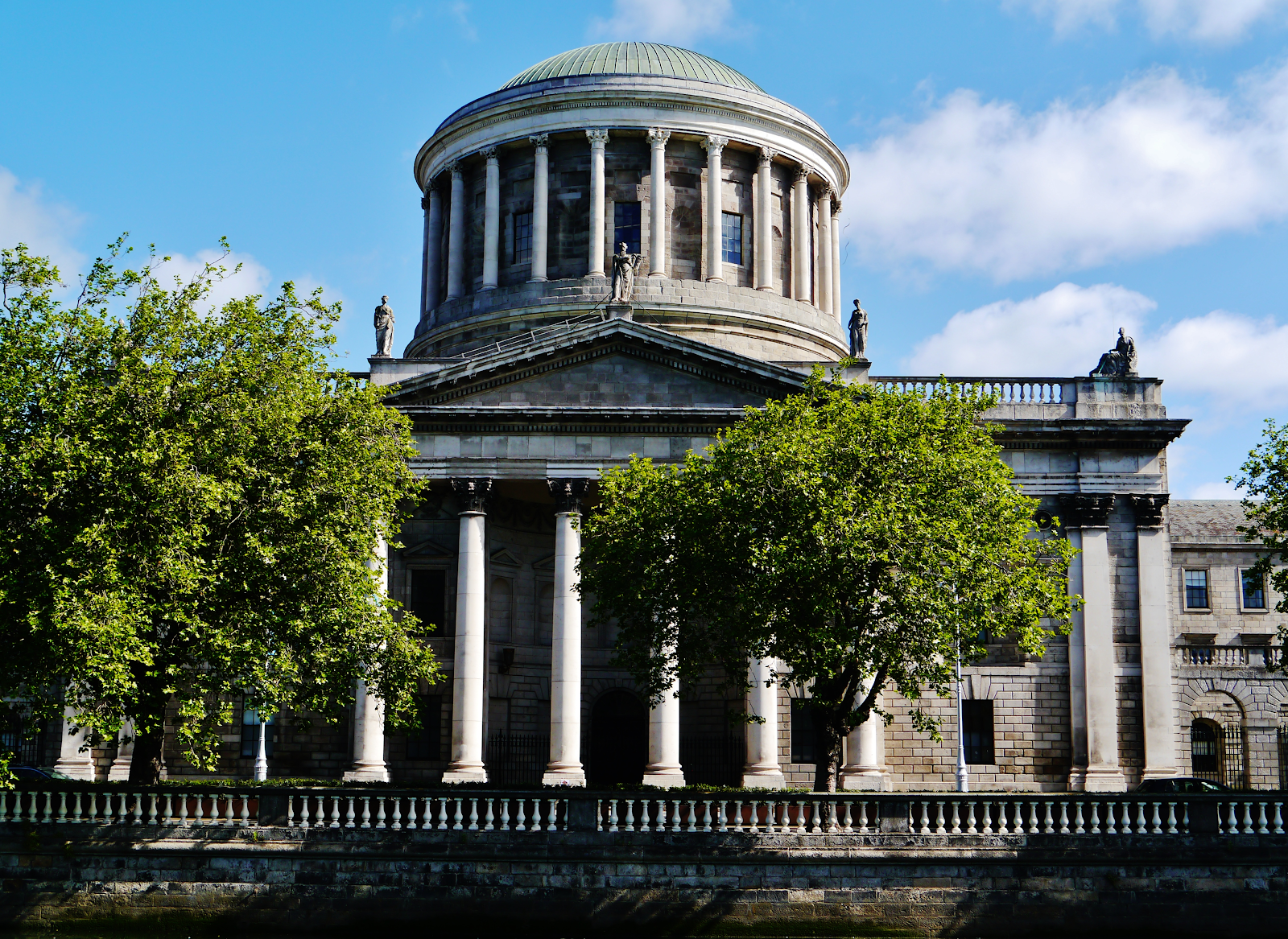
Photo credit: Samuel Lennox, via Wikimedia Commons


Introduction


Is there anything left to say on the direct effect of EU law? Yes, according to the UK Supreme Court, which handed down its much-awaited judgment in Dillon et al on 7 May 2026. The UK reference above is not a typo: despite Brexit, aspects of the EU/UK Withdrawal Agreement (‘WA’) have direct effect under the conditions provided for in EU law, in line with Article 4 WA. In Dillon, the UK Supreme Court was asked to interpret whether one provision of this agreement – Article 2(1) of the Ireland/NI Protocol (‘Protocol’), which is itself a core part of the WA (Article 182 WA) – is directly effective and, if so, on what terms.


The case concerned the Legacy (Troubles and Reconciliation) Act 2023, which set out a broad range of immunities for serious crimes committed in Northern Ireland during the Troubles. The principal claimants were one direct victim and three relatives of victims killed in the conflict – a wife, mother and sister who, as O’Donoghue observes, were but minimally acknowledged by the UKSC. They challenged the immunities provisions of the Act under the ECHR and EU law.


In this post, we focus only on the EU law dimensions of the case and, particularly, on the question of direct effect. In our view, Dillon raises significant questions about the correct application of the direct effect conditions, the ultimate arbiter of which is the CJEU. In particular, we argue that the UKSC’s interpretation of direct effect in Dillon is inconsistent with EU law, because it creates an unprecedented requirement of ‘double direct effect’: it applies the direct effect conditions to both a provision of the Withdrawal Agreement/Protocol and to measures referenced in this provision.


Why was EU law still relevant in Dillon in 2026?


One of the most contentious aspects of the Withdrawal Agreement negotiations was the status of Northern Ireland. It is widely documented that EU membership was one of the principal catalysts for the Belfast/Good Friday Agreement (‘BGFA’) that officially marked the end of the Northern Ireland conflict known as ‘the Troubles’. As EU membership by both the UK and Ireland had ensured free movement between the Irish north and south, the creation of special arrangements that secured this after Brexit was a crucial aspect of the UK’s exit negotiations.


These special arrangements were embedded into the Ireland/NI Protocol (as of 2023 also known as the ‘Windsor Framework’ in the UK), which was appended to the Withdrawal Agreement as a core part of it dealing with a specific ‘withdrawal’ issue.  The Protocol provides for continued north/south cooperation, avoiding a hard border and protecting both trade and cross-border work. Importantly for the purposes of the Dillon case, the Protocol also notes in recital 7 of its Preamble that ‘Union law has provided a supporting framework for the provisions on Rights, Safeguards and Equality of Opportunity of the 1998 Agreement’ (‘RSEO’) and includes a specific non-regression guarantee with respect to this part of the BGFA. To this end, Article 2(1) of the Protocol provides:


The United Kingdom shall ensure that no diminution of rights, safeguards or equality of opportunity, as set out in that part of the Belfast/Good Friday Agreement entitled Rights, Safeguards and Equality of Opportunity results from its withdrawal from the Union, including in the area of protection against discrimination, as enshrined in the provisions of Union law listed in Annex 1 to this Protocol, and shall implement this paragraph through dedicated mechanisms.


It was this article of the Protocol that formed the basis of the EU law claim in Dillon. The claimants’ argument went as follows: since the UK had been subject to the Victims’ Rights Directive (‘VRD’) before Brexit and this had been implemented in NI through domestic measures, the immunities created by the Legacy Act reduced the level of protection of fundamental rights available during the UK’s membership of the EU, and were therefore in conflict with Article 2 of the NI Protocol. This claim was made possible by Article 4(1) WA, which states that the “Agreement shall produce in respect of and in the United Kingdom the same legal effects as those which they produce within the Union and its Member States” and the test for individuals to rely on a provision of the Withdrawal Agreement before domestic courts is that such a provision should “meet the conditions for direct effect under Union law.”


In line with the widely known Van Gend en Loos formula, a provision of EU law has direct effect if it confers rights to individuals that are clear, precise, and unconditional, rather than being subject to the adoption of further measures by either Member States or the EU.  The wording of Article 2(1) of the Protocol prima facie meets these conditions with ease. The right conferred by Article 2(1) is to not have ‘rights, safeguards or equality of opportunity’ as set out in the BGFA and in Annex 1 of the Protocol diminished. This paragraph contains a ‘textbook’ negative obligation. It requires no further measures at all – the UK simply needs to refrain from introducing new measures that reduce the level of protection of EU fundamental rights as it stood on 31 December 2020.


The claimants consequently argued that, since Article 4 WA also provides for the Agreement to have primacy and, at paragraph 2, requires that domestic courts be capable of disapplying incompatible provisions, the immunity provisions of the Legacy Act had to be disapplied. Two courts in Northern Ireland had found for the claimants, disapplying the offending provisions – but the government challenged this on appeal to the UKSC. It argued that if Article 2 was to have direct effect, it could only do so by reference to obligations that were themselves clear, precise and unconditional.


The Supreme Court sided with the government. It found that Article 2 could not always have direct effect, but only under certain circumstances, namely when the measures cross-referenced in Article 2 were themselves directly effective.  It is worth setting out its reasoning in some detail.


The UKSC commences, at paragraph 112, by citing the so-called Demirel test.  Demirel is one of the early cases in which the CJEU considered whether provisions in bilateral agreements signed by the EU could have direct effect; and it found at paragraph 14 that:


…a provision in an agreement concluded by the European Union with a non-member country must be regarded as being directly applicable when, regard being had to its wording and to the purpose and nature of the agreement, the provision contains a clear and precise obligation which is not subject, in

its implementation or effects, to the adoption of any subsequent measure... (emphasis added)


So far, so good.  While, as we discuss further below, the treatment of the Withdrawal Agreement (or Protocol) as part of ordinary EU external relations law is questionable, this does reflect the commonly used test for evaluating the direct effect of bilateral agreements involving the EU.


However, the UKSC proceeds with the following statement in paragraph 113:


The obligation imposed on the United Kingdom by article 2(1) of the Windsor

Framework relates to rights, safeguards or equality of opportunity “as set out in” the RSEO chapter. It is therefore necessary to consider whether, having regard to the wording and to the purpose and nature of the RSEO chapter and of article 2(1) of the Windsor Framework, those provisions read together impose a clear and precise obligation which satisfies the test for direct effect.


In our view, the words “therefore necessary” make a huge argumentative leap, hitherto unseen in any EU law treatment of direct effect. In this single short paragraph, the CJEU takes the Demirel test but applies it simultaneously to the Withdrawal Agreement and its provisions and the BGFA’s RSEO chapter’s provisions. In other words, the UKSC reasons that Article 2 of the Protocol cannot have direct effect as such: for it to be directly effective, anything it references must also be directly effective.  This leads to its even more confounding finding, which is – ultimately – that Article 2 of the Protocol sometimes has direct effect – but at other times it does not. This is because, according to the UKSC, it is impossible to identify a clear and precise obligation without reference to the RSEO chapter. As the UKSC puts it at paragraph 116, “[i]t is only in this way that the obligation not to diminish rights, safeguards or equality of opportunity acquires any content.”


This aspect of the ruling – which we dub ‘double direct effect’ –presents a deep challenge to settled understandings of the direct effect of EU law.


The fallacy of the UKSC’s direct effect


The UKSC’s ruling does not question the possibility of Article 2 of the Protocol to have direct effect, nor does it challenge the terms of direct effect. According to the Court, as per paragraph 112, the relevant conditions are the conditions set out in EU law. But the choice of EU law is already telling of the ruling’s direction and tone: rather than going straight for the Van Gend en Loos conditions, the Court refers to the Demirel test on the direct effect of international agreements.


While this choice is defensible to a degree as the WA is, after all, a bilateral agreement, the confidence with which the UKSC resorts to it is puzzling. Unlike association agreements, such as the one between the EU and Turkey at stake in Demirel, or even the UK/EU Trade and Cooperation Agreement, EU competence for which resides in external relations law (Article 217 TFEU), the Withdrawal Agreement is a very specific type of agreement. The competence to conclude it is found in the constitutional part of the Treaty on European Union – Article 50 TEU – and it is Article 50 (2) that sets out that the terms of withdrawal are to be negotiated in accordance with Article 218(3) TFEU. The Withdrawal Agreement is thus a category in its own right: it is not about a third state negotiating the terms of its association with the EU, however deep, but about a Member State negotiating its departure from the bloc in line with its own constitutional requirements, as set out in Article 50 TEU.  The exceptionality of the Withdrawal Agreement has been raised indirectly in litigation before the CJEU and, albeit that the Court has not had specific occasion to address what this means for direct effect, it has emphasised the significance of Article 50 TEU as the essential legal context for analysing the provisions of the Withdrawal Agreement (see, e.g., Préfet du Gers I, para 54). 


But even if we were to accept that the Withdrawal Agreement should be treated just like any other bilateral treaty, its own terms make its ‘intention’ clear, given the express wording of Article 4 WA on the application of the direct effect conditions – a very unusual stipulation that, to our mind, would not go unnoticed by the CJEU. In fact, as Gallo and Labus note, specific exclusions of direct effect are the norm in the external relations context, as is indeed the case for the TCA, Article 5 of which preclude direct reliance by individuals on its provisions. The choice of the Demirel conditions is, therefore, significant for at least two reasons: first, it is important symbolically. The UKSC makes a choice to treat the Withdrawal Agreement as one of many international agreements the UK has signed. This automatically limits any perceived onus on its part to read the ‘purpose and nature’ of the Withdrawal Agreement or the Protocol as resulting in different obligations than other international law. Second, the reliance on the Demirel test and its focus on not only the precision and unconditionality of the relevant provisions, but also the ‘purpose and nature’ of the agreement, enables the UKSC’s further findings about Article 2(1) WA. For, as already highlighted above, rather than treating ‘purpose and nature’ as pertaining to the Withdrawal Agreement and its provisions, the UKSC understands this test as applying to the RSEO section of the BGFA.


The ‘purpose and nature’ of the BGFA is summarised in paragraph 119 as “establishing peace in Northern Ireland after decades of sectarianism and civil conflict”. This reference appears to preclude a reading of the BGFA as aiming to secure cross-community equality in a broader sense, which makes reliance on Article 2 for the purposes of ensuring the non-diminution of EU fundamental rights altogether less likely. It will be far more difficult to link provisions in the RSEO chapter to EU law if it is essential to prove that their purpose and nature was ‘establishing peace’. This focus on the Demirel condition of the nature and purpose of the agreement thus appears to negate, at least to an extent, the practical relevance of Article 2 as a non-regression clause. Rather than protecting the ‘supporting framework’ of fundamental rights that membership of the EU meant for the peace process in tune with the Protocol’s Preamble, the interpretation could prove to be much narrower– a possibility that remains to be fleshed out further in subsequent case law.


Beyond the type of direct effect it chooses, though, the UKSC also commits, in our view, a fundamental, substantive error of EU law in its application of the direct effect conditions. This error rests on the finding that Article 2(1) is a provision that could sometimes, but not always, have direct effect – depending on what else it references. This position does not withstand scrutiny from the perspective of EU law. 


It is trite EU law, including under Demirel, that the direct effect conditions refer to ‘a provision’. Leaving the categorical exclusion of certain forms of direct effect for certain instruments (eg, the horizontal direct effect of directives), the CJEU has never held that a provision can both have and lack direct effect. The test is a clear binary: the provision either meets the conditions and it is directly effective or it does not, and it is not.


In this sense, it may have been more coherent for the UKSC to state that Article 2 is not directly effective at all. That, however, would have created the problem that some of the EU law explicitly referred to in the provision (the Equality directives) are par excellence directly effective obligations. Finding that Article 2(1) lacks direct effect altogether would have created a procedurally awkward situation, whereby the Annex to the Protocol has direct effect and supremacy in accordance with Article 4(1) WA, but its ‘activating’ provision does not. It was also clear that the provision was thought to have direct effect when negotiated and the UK government did not challenge the right of individuals to invoke it with respect to the annexed Directives; while the UKSC made it clear that UK government interpretations of its own commitments made when concluding the WA were of no help in determining of Art 2 of the Protocol was directly effective (see paragraphs 123-124 of the judgment), it seems to have wanted to avoid making the existence of that Annex 1 and, indeed, Article 2 itself wholly pointless from a litigation perspective. Hence, the UKSC resorts to a half-way house: if the provisions against which non-diminution is sought are themselves directly effective, then Article 2 can be invoked before domestic courts. If they are not, it cannot. Much like Schrödinger’s cat, then, direct effect is simultaneously alive and dead – it all depends on what Article 2 is referencing. 


This reasoning in our view misunderstands (though it does not reference) CJEU case law on the direct effect of provisions that also refer to other provisions, as well as the nature of the direct effect conditions as interpreted in EU law, more generally. For example, Charter provisions regularly give ‘specific expression’ to non-directly effective measures of directives (see, eg, the Grand Chamber rulings in Egenberger, Braathens,  KL v X). Unlike the approach espoused by the UKSC, it is not the non-directly effective measures detailing the core obligation that suddenly acquire direct effect. Rather, the presence of a directly effective measure, such as Art 47 CFR, makes the more specific obligations listed in the directives invocable in court, where they otherwise would not be. The core obligation is directly effective regardless of what it cross-references. The CJEU makes this very clear in Egenberger:


78. [L]ike Article 21 of the Charter, Article 47 of the Charter on the right to effective judicial protection is sufficient in itself and does not need to be made more specific by provisions of EU or national law to confer on individuals a right which they may rely on as such [emphasis added].


In other words: it is the more general provision of primary law – Article 47 of the Charter – that gives rise to a clear, precise and unconditional obligation. This does not require a cross-reference to a separate provision that is also directly effective in order to be relied upon. Rather, the only effect of the directives in the above cases is to show that the scope of EU law – and hence the relevant provision of the Charter – was engaged.


We found similar reasoning in CJEU judgments that involve international agreements, where the cross-referencing to Annexes and Protocols is very common. In Sevince, for instance, concerning the EEC-Turkey Association Agreement, the CJEU found in paragraph 22 that provisions in several decisions adopted under this association agreement had direct effect – and that this


cannot be affected by the fact that [other provisions] provide that the procedures for applying the rights conferred onto Turkish workers are to be established under national rules. Those provisions merely clarify the obligation of the Member States to take such administrative measures as may be necessary for the implementation of those provisions, without empowering the Member States to make conditional or restrict the application of the precise and unconditional right which the decisions of the Council of Association grant to Turkish workers. (emphasis added) 


The analogy is, in our view, powerful: similarly to Article 2, this case concerned a standstill obligation that no further obstacles to the free movement of workers be imposed. Moreover, like Article 2, there was an expectation that national procedures would be introduced to ensure the effectiveness of this core obligation. The CJEU clearly distinguished this procedural conditionality from the primary negative duty. 


The idea that the ‘referred-to’ provisions do not themselves have to be directly effective for a primary provision to be directly effective is also expressly confirmed in the 2022 ruling in Deutsche Umwelthilfe, which concerned standing requirements in the implementation of the Aarhus Convention. The CJEU’s reasoning is worth citing in some detail:


66. [W]hile it is true that Article 9(3) of the Aarhus Convention does not have direct effect in EU law and cannot, therefore, be relied on, as such, in a dispute falling within the scope of EU law, in order to disapply a provision of national law which is contrary to it, the fact remains that, first, the primacy of international agreements concluded by the European Union requires that national law be interpreted, to the fullest extent possible, in accordance with the requirements of those agreements and, secondly, that Article 9(3) of the Aarhus Convention, read in conjunction with Article 47 of the Charter, imposes on Member States an obligation to ensure effective judicial protection of the rights conferred by EU law, in particular the provisions of environmental law...


78. … the discretion conferred on the Member States to lay down rules governing the right to bring proceedings, referred to in [Article 9(3) of the Aarhus Convention], does not affect their obligation to ensure a right to an effective remedy enshrined in Article 47 of the Charter, as, moreover, also alluded to in Article 9(4) of the Aarhus Convention. Article 47 of the Charter is sufficient in itself and does not need to be made more specific by provisions of EU or national law in order to confer on individuals a right which they may rely on as such … Thus, that article may be relied on as a limit on the discretion left to the Member States under Article 9(3) of the Aarhus Convention.


This case is also analogous to what the UKSC had to consider in Dillon: a primary provision that set out a clear, precise and unconditional right (Article 47 of the Charter) – and further provisions, covering more specific situations in which such a right might apply, which are not directly effective (in Article 9(3) of the Aarhus Convention).  The CJEU had every opportunity to set out that both Article 9(3) of the Aarhus Convention and Article 47 of the Charter had to be directly effective, but did not do so – instead, it stressed that Article 47 sets out framework conditions for how a conditional, imprecise referred provision had to function.  This is in our view similar to the function that Article 2 of the Protocol carries out: it sets out the conditions that apply once the RSEO and Annex 1 directives need to be considered, in the form of setting a non-diminution test.


Finally, the UKSC’s understanding of the core negative obligation in Article 2 as vacuous without a contemporaneous assessment of the RSEO sets too high a threshold for clarity and precision. If this was how its reasoning worked, the CJEU would have denied the direct effect of most provisions of EU primary law. To take one iconic example, it clearly would have declined to accept the direct effect of Article 157 TFEU in Defrenne back in 1976; as Daniele Gallo puts it, “[t]he contents of the obligation of [what is now Article 157 TFEU] were considered sufficiently clear, to the extent that the Member States must ensure ‘the application of the principle that men and women should receive equal pay for equal work’, despite … that there was, at the time, relative uncertainty about the concept of ‘equal work’ as well as that of ‘work of equal value’.  (Gallo, OUP 2025, 83).


To summarise, the RSEO determines the scope of Article 2 and it is squarely for the Supreme Court to interpret what this means. As noted above, there may be disagreement about how narrowly the ambit of the RSEO was drawn in this ruling – disagreement which can be further discussed in the Specialised Committee on the Windsor Framework. Such disagreement, however, would concern the substantive question of diminution (i.e., was there a relevant RSEO right that has now been diminished?) – and not the relevant test for direct effect. As a matter of the direct effect conditions, there can be little doubt, based on CJEU authority on direct effect, that Article 2 can be invoked before domestic court. In turn, if disagreement arises about the direct effect conditions, the correct interpretation must be determined by the CJEU – a point to which we now turn, in concluding.


Is this the final word on the direct effect of Article 2 NIP?


Assuming that our analysis is correct, and that the application of the direct effect conditions in Dillon is inaccurate, can anything be done about it? The UKSC was not entitled to make a reference to the CJEU on the matter of direct effect, as this is not provided for under this part of the Protocol. While references are possible with regard to a limited number of other provisions, primarily relating to trade, they are not provided for in the context of the non-diminution guarantee. It is to be hoped, however, that the Joint Committee overseeing the WA will discuss these issues in its upcoming meeting, particularly given the significance of the direct effect question for ongoing litigation on Article 2 at lower levels and, more generally, for the very ability of the Dedicated Mechanism set up under the Protocol to contribute to the enforcement of the non-diminution guarantee through litigation.


Arguably, regardless of the outcome of the political discussion, a question should now be put to the CJEU about the correct application of the direct effect criteria by agreement of the parties. The Dillon case demonstrates the technical difficulties associated with ongoing Brexit litigation that involves EU law concepts without the possibility of interpretive clarity through the preliminary reference structure, and it is in nobody’s interest for different versions of a 60 year old test to apply in the EU itself and its closest trading partner. Ultimately, though, if no agreement is reached about what the correct interpretation of the direct effect conditions is in the context of Article 2 within the Joint Committee, an arbitration panel may be appointed to determine the issue. Its decision will be binding on both parties. Crucially, the arbitration panel would be required to make a reference to the CJEU to determine any issues of EU law before it reaches its decision. Undoubtedly, the concept of direct effect would be such an issue.


Wednesday, 15 May 2024

We’re all trying to find the Guy who did this … The Disapplication of the Illegal Migration Act in Northern Ireland


Professor Colin Murray, Newcastle Law School

Photo credit: Wknight94, via Wikimedia Commons


Introduction

The courtroom was anything but packed on a grey Monday morning in Belfast. There were no camera crews outside. And yet, for a small band of cognoscenti who gathered to hear Humphreys J’s decision, something significant was about to happen. The UK Government’s keystone migration legislation, the Illegal Migration Act 2023 (providing for the “outsourcing” of asylum claims to third countries), was about to be confronted with the fact that it had made extensive rights commitments specific to Northern Ireland within the UK-EU Withdrawal Agreement. Either these immigration measures were going to be found not to apply to Northern Ireland, or some violence was going to be inflicted upon the rights commitments made to Northern Ireland.

The momentousness of this moment should not have come as a surprise; the workings of Article 2 of the Windsor Framework were settled as far back as 2018, whereas other special post-Brexit provisions for Northern Ireland have been repeatedly redrawn. In 2021, its operation was described by the UK Government as “not controversial”, at a time when they were eager to see significant changes to other parts of the then Protocol. The significance of Article 2 has been highlighted many, many, many times on this blog. So how did the judgment in Re NIHRC’s Application sneak up on the UK Government?

Article 2

Article 2 of the Northern Ireland Protocol (as was) was a vital provision for the UK’s Brexit policy. It provides:

1. The United Kingdom shall ensure that no diminution of rights, safeguards or equality of opportunity, as set out in that part of the 1998 Agreement entitled Rights, Safeguards and Equality of Opportunity results from its withdrawal from the Union, including in the area of protection against discrimination, as enshrined in the provisions of Union law listed in Annex 1 to this Protocol, and shall implement this paragraph through dedicated mechanisms.

2. The United Kingdom shall continue to facilitate the related work of the institutions and bodies set up pursuant to the 1998 Agreement, including the Northern Ireland Human Rights Commission, the Equality Commission for Northern Ireland and the Joint Committee of representatives of the Human Rights Commissions of Northern Ireland and Ireland, in upholding human rights and equality standards.

Whereas trade elements related to Northern Ireland could be connected to the 1998 Agreement (better known as the Belfast or Good Friday Agreement) through the operation of cross-border bodies, the connection with regard to rights and equality law was direct. The 1998 Agreement set out a new basis for a post-conflict governance order in Northern Ireland based on the rights of everyone in the community, and in the years since the Agreement, extensive elements of those rights protections were grounded in EU law. The UK Government would have faced an uphill struggle to maintain that Brexit did not impact its commitment to the “letter and spirit” of the 1998 Agreement without providing specific rights and equality assurances in the Northern Ireland context.

In the SPUC case of 2023 the Northern Ireland Court of Appeal refined this commitment into a six stage test (para 54):

A right (or equality of opportunity protection) included in the relevant part of the Belfast/Good Friday 1998 Agreement is engaged.

That right was given effect (in whole or in part) in Northern Ireland, on or before 31 December 2020.

That Northern Ireland law was underpinned by EU law.

That underpinning has been removed, in whole or in part, following withdrawal from the EU.

This has resulted in a diminution in enjoyment of this right; and

This diminution would not have occurred had the UK remained in the EU.

Every element of this test must be fulfilled if a case based around non-diminution is to succeed.

The non-diminution commitment is not simply an international law obligation upon the UK; under section 7A of the European Union (Withdrawal) Act 2018, Article 2 appears to operate within the UK’s domestic jurisdictions with the same effect as EU law had prior to Brexit. In other words, reflecting the commitment in Article 4 of the Withdrawal Agreement to retaining the legal effect of EU law as regards the withdrawal agreement, this provision enables the courts to disapply statutes which conflict with its terms. And yet, in a bizarre hostage to fortune, when it was aware that legal challenges to the Illegal Migration Act under Article 2 were already underway, the UK Government issued assurances as part of the Safeguarding the Union Command Paper in January 2024 that ‘the Windsor Framework applies only in respect of the trade in goods’ (para 46). The new judgment undermines this claim (which, even at first glance, was always inaccurate).

The Illegal Migration Act

Section 2 of the Illegal Migration Act 2023 imposes a duty on the Home Secretary to make arrangements for the removal of the vast majority of asylum seekers who entered the UK after the Act was passed, including the sending of such individuals to Rwanda. Section 5 makes this duty applicable implicitly notwithstanding a range of international law, from the terms of the Refugee Convention to those of the European Convention on Human Rights (ECHR), which might ordinarily be asserted by the individual in question.

The 2023 Act is thus a difficult statute to effectively challenge on the basis of rights concerns. It excludes the use of the interpretive duty under section 3 of the Human Rights Act 1998 (ie the obligation to interpret domestic law compatibly with the ECHR ‘[s]o far as it is possible to do so’), leaving the domestic courts only able to declare the statute incompatible with the incorporated ECHR rights under section 4 of the Act (an outcome which does not impact the validity of the statute.) Although Humphreys J did find swathes of the Act incompatible with the ECHR rights as part of the Re NIHRC judgment, and therefore issued a declaration of incompatibility, this does not lead to any effective remedy.

The 2023 Act does not, however, negate the effect of claims made under Article 2 of the Windsor Framework insofar as it applies to Northern Ireland – a separate question from the compatibility of that Act with the Human Rights Act. And so the main arguments relating to the Act were thus channelled through the non-diminution commitment and into the way EU law still works in the Northern Ireland context, which held out the possibility of disapplication of the Illegal Migration Act.

The High Court Judgment


Disapplication of a statute is a significant outcome – as Humphreys J recognised in his decision “parliamentary sovereignty remains a fundamental tenet of our constitutional law” (para 37). But he also acknowledged that for as long as the UK was part of the EU, national law could not have legal effect insofar as it undermined EU law (the position reached in the Factortame case in the early 1990s). The issue was whether this approach continued to apply in the same way with regard to Article 2 of the Windsor Framework. For the UK Government Article 2 was simply an “an obligation of result”; it was not that the relevant elements of EU law continued to be “made applicable” in Northern Ireland law, but rather that Article 2 “set a benchmark by which rights can be measured and no diminution ensured” (para 49). The problem with this argument is that it flies in the face of the wording of Article 4 the Withdrawal Agreement and Parliament’s commitments under section 7A of the European Union (Withdrawal) Act; “its provisions … shall produce in the UK the same legal effects as those which they produce in EU Member States” (para 54). The Windsor Framework is an integral part of the Withdrawal Agreement and therefore “Factortame is still in play since the rights and obligations under the WA must prevail over any inconsistent domestic law” (para 57). There was nothing of legal significance to the UK Government’s supposed distinction between the provisions of the Agreement and EU law made applicable under it.  

The Government’s next ploy was to claim that the human rights obligations contained within the 1998 Agreement could not be applied to asylum seekers. In the Government’s view, that Agreement was all about “warring factions” in Northern Ireland, something that had no relevance to immigration policy. Remember that under the first limb of the SPUC test there must be a connection between the right being claimed and the 1998 Agreement (the whole point of the UK Government’s commitment was, after all, to insulate Brexit from claims that the 1998 Agreement was being undermined). Humprhreys J acknowledged that, in some cases, it will be a difficult task for the courts to establish the relevant connection:

Article 2 of the WF is an unusual provision in that it seeks to incorporate into law a chapter of the B-GFA which was never intended to create binding legal rights and obligations. It was the product of lengthy negotiations between political parties, the UK and Irish Governments, and contains statements of aspiration as well as legal right. A document renowned for its ‘constructive ambiguity’ does not lend itself easily to the tenets of statutory construction. (para 67)

This, however, is not one of those cases. The 1998 Agreement makes explicit commitments over the “civil rights … of everyone in the community”. A natural reading of these terms encompasses asylum seekers, and for Humphreys J, although the 1998 Agreement “did not expressly reference immigration or asylum, there is no basis to exclude such individuals from the wide compass of “everyone in the community” (para 69). The brilliance of this judgment is to directly face down the high-handed assumptions which underpinned the Government’s case. After decades of conflict, the 1998 Agreement made a commitment to ground the governance of Northern Ireland in the human rights of all; it did not treat human rights as being particularised to a sectarian context.

After these (always tenuous) arguments failed, the Government’s legal position collapsed. Most of the  public case around the Illegal Migration Act was that it was a great triumph of Brexit; the UK Government was able to put the Rwanda scheme in place because it could now depart from the requirements of the Qualification Directive, the Procedures Directive, the Dublin III Regulation and the Trafficking Directive. And so, time and again in the judgment, the Government accepted that the legislation involved a diminution of the protections mandated by these aspects of EU law; “the respondents accept that, in a category of case, the IMA, once in force, will result in a diminution of right” (para 116, see also para 133). For all the bluster that has accompanied the judgment, the UK Government knew (it did not need the court to rule) that it was acting to hollow out these EU law requirements. Indeed, it was able to do so, with regard to Great Britain, because of Brexit. It had not, however, given sufficient consideration to the implications of the specific commitments it had made in the Northern Ireland context.

It was thus straightforward for the Court to conclude that “there is a diminution of rights brought about by the enactment of the IMA” (para 117) and the remedy of disapplication of extensive provisions of the statute within the law of Northern Ireland flowed as a direct consequence of this. And who is responsible for this? Once again, Humphreys J is clear: “This outcome does not occur at the whim of the courts but represents the will of Parliament as articulated in the Withdrawal Act” (para 175).

Conclusion

The outcome in the High Court is therefore far from legally controversial. The UK Government’s efforts towards asserting that Article 2 was an obligation as to result, entirely within its keeping, was a desperate ploy, which would have denuded the entire provision of legal significance without any basis for doing so. Once this proposition was rejected, the Government’s case was lost, and it has found itself in a fluster ever since. Tom Pursglove went as far as to mislead Parliament in responding to an Urgent Question about the decision with an assertion that ‘our approach is compatible with international law’. It isn’t, and the UK Government accepted that it wasn’t when it enacted the legislation (it acknowledged, on introducing the legislation that, it could not issue a statement that the legislation was compatible with the ECHR). And yet it sticks doggedly to its claims that the court’s decision involved an unwarranted “expansion” of the 1998 Agreement.

The question remains, however, why this decision came as such a shock? Why were the media not primed and ready for a Northern-Ireland-shaped hole to be knocked in UK immigration policy? As so often in debates over Brexit, this surprise is largely the product of neglect of commitments made towards Northern Ireland. Article 2 was agreed as an essential part of closing off claims that Brexit undermined the rights elements of the 1998 Agreement, so many of which had come to be underpinned by EU law. But once this part of the deal was done, it quickly faded into the background.

The recurring crisis over trade policy consumed such attention that the UK Government lost sight of the fact that it had agreed to a higher baseline of rights commitments for Northern Ireland by comparison to the rest of the UK. When the law related to Northern Ireland is complex and unique it is all too easy for wishful thinking to become dominant in the corridors of Westminster and Whitehall. The Article 2 commitment doesn’t fit with the narrative of “take back control”, but the UK’s Conservative Government remains all too eager to present commitments it willingly made as hardships that have been inflicted upon it.       


Tuesday, 30 April 2024

High Trust Arrangements in a Low Trust Context: The Rwanda Policy’s impact on the Common Travel Area


Professor Colin Murray, University of Newcastle, and Professor Steve Peers, Royal Holloway University of London

Photo credit: Zairon, via Wikimedia Commons

Introduction

The latest spat between the UK and Ireland over the knock-on consequences of the UK’s Rwanda policy exposes the tangled web of EU law and Common Travel Area (CTA) arrangements which now cover the interactions between both countries’ immigration policies. This post considers these interactions and proposals of the Irish Government to legislate in light of the Irish High Court decision in A v Minister for Justice.

The Realities of the CTA post-Brexit

The CTA has been a remarkably durable feature of relations between the UK and Ireland for over a century. In the immediate aftermath of a bloody war of independence, both countries recognised the mutual benefits of facilitating people moving across their new borders. And even at the height of the Brexit referendum campaign, pro-Brexit campaigners lined up to downplay any concerns around the land border because the CTA would continue after Brexit. Even if it was not, of itself, capable of ensuring an open border on the island of Ireland, the CTA was generally accepted as providing an important ongoing element of UK-Ireland relations. This always underplayed how difficult it was going to be to make these arrangements work post Brexit.

The CTA arrangement has been operable for so long on the basis that it works on two levels; unrestricted movement can take place between the parts of the CTA because each part enforces broadly comparable external rules of entry. For decades, the two states aligned their immigration policy and enforced a shared list of excluded individuals. After both joined the EEC at the same time, these arrangements were augmented by a range of EU law, but Ireland and the UK continued to jointly operate opt outs to let them maintain distinct elements of immigration policy and to provide more legal entitlements to each other’s citizens than they did to other EU citizens (see here).

Post Brexit, the immediate concern was over the UK’s commitment to the CTA. Once Brexit happened, the common external arrangement would no longer be operative, because EU citizens could continue to move freely into Ireland (whereas they would face new restrictions on moving directly to the UK). They could, however, then use the CTA to move into the UK, thereby circumventing the UK’s new immigration policy.  UK ministers, however, remained confident that they could deal with this issue by immigration enforcement away from the border (by requiring banks, landlords, etc to require individuals provide proof of status before accessing services). They therefore signed up to a new CTA deal with Ireland in 2019.

The latest spat in post-Brexit relations between the UK and Ireland, however, involves the necessary corollary of some of the concerns being raised before Brexit took effect. Once the UK set about tightening its restrictions on immigration, and particularly abandoning safeguards around refugees that it had implemented under EU law, would there be a displacement effect as people turned to Ireland instead to process asylum claims. This led to the claims by Ireland’s Justice Minister, Helen McEntee, that not only was there a sharp rise in asylum applications in Ireland in recent months, that 80% of new applicants were now crossing the land border from Northern Ireland. There has not been any evidence published to support this figure (a fact emphasised by some coalition government ministers from other parties, perhaps more alive to the consequences of ramping up these tensions for the CTA).

Groups like the Irish Refugee Council have pointed out that simply because the number of in-country applications has risen, this does not mean that all of those individuals have crossed the land border (people in the country on a different immigration status can make decisions to apply for asylum on the basis of a change in the circumstances of their home country, for example). But the impression that the UK Government’s Rwanda policy has had a direct knock on impact on Ireland, which needs to be addressed, has become central to ministerial thinking.

The position in Ireland

EU asylum law framework

The problem for Ireland is how to enforce returns to the UK, especially in light of the legislation closing off of routes to claim asylum in the UK. The starting point is that Ireland is bound by aspects of EU asylum law, having exercised the possibility to opt in to parts of it. In particular, Ireland opted into the first phase asylum procedures Directive, adopted in 2005, but not the second phase asylum procedures Directive, adopted in 2013 (the ‘2013 Directive’), both of which contain slightly different rules (optional for Member States) on ‘safe third countries’ – ie countries that asylum seekers could arguably make their applications in instead, other than their countries of origin or the country where they are applying now.

The ‘safe third country’ rules in the Directives refer to non-EU countries. If the argument is that the asylum seeker should have applied in an EU Member State or a Schengen associate (Norway, Iceland, Switzerland, Liechtenstein), a different set of rules (the ‘Dublin rules’) apply instead, which determine in detail which Member State is considered responsible for the application, how transfers of asylum-seekers to give effect to the responsibility rules work, and what rights asylum-seekers have to challenge the potential transfers. Ireland has opted in to the current version of those rules – the 2013 version of the Dublin Regulation, known as ‘Dublin III’ – which states that rather than apply those rules to transfer an asylum seeker to another Member State which is responsible, a Member State can choose (as an option) to send an asylum seeker to a non-EU country instead, in accordance with the ‘safe third country’ rules in the 2013 Directive. (One way for Ireland to get around difficulties sending asylum seekers back to the UK would be to revert to the Dublin rules and try to send more of them back to other Member States under those criteria; but that will not always work, for instance because there may not be enough evidence to apply those rules, or the responsibility for the Member State which they first entered illegally to deal with the asylum-seeker may have timed out).

Ireland intends to opt in to the 2024 versions of the Dublin Regulation and the procedures law – which will now become a Regulation – after they are formally adopted, which is scheduled for May 14 (on the details of the new Regulations, see here and here). The procedures Regulation will change the ‘safe third country’ rules again. However, this will not have an immediate impact, since these new Regulations will not apply until mid-2026. So the focus here is the current law.

According to the recent Irish High Court judgment, Ireland had ‘safe third country’ rules at several points previously, but reintroduced the possibility in 2020, when an omnibus law on Brexit amended the International Protection Act 2015 to provide again for ‘safe third countries’ to be designated. Obviously this legal change had the UK in mind – given that the Dublin rules ceased to apply to the UK at the end of 2020, when the Brexit transition period expired. Indeed, the Irish government promptly used these new powers to designate the UK as a ‘safe third country’.

EU ‘safe third country’ rules

The 2005 ‘safe third country’ rules, which apply to Ireland as such, state that a Member State can apply the concept ‘only’ if ‘the competent authorities are satisfied that a person seeking asylum will be treated in accordance with the following principles in the third country concerned:’

a) life and liberty are not threatened on account of race, religion, nationality, membership of a particular social group or political opinion;

b) the principle of non-refoulement in accordance with the Geneva [Refugee] Convention is respected;

c) the prohibition of removal, in violation of the right to freedom from torture and cruel, inhuman or degrading treatment as laid down in international law, is respected; and

d) the possibility exists to request refugee status and, if found to be a refugee, to receive protection in accordance with the Geneva Convention.

The Directive goes on to state that ‘[t]he application of the safe third country concept shall be subject to rules laid down in national legislation, including:’

a) rules requiring a connection between the person seeking asylum and the third country concerned on the basis of which it would be reasonable for that person to go to that country;

b) rules on the methodology by which the competent authorities satisfy themselves that the safe third country concept may be applied to a particular country or to a particular applicant’, which must ‘include case-by-case consideration of the safety of the country for a particular applicant and/or national designation of countries considered to be generally safe’;

c) rules in accordance with international law, allowing an individual examination of whether the third country concerned is safe for a particular applicant which, as a minimum, shall permit the applicant to challenge the application of the safe third country concept on the grounds that he/she would be subjected to torture, cruel, inhuman or degrading treatment or punishment.

Next, Member States must:

a) inform the applicant accordingly; and

b) provide him/her with a document informing the authorities of the third country, in the language of that country, that the application has not been examined in substance.

Finally, if the non-EU country concerned ‘does not permit the applicant for asylum to enter its territory, Member States shall ensure that access to a procedure is given in accordance with the basic principles and guarantees described in’ the Directive.

The 2013 Directive is similar, except for adding ‘there is no risk of serious harm as defined in Directive 2011/95/EU [the EU Directive on definition of refugee and subsidiary protection status] to the list of principles that must apply in the non-EU country, and providing that the applicant must be permitted to argue that the non-EU country ‘is not safe in his or her particular circumstances’ and ‘to challenge the existence of a connection between him or her and the third country in accordance with’ the Directive.

The impact of designating a country as a ‘safe third country’ is that the application is inadmissible on the merits – on the assumption that it will be considered on the merits in the other country instead, because it is presumed that the asylum-seeker will apply for asylum in that country after being expelled there. The case will be fast-tracked, and it may be harder to stay on the territory in the event of an appeal against the decision than in some other cases.

The Court of Justice has ruled several times on the interpretation of the ‘safe third country’ rules in the 2013 Directive: Cases C-564/18, C-821/19, and C-924/19 and C-925/19 PPU, inter alia ruling that the principle does not apply to transit countries, and that Hungary had not fully provided for the guarantees related to the ‘safe third country’ concept’ required by the Directive in its national law.

The High Court judgment

The Irish High Court judgment ruled that the Irish government’s designation of the UK as a ‘safe third country’ was unlawful; but it did not rule on whether or not the UK was actually safe. This apparent paradox stems from the nature of administrative law, which often concerns itself with whether the public administration followed the correct procedure, rather than the merits of the decision – in part because courts are often more willing to review the procedure which a government applied to take a decision than the merits of that decision, which are seen as to some extent a matter of political discretion. So it’s possible that after a court quashes a government measure as unlawful on procedural grounds, the government could back and lawfully adopt the same decision again, provided that it now does so following the correct procedure. (And to knock on the head another common misconception: a minister taking an unlawful decision does not mean that the minister has committed a crime)

So why was the designation of the UK as a ‘safe third country’ unlawful? Mainly because the Irish law from 2020 providing the powers to designate such countries was not fully consistent with EU law, particularly because it did not provide the guarantees required in the 2013 Directive, which is cross-referenced in the Dublin III Regulation. (As noted above, the CJEU came to a very similar conclusion regarding Hungary’s lack of full application of those guarantees, but oddly the High Court judgment makes no reference to this case law). Also, there had not been a continual review of the position in the UK.

However, this did not mean – despite a popular misconception on this point – that the High Court judgment ruled that the UK was unsafe because of the UK’s Rwanda policy. In fact the judgment is at pains to point out that it was not reaching any conclusion on the Rwanda policy one way or another.

The Irish government’s response

The Irish government has announced plans to adopt legislation to designate the UK as a ‘safe third country’. Depending on the content, this may be sufficient to address the specific reasons why the High Court found that the previous designation was unlawful. But this is not the end of the story, because, as we have seen, the High Court did not get into the merits of whether the UK was ‘safe’ or not, particularly in light of the Rwanda policy, which has moreover developed since. Any fresh legislation could be challenged on those grounds. It’s even possible, if fresh challenges are brought, that an Irish court may want to send questions to the CJEU on this or other aspects of interpretation of the ‘safe third country’ rule. (Incidentally, as the Irish High Court did not rule on the merits of whether or not the UK was 'safe', the Irish government - unlike the UK recently - is not legislating to overturn a court judgment on whether another country is 'safe').

Furthermore, there are other elements to the EU rule, not discussed much in the High Court ruling. As noted above, there must be a ‘connection’ between the asylum seeker and the non-EU country (a point notably missing from the Rwanda policy, on the UK side), and the case law says that mere transit is not enough to create a connection. The two asylum-seekers concerned by the previous High Court judgment had been deemed to have spent enough time in the UK to have a ‘connection’, but that will arguably not be the case for all asylum-seekers who might make their way via the UK to Ireland.

Another point – also scrapped on the UK side in the Rwanda policy – is that the asylum-seeker must be readmitted by the non-EU country. The EU rules thus aim to avoid the very limbo that thousands of asylum-seekers are subject to in the UK, where their cases are inadmissible but with no country willing or obliged to decide their applications on the merits. While the High Court judgment refers to UK willingness to readmit asylum seekers previously (see para 44), the UK has now announced that it is not willing to do so, perhaps because it views the CTA arrangements as not binding. This obviously creates a further issue on the EU side (on the readmission/’safe third country’ nexus in EU law, see the pending Case C-134/23).

Immigration Policy for the whole of the UK?

As well as the Irish dimension to this argument, there is also a Northern Irish aspect. Notwithstanding the current wrangling, many question marks hang over the UK’s policy under the Illegal Migration Act 2023, as extended by the Rwanda Act 2024, and particularly over how they apply in the context of Northern Ireland. As part of the EU-UK Withdrawal Agreement the UK committed to ensuring no diminution of rights and equality protections operative in Northern Ireland law as a result of EU law because of Brexit (Windsor Framework, Article 2). It did so to avoid any claim that Brexit jeopardised the rights provisions of the Belfast/Good Friday Agreement 1998, some of which had come to rely upon EU law in practice. This concession headed off a lightning-rod argument for opposition to Brexit in the Northern Ireland context, and enabled the deal to proceed.

But now that these arrangements are in place, and operative, it means that Northern Ireland has a separate (and higher) floor of rights protections than the remainder of the UK. It is arguable that many aspects of EU law applicable to asylum seekers, and providing protections for them (including the Trafficking Directive), continue in full effect in Northern Ireland post Brexit. As pointed out in previous posts (here and here) the courts have the ability to disapply statutes insofar as they conflict with the Windsor Framework arrangements. In other words, this casts doubt on whether the UK Government’s flagship policy on asylum seekers can apply equally in all parts of the UK. The issue has already been argued before the Northern Ireland High Court with regard to the Illegal Migration Act (judgment is pending). Even if the Rwanda Act closes off many legal challenges, asylum seekers within Northern Ireland are therefore likely to try to use the Windsor Framework to challenge any deportations under these measures for the foreseeable future. 

Conclusions

Amid the tangle post-Brexit arrangements, both countries appear to be talking at cross purposes. For the UK Government, Brexit removed its obligations to comply with the Dublin III regulations and the arrangements thereunder for return of asylum seekers to other EU countries (and it cites the restrictions on it being able to enforce the return of individuals to France post Brexit as evidence of this). For the Irish Government, the Dublin III process might have been used when both countries were EU Member States, but the underlying CTA relationship sprang back into full effect (although conditioned by its own EU obligations) once the overlaying EU law was removed post Brexit. In reality, so much of the CTA relies on shared understandings and reciprocal nods, that there is considerable scope for misinterpretation. Indeed, two countries which were engaging with each other in the close collaborative relationship that the CTA requires might well have been expected to publicly make the appropriate arrangements in advance of Brexit taking effect (but that, alas, is not where UK-Ireland relations are at – see Professor Bernard Ryan here).

Elections loom in both Ireland and the UK, and many politicians in both countries have decided that there are votes to be won in looking tough on immigration. When refugees and asylum-seekers are at issue, however, it is difficult to ignore the fact that both countries process a relatively low number of asylum claims on a European level. But both countries are at loggerheads over policies which increasingly put the CTA arrangements in jeopardy and which seek to ignore the fact that conflict and persecution necessarily create more refugees. Both, it has to be concluded, would like this to be someone else’s problem.

Friday, 8 March 2024

The Dillon Judgment, Disapplication of Statutes and Article 2 of the Northern Ireland Protocol/Windsor Framework


Anurag Deb, PhD researcher, Queens University Belfast, and Colin Murray, Professor of Law, Newcastle Law School

Photo credit: Aaronward, via Wikicommons media

Extensive provisions of an Act of Parliament have been disapplied by a domestic court in the UK for the first time since Brexit. That is, in itself, a major development, and one which illustrates the power of the continuing connections between the UK and EU legal orders under the Withdrawal Agreement. It is an outcome which took many by surprise, even though we have argued at length that the UK Government has consistently failed to recognise the impact of Article 2 in rights cases. So here is the story of this provision of the Withdrawal Agreement, the first round of the Dillon case, and why understanding it will matter for many strands of the current government’s legislative agenda.

Article 2 of the Windsor Framework, as the UK Government insists on calling the entirety of what was the Northern Ireland Protocol (even though the Windsor Framework did nothing to alter this and many other provisions), is one of the great survivors of this most controversial element of the Brexit deal. Whereas other parts of the Brexit arrangements for Northern Ireland have been repeatedly recast, the wording of this provision has remained remarkably consistent since Theresa May announced her version of the Brexit deal in November 2018 (although it was Article 4 in that uncompleted version of the deal).

The provision was tied up relatively early in the process. Indeed, it suited the UK Government to be able to claim that rights in Northern Ireland were being protected as part of the Withdrawal Agreement, to enable them to avoid claims that Brexit was undermining the Belfast/Good Friday Agreement of 1998. Although the 1998 Agreement makes limited mention of the EU in general, it devotes an entire chapter to rights and equality issues, and EU law would play an increasing role with regard to these issues in the years after 1998.   

The UK Government made great play of explaining, in 2020, that its Article 2 obligations reflected its ‘steadfast commitment to upholding the Belfast (“Good Friday”) Agreement (“the Agreement”) in all its parts’ (para 1). Even as it appeared ready to rip up large portions of the Protocol, in the summer of 2021, the Article 2 commitments continued to be presented as ‘not controversial’ (para 37). It might more accurately have said that these measures were not yet controversial, for no one had yet sought to use this provision to challenge the operation of an Act of Parliament. In a powerful example of Brexit “cake-ism”, the UK Government loudly maintained that Article 2 was sacrosanct only because it had convinced itself that the domestic courts would not be able to make much use of it.

Little over a month ago, the Safeguarding the Union Command Paper all-but sought to write the rights provision out of the Windsor Framework (para 46):

The important starting point is that the Windsor Framework applies only in respect of the trade in goods - the vast majority of public policy is entirely untouched by it. … Article 2 of the Framework does not apply EU law or ECJ jurisdiction, and only applies in the respect of rights set out in the relevant chapter of the Belfast (Good Friday) Agreement and a diminution of those rights which arises as a result of the UK’s withdrawal from the EU.

Article 2 is a complex and detailed provision, by which (read alongside Article 13(3)) the UK commits that the law in Northern Ireland will mirror developments in EU law regarding the six equality directives listed in Annex 1 of the Protocol and, where other aspects of EU law protect aspects of the rights and equality arrangements of the relevant chapter of the 1998 Agreement, that there will be no diminution of such protections as a result of Brexit. But notwithstanding the complexity of these multi-speed provisions, by no construction can it be tenable to suggest that ‘the Windsor Framework applies only in respect of the trade in goods’.

The Dillon judgment marks the point at which the Government’s rhetoric is confronted by the reality of the UK’s Withdrawal Agreement obligations, and the extent to which they are incorporated into domestic law by the UK Parliament’s Withdrawal legislation. The case relates to the controversial Northern Ireland Troubles (Legacy and Reconciliation) Act 2023, heralded by the UK Government as its vehicle for addressing the legal aftermath of the Northern Ireland conflict. This Act, in preventing the operation of civil and criminal justice mechanisms in cases relating to the conflict, providing for an alternate body for addressing these legacy cases (Independent Commission for Reconciliation and Information Recovery) and requiring this body to provide for immunity for those involved in causing harms during the conflict, has provoked widespread concern within and beyond Northern Ireland.

The Act has been the subject of challenges under the Human Rights Act 1998 and an inter-state action against the UK launched before the European Court of Human Rights by Ireland. In the interest of brevity, however, this post will explore only the challenges under the Protocol/Windsor Framework. This is not the first case to invoke Article 2 (see here and here for our analysis of earlier litigation to which the UK Government should have paid more attention), but this remains the most novel element of the litigation, testing the operation of this element of the Withdrawal Agreement. It is also offers the most powerful remedy directly available to those challenging the Act; disapplication of a statute to the extent that it conflicts with those elements of EU law which this provision preserves.

These requirements are explained by the operation of Article 4 of the Withdrawal Agreement, which spells out that elements of the Withdrawal Agreement and the EU law which continues to be operative within the UK as a result of that Agreement will continue to be protected by the same remedies as applicable to breaches of EU law by Member States. Section 7A of the European Union (Withdrawal Act) 2018 reflected this obligation within the UK’s domestic jurisdictions, as accepted by the UK Supreme Court in the Allister case (see here for analysis). For Mr Justice Colton, his task could thus be summarised remarkably easily; ‘any provisions of the 2023 Act which are in breach of the WF [Windsor Framework] should be disapplied’ (para 527). All he had to do, therefore, was assess whether there was a breach.

The rights of victims are a prominent element of the Rights, Safeguards and Equality of Opportunity chapter of the 1998 Agreement. These rights were, in part, given protection within Northern Ireland Law through the operation of the Victims’ Directive prior to Brexit and, insofar as this EU law is being implemented, through the operation of the EU Charter of Fundamental Rights with regard to its terms. The key provision of the Victims’ Directive is the guarantee in Article 11 that applicants must be able to review a decision not to prosecute, a right clearly abridged where immunity from prosecution is provided for under the Legacy Act. The breach of this provision alone was therefore sufficient to require the application of extensive elements of the Legacy Act (sections 7(3), 8, 12, 19, 20, 21, 22, 39, 41, 42(1)) (para 608):

It is correct that article 11(1) and article 11(2) both permit procedural rules to be established by national law. However, the substantive entitlement embedded in article 11 is a matter for implementation only and may not be taken away by domestic law. The Directive pre-supposes the possibility of a prosecution. Any removal of this possibility is incompatible with the Directive.

The UK Government cannot claim to have been blindsided by this conclusion. They explicitly acknowledged the specific significance of the Victims’ Directive for the 1998 Agreement commitments in their 2020 Explainer on Article 2 (para 13). Moreover, in the context of queries over the application of Article 2 to immigration legislation, the UK Government insisted that in making provisions for victims the 1998 Agreement’s ‘drafters had in mind the victims of violence relating to the conflict in Northern Ireland’. Exposed by these very assertions, the Government hoped to browbeat the courts with a vociferous defence of the Legacy Act (going so far as to threaten consequences against Ireland for having the temerity to challenge immunity arrangements which raised such obvious rights issues).

The strange thing about the Dillon case, therefore, is not that the court disapplied swathes of the Legacy Act. This outcome is the direct consequence of the special rights protections that the UK agreed for Northern Ireland as part of the Withdrawal Agreement. The strange thing is that Mr Justice Colton arrived at this position so readily, in the face of such a determined efforts by the UK Government to obscure the extent of the rights obligations to which it had signed up. In the context of the UK’s full membership of the EEC and its successors, it took many years and many missteps to get to Judicial Committee of the House of Lords applying the remedy of disapplication of statutory provisions which were in conflict with EU law (or Community law, as it then was) in Factortame (No. 2). The Northern Ireland High Court was not distracted from recognising that these requirements remain the same within Northern Ireland’s post-Brexit legal framework when it comes to non-diminution of rights as a result of Brexit.

Indeed, the Court could not be so distracted. As we set out above, once Colton J determined that relevant sections of the Legacy Act had breached the Victims’ Directive, the judge had no discretion in the matter of disapplying the offending sections. This marks perhaps one of the strangest revelations to emerge from Brexit. Disapplication of inconsistent domestic law (of whatever provenance) as a remedy extends across much of the Withdrawal Agreement, covering any and every aspect of EU law which the Agreement makes applicable in the UK. This fact – spelled out in the crisp terms of Article 4 of the Withdrawal Agreement – was nowhere to be found in the 1972 Accession Treaty by which the UK became part of the (then) EEC. This is unsurprising, considering that the primacy of Community law over domestic law was then a relatively recent judicial discovery. In the decades since then, however, the principle of EU law primacy and the requirement that inconsistent domestic laws be disapplied have become a firm and irrevocable reality. Small wonder then, that the UK Government accepted it as a price to pay for leaving Brussels’ orbit without jeopardising the 1998 Agreement – no matter how it has since spun the notion of “taking back control”.

Where the government might have its own interests in attempting to obscure the clarity of Article 2 and its attendant consequences, Dillon is by some measure a wake-up call for Westminster. The report of the Joint Committee on Human Rights’ scrutiny of the Bill which became the Legacy Act contained no reference to the Windsor Framework, notwithstanding consistent work by the statutory Human Rights and Equality Commissions in Northern Ireland (the NIHRC and ECNI) to highlight the issue. Dillon marks not only some of the most extensive disapplication of primary legislation ever enacted by Parliament, but also the first such outcome after Brexit. But Dillon is only the beginning. It will be followed in the weeks to come by a challenge to the Illegal Migration Act 2023 by the NIHRC, where there are clear arguments that relevant EU law has been neglected. The Government, and Westminster in general, have not woken up to the legal realities of the Brexit deal. Dillon makes clear that Parliament needs to pay far greater attention to the Windsor Framework; not as a legal curio that only occasionally escapes its provincial relevance, but as a powerful source of law which impacts law-making and laws which are intended to apply on a UK-wide basis.