Showing posts with label Common Travel Area. Show all posts

Tuesday, 30 April 2024

High Trust Arrangements in a Low Trust Context: The Rwanda Policy’s impact on the Common Travel Area


Professor Colin Murray, University of Newcastle, and Professor Steve Peers, Royal Holloway University of London

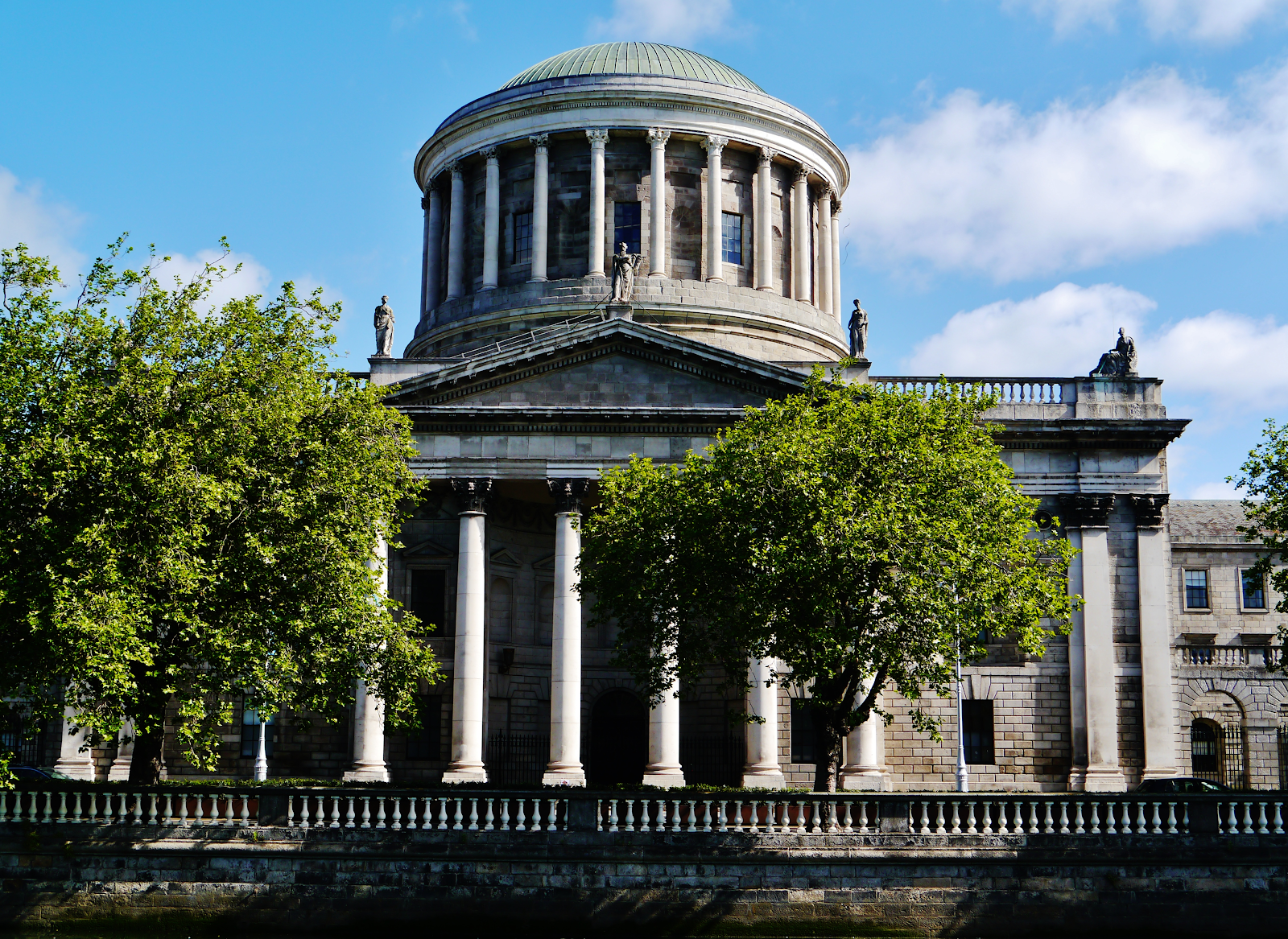
Photo credit: Zairon, via Wikimedia Commons

Introduction

The latest spat between the UK and Ireland over the knock-on consequences of the UK’s Rwanda policy exposes the tangled web of EU law and Common Travel Area (CTA) arrangements which now cover the interactions between both countries’ immigration policies. This post considers these interactions and proposals of the Irish Government to legislate in light of the Irish High Court decision in A v Minister for Justice.

The Realities of the CTA post-Brexit

The CTA has been a remarkably durable feature of relations between the UK and Ireland for over a century. In the immediate aftermath of a bloody war of independence, both countries recognised the mutual benefits of facilitating people moving across their new borders. And even at the height of the Brexit referendum campaign, pro-Brexit campaigners lined up to downplay any concerns around the land border because the CTA would continue after Brexit. Even if it was not, of itself, capable of ensuring an open border on the island of Ireland, the CTA was generally accepted as providing an important ongoing element of UK-Ireland relations. This always underplayed how difficult it was going to be to make these arrangements work post Brexit.

The CTA arrangement has been operable for so long on the basis that it works on two levels; unrestricted movement can take place between the parts of the CTA because each part enforces broadly comparable external rules of entry. For decades, the two states aligned their immigration policy and enforced a shared list of excluded individuals. After both joined the EEC at the same time, these arrangements were augmented by a range of EU law, but Ireland and the UK continued to jointly operate opt outs to let them maintain distinct elements of immigration policy and to provide more legal entitlements to each other’s citizens than they did to other EU citizens (see here).

Post Brexit, the immediate concern was over the UK’s commitment to the CTA. Once Brexit happened, the common external arrangement would no longer be operative, because EU citizens could continue to move freely into Ireland (whereas they would face new restrictions on moving directly to the UK). They could, however, then use the CTA to move into the UK, thereby circumventing the UK’s new immigration policy.  UK ministers, however, remained confident that they could deal with this issue by immigration enforcement away from the border (by requiring banks, landlords, etc to require individuals provide proof of status before accessing services). They therefore signed up to a new CTA deal with Ireland in 2019.

The latest spat in post-Brexit relations between the UK and Ireland, however, involves the necessary corollary of some of the concerns being raised before Brexit took effect. Once the UK set about tightening its restrictions on immigration, and particularly abandoning safeguards around refugees that it had implemented under EU law, would there be a displacement effect as people turned to Ireland instead to process asylum claims. This led to the claims by Ireland’s Justice Minister, Helen McEntee, that not only was there a sharp rise in asylum applications in Ireland in recent months, that 80% of new applicants were now crossing the land border from Northern Ireland. There has not been any evidence published to support this figure (a fact emphasised by some coalition government ministers from other parties, perhaps more alive to the consequences of ramping up these tensions for the CTA).

Groups like the Irish Refugee Council have pointed out that simply because the number of in-country applications has risen, this does not mean that all of those individuals have crossed the land border (people in the country on a different immigration status can make decisions to apply for asylum on the basis of a change in the circumstances of their home country, for example). But the impression that the UK Government’s Rwanda policy has had a direct knock on impact on Ireland, which needs to be addressed, has become central to ministerial thinking.

The position in Ireland

EU asylum law framework

The problem for Ireland is how to enforce returns to the UK, especially in light of the legislation closing off of routes to claim asylum in the UK. The starting point is that Ireland is bound by aspects of EU asylum law, having exercised the possibility to opt in to parts of it. In particular, Ireland opted into the first phase asylum procedures Directive, adopted in 2005, but not the second phase asylum procedures Directive, adopted in 2013 (the ‘2013 Directive’), both of which contain slightly different rules (optional for Member States) on ‘safe third countries’ – ie countries that asylum seekers could arguably make their applications in instead, other than their countries of origin or the country where they are applying now.

The ‘safe third country’ rules in the Directives refer to non-EU countries. If the argument is that the asylum seeker should have applied in an EU Member State or a Schengen associate (Norway, Iceland, Switzerland, Liechtenstein), a different set of rules (the ‘Dublin rules’) apply instead, which determine in detail which Member State is considered responsible for the application, how transfers of asylum-seekers to give effect to the responsibility rules work, and what rights asylum-seekers have to challenge the potential transfers. Ireland has opted in to the current version of those rules – the 2013 version of the Dublin Regulation, known as ‘Dublin III’ – which states that rather than apply those rules to transfer an asylum seeker to another Member State which is responsible, a Member State can choose (as an option) to send an asylum seeker to a non-EU country instead, in accordance with the ‘safe third country’ rules in the 2013 Directive. (One way for Ireland to get around difficulties sending asylum seekers back to the UK would be to revert to the Dublin rules and try to send more of them back to other Member States under those criteria; but that will not always work, for instance because there may not be enough evidence to apply those rules, or the responsibility for the Member State which they first entered illegally to deal with the asylum-seeker may have timed out).

Ireland intends to opt in to the 2024 versions of the Dublin Regulation and the procedures law – which will now become a Regulation – after they are formally adopted, which is scheduled for May 14 (on the details of the new Regulations, see here and here). The procedures Regulation will change the ‘safe third country’ rules again. However, this will not have an immediate impact, since these new Regulations will not apply until mid-2026. So the focus here is the current law.

According to the recent Irish High Court judgment, Ireland had ‘safe third country’ rules at several points previously, but reintroduced the possibility in 2020, when an omnibus law on Brexit amended the International Protection Act 2015 to provide again for ‘safe third countries’ to be designated. Obviously this legal change had the UK in mind – given that the Dublin rules ceased to apply to the UK at the end of 2020, when the Brexit transition period expired. Indeed, the Irish government promptly used these new powers to designate the UK as a ‘safe third country’.

EU ‘safe third country’ rules

The 2005 ‘safe third country’ rules, which apply to Ireland as such, state that a Member State can apply the concept ‘only’ if ‘the competent authorities are satisfied that a person seeking asylum will be treated in accordance with the following principles in the third country concerned:’

a) life and liberty are not threatened on account of race, religion, nationality, membership of a particular social group or political opinion;

b) the principle of non-refoulement in accordance with the Geneva [Refugee] Convention is respected;

c) the prohibition of removal, in violation of the right to freedom from torture and cruel, inhuman or degrading treatment as laid down in international law, is respected; and

d) the possibility exists to request refugee status and, if found to be a refugee, to receive protection in accordance with the Geneva Convention.

The Directive goes on to state that ‘[t]he application of the safe third country concept shall be subject to rules laid down in national legislation, including:’

a) rules requiring a connection between the person seeking asylum and the third country concerned on the basis of which it would be reasonable for that person to go to that country;

b) rules on the methodology by which the competent authorities satisfy themselves that the safe third country concept may be applied to a particular country or to a particular applicant’, which must ‘include case-by-case consideration of the safety of the country for a particular applicant and/or national designation of countries considered to be generally safe’;

c) rules in accordance with international law, allowing an individual examination of whether the third country concerned is safe for a particular applicant which, as a minimum, shall permit the applicant to challenge the application of the safe third country concept on the grounds that he/she would be subjected to torture, cruel, inhuman or degrading treatment or punishment.

Next, Member States must:

a) inform the applicant accordingly; and

b) provide him/her with a document informing the authorities of the third country, in the language of that country, that the application has not been examined in substance.

Finally, if the non-EU country concerned ‘does not permit the applicant for asylum to enter its territory, Member States shall ensure that access to a procedure is given in accordance with the basic principles and guarantees described in’ the Directive.

The 2013 Directive is similar, except for adding ‘there is no risk of serious harm as defined in Directive 2011/95/EU [the EU Directive on definition of refugee and subsidiary protection status] to the list of principles that must apply in the non-EU country, and providing that the applicant must be permitted to argue that the non-EU country ‘is not safe in his or her particular circumstances’ and ‘to challenge the existence of a connection between him or her and the third country in accordance with’ the Directive.

The impact of designating a country as a ‘safe third country’ is that the application is inadmissible on the merits – on the assumption that it will be considered on the merits in the other country instead, because it is presumed that the asylum-seeker will apply for asylum in that country after being expelled there. The case will be fast-tracked, and it may be harder to stay on the territory in the event of an appeal against the decision than in some other cases.

The Court of Justice has ruled several times on the interpretation of the ‘safe third country’ rules in the 2013 Directive: Cases C-564/18, C-821/19, and C-924/19 and C-925/19 PPU, inter alia ruling that the principle does not apply to transit countries, and that Hungary had not fully provided for the guarantees related to the ‘safe third country’ concept’ required by the Directive in its national law.

The High Court judgment

The Irish High Court judgment ruled that the Irish government’s designation of the UK as a ‘safe third country’ was unlawful; but it did not rule on whether or not the UK was actually safe. This apparent paradox stems from the nature of administrative law, which often concerns itself with whether the public administration followed the correct procedure, rather than the merits of the decision – in part because courts are often more willing to review the procedure which a government applied to take a decision than the merits of that decision, which are seen as to some extent a matter of political discretion. So it’s possible that after a court quashes a government measure as unlawful on procedural grounds, the government could back and lawfully adopt the same decision again, provided that it now does so following the correct procedure. (And to knock on the head another common misconception: a minister taking an unlawful decision does not mean that the minister has committed a crime)

So why was the designation of the UK as a ‘safe third country’ unlawful? Mainly because the Irish law from 2020 providing the powers to designate such countries was not fully consistent with EU law, particularly because it did not provide the guarantees required in the 2013 Directive, which is cross-referenced in the Dublin III Regulation. (As noted above, the CJEU came to a very similar conclusion regarding Hungary’s lack of full application of those guarantees, but oddly the High Court judgment makes no reference to this case law). Also, there had not been a continual review of the position in the UK.

However, this did not mean – despite a popular misconception on this point – that the High Court judgment ruled that the UK was unsafe because of the UK’s Rwanda policy. In fact the judgment is at pains to point out that it was not reaching any conclusion on the Rwanda policy one way or another.

The Irish government’s response

The Irish government has announced plans to adopt legislation to designate the UK as a ‘safe third country’. Depending on the content, this may be sufficient to address the specific reasons why the High Court found that the previous designation was unlawful. But this is not the end of the story, because, as we have seen, the High Court did not get into the merits of whether the UK was ‘safe’ or not, particularly in light of the Rwanda policy, which has moreover developed since. Any fresh legislation could be challenged on those grounds. It’s even possible, if fresh challenges are brought, that an Irish court may want to send questions to the CJEU on this or other aspects of interpretation of the ‘safe third country’ rule. (Incidentally, as the Irish High Court did not rule on the merits of whether or not the UK was 'safe', the Irish government - unlike the UK recently - is not legislating to overturn a court judgment on whether another country is 'safe').

Furthermore, there are other elements to the EU rule, not discussed much in the High Court ruling. As noted above, there must be a ‘connection’ between the asylum seeker and the non-EU country (a point notably missing from the Rwanda policy, on the UK side), and the case law says that mere transit is not enough to create a connection. The two asylum-seekers concerned by the previous High Court judgment had been deemed to have spent enough time in the UK to have a ‘connection’, but that will arguably not be the case for all asylum-seekers who might make their way via the UK to Ireland.

Another point – also scrapped on the UK side in the Rwanda policy – is that the asylum-seeker must be readmitted by the non-EU country. The EU rules thus aim to avoid the very limbo that thousands of asylum-seekers are subject to in the UK, where their cases are inadmissible but with no country willing or obliged to decide their applications on the merits. While the High Court judgment refers to UK willingness to readmit asylum seekers previously (see para 44), the UK has now announced that it is not willing to do so, perhaps because it views the CTA arrangements as not binding. This obviously creates a further issue on the EU side (on the readmission/’safe third country’ nexus in EU law, see the pending Case C-134/23).

Immigration Policy for the whole of the UK?

As well as the Irish dimension to this argument, there is also a Northern Irish aspect. Notwithstanding the current wrangling, many question marks hang over the UK’s policy under the Illegal Migration Act 2023, as extended by the Rwanda Act 2024, and particularly over how they apply in the context of Northern Ireland. As part of the EU-UK Withdrawal Agreement the UK committed to ensuring no diminution of rights and equality protections operative in Northern Ireland law as a result of EU law because of Brexit (Windsor Framework, Article 2). It did so to avoid any claim that Brexit jeopardised the rights provisions of the Belfast/Good Friday Agreement 1998, some of which had come to rely upon EU law in practice. This concession headed off a lightning-rod argument for opposition to Brexit in the Northern Ireland context, and enabled the deal to proceed.

But now that these arrangements are in place, and operative, it means that Northern Ireland has a separate (and higher) floor of rights protections than the remainder of the UK. It is arguable that many aspects of EU law applicable to asylum seekers, and providing protections for them (including the Trafficking Directive), continue in full effect in Northern Ireland post Brexit. As pointed out in previous posts (here and here) the courts have the ability to disapply statutes insofar as they conflict with the Windsor Framework arrangements. In other words, this casts doubt on whether the UK Government’s flagship policy on asylum seekers can apply equally in all parts of the UK. The issue has already been argued before the Northern Ireland High Court with regard to the Illegal Migration Act (judgment is pending). Even if the Rwanda Act closes off many legal challenges, asylum seekers within Northern Ireland are therefore likely to try to use the Windsor Framework to challenge any deportations under these measures for the foreseeable future. 

Conclusions

Amid the tangle post-Brexit arrangements, both countries appear to be talking at cross purposes. For the UK Government, Brexit removed its obligations to comply with the Dublin III regulations and the arrangements thereunder for return of asylum seekers to other EU countries (and it cites the restrictions on it being able to enforce the return of individuals to France post Brexit as evidence of this). For the Irish Government, the Dublin III process might have been used when both countries were EU Member States, but the underlying CTA relationship sprang back into full effect (although conditioned by its own EU obligations) once the overlaying EU law was removed post Brexit. In reality, so much of the CTA relies on shared understandings and reciprocal nods, that there is considerable scope for misinterpretation. Indeed, two countries which were engaging with each other in the close collaborative relationship that the CTA requires might well have been expected to publicly make the appropriate arrangements in advance of Brexit taking effect (but that, alas, is not where UK-Ireland relations are at – see Professor Bernard Ryan here).

Elections loom in both Ireland and the UK, and many politicians in both countries have decided that there are votes to be won in looking tough on immigration. When refugees and asylum-seekers are at issue, however, it is difficult to ignore the fact that both countries process a relatively low number of asylum claims on a European level. But both countries are at loggerheads over policies which increasingly put the CTA arrangements in jeopardy and which seek to ignore the fact that conflict and persecution necessarily create more refugees. Both, it has to be concluded, would like this to be someone else’s problem.

Tuesday, 27 February 2018

A Modest Proposal: Avoiding a Deadlock on the Irish border in the Brexit talks


Professor Steve Peers, University of Essex

There is an apparent risk that the negotiations on the Brexit withdrawal agreement could break down over forthcoming proposals to address the Irish border controls issue. It is unfortunate that the UK government has not tabled its own treaty text or more advanced proposals for customs facilitation away from the borders. And it is tragic that the British public is burdened, in the form of their current Foreign Secretary, with one of the most incompetent politicians in British history – unable to grasp the obvious differences between levying a congestion charge at the border of London boroughs and the vastly more complex task of avoiding border checks between the UK and Ireland.

Be that as it may, in advance of the Commission’s proposals due tomorrow, I have suggested (in Annex 1) a text on the Irish border issues for the withdrawal agreement, which reflects the joint report agreed in December (discussed here) as much as possible. For ease of reference, Annex 2 includes the relevant excerpt from the Joint Report.

I have reflected the text of the joint report as faithfully as possible, with the exception of one contradiction which I could not reconcile. Some parts of the joint report appeared to me to be political commitments, so I suggest that they appear as Joint Declarations or UK-only declarations which would be part of the Final Act of the withdrawal agreement (this is a common approach to treaty drafting).

On the key issue of “regulatory alignment”, my suggested text reflects that this is the third of three options, and so suggests deferring negotiation on the details until after Brexit day. This would also reflect the difficulty of negotiating the first or second option before Brexit day, and would reduce the risk of a collapse of the talks, which would jeopardise the two sides’ objectives on the border issue and the other issues at stake in the talks (the protection of EU27 and UK citizens’ rights, if they moved before Brexit day, and avoiding the economic impact of a WTO-only “no deal” outcome on both sides).

However, this suggestion to support the UK government’s argument to defer the “regulatory alignment” issues presupposes that in the meantime the UK government puts full effort into the first option, proposing a customs facilitation treaty that would avoid border checks and a plan to give it effect. This should include any additional provisions which may be necessary to keep the UK’s commitments to ensure North-South cooperation functions on the island of Ireland after Brexit.

If the UK government cannot do so then it should have the integrity to acknowledge that the promises on this issue made during the referendum campaign were false, rather than blame the EU or Ireland, or particularly Remain voters (whose concern about the possible complications was dismissed as “scaremongering”) for the consequences.

Note that the “1973 reset” canard that “the UK and Ireland never had controls before” ignores the fact that the two countries never previously diverged as to whether they were EEC/EU members or not. And the notion of Ireland leaving the EU – against the views of 88% of voters – seems about as likely as the ghost of Eamon de Valera leading the next Orange order parade.

I have proposed alternative wording, where relevant, to take account of the position of the current UK government, on the one hand, and of a potential Labour government (see my comments on Jeremy Corbyn’s speech yesterday) on the other.

Barnard & Peers: chapter 27

Photo credit: Forbes


Annex 1 – proposed text of withdrawal agreement and declarations

Article 1

The withdrawal of the United Kingdom from the European Union shall not prejudice the operation of the 1998 Good Friday or Belfast Agreement, including its subsequent implementation agreements and arrangements, and to the effective operation of each of the institutions and bodies established under them.

This gives effect to part of paragraph 43 of the Joint Report. Unlike the Joint Report, it does not refer only to the UK’s obligations.

Article 2

The United Kingdom and the European Union shall refrain from installing any physical infrastructure or related checks and controls at the border between Northern Ireland and the Republic of Ireland.

This gives effect to the “no hard borders” part of paragraph 43 of the Joint Report. Unlike the Joint Report, it does not refer only to the UK’s obligations.

Article 3

1. This Part is without prejudice to agreement on the future relationship between the European Union and the United Kingdom.

2. This Part is specific to the unique circumstances on the island of Ireland. 

This partly reflects paragraph 46 of the Joint Report. The paragraph goes on to say that the commitments “are made and must be upheld in all circumstances, irrespective of the nature of any future agreement between the European Union and United Kingdom”. However, this is inconsistent with the same paragraph saying that the commitments “will not pre-determine the outcome” of future talks; and it is questionable whether parties to a treaty can bind themselves as to what replacement arrangement they might agree in future. The provision on “unique” circumstances arguably points to a relaxation of the EU27’s “no cherry picking” rule.

Article 4

1. Following the expiry of the [transitional] [implementation] period, the obligation in Article 2 shall be ensured by a [customs cooperation] [customs union] agreement to be negotiated before that date between the United Kingdom and the European Union, which shall include any additional provisions necessary to ensure the absence of physical infrastructure or related checks and controls at the border and the protection of North-South cooperation on the island of Ireland.

This gives effect to the first option in paragraph 49: “The United Kingdom's intention is to achieve these objectives through the overall EU-UK relationship”. The first set of square brackets reflect the UK government and EU27’s different description of the period after Brexit Day. The second set of square brackets offers an alternative wording reflecting the current UK’s government’s position and a potential future Labour government position respectively. See also the proposed joint declaration 3.

2. In the event that the agreement referred to in paragraph 1 is not concluded, the United Kingdom will propose specific solutions to address the unique circumstances of the island of Ireland, and the parties will negotiate in good faith on that basis to ensure the absence of physical infrastructure or related checks and controls at the border and the protection of North-South cooperation on the island of Ireland.

Reflects the second option in paragraph 49.

3. In the absence of on agreement pursuant to paragraphs 1 or 2, the United Kingdom will maintain full alignment with those rules of the Internal Market [and the Customs Union] which, now or in the future, support North-South cooperation, the all-island economy and the protection of the 1998 Agreement. The list of those rules shall be established by the Joint Committee within one year of the exit date.

The words in square brackets would be removed in the event of a Labour government. This reflects the third option in paragraph 49. It adds an obligation to agree on the list of relevant rules within one year of Brexit Day, by which point it should be clearer whether discussions on the first or second options lead to a possibility of agreement. The case for deferring this discussion until after Brexit Day is that: a) it is premature in the absence of discussions of the other options; and b) it increases the risk that no withdrawal agreement can be concluded, putting at risk the intention to avoid a hard border as well as all the other objectives of the agreement.  

4. Each party will establish mechanisms to ensure the implementation and oversight of any specific arrangement to safeguard the integrity of the EU Internal Market [and the Customs Union].

Based on paragraph 51 of the Joint Report. The precise intention of that paragraph is not clear. The words in square brackets would be removed in the event of a Labour government.


Declarations

Joint Declarations

1. Both Parties respect the provisions of the 1998 Agreement regarding the constitutional status of Northern Ireland and the principle of consent. This withdrawal agreement is fully consistent with these provisions. The United Kingdom continues to respect and support fully Northern Ireland's position as an integral part of the United Kingdom, consistent with the principle of consent. 

Based on paragraph 44 of the Joint Report.

2. Cooperation between Ireland and Northern Ireland is a central part of the 1998 Agreement and is essential for achieving reconciliation and the normalisation of relationships on the island of Ireland. In this regard, both Parties recall the roles, functions and safeguards of the Northern Ireland Executive, the Northern Ireland Assembly, and the North-South Ministerial Council (including its cross-community provisions) as set out in the 1998 Agreement.

Based on paragraph 47 of the Joint Report.

3. In order to give effect to Article 4(1), the parties agree to enter into formal negotiations as soon as possible after the exit date on the basis of the draft [customs cooperation] [customs union] agreement proposed by the United Kingdom.

This would give concrete effect to the first option in paragraph 49 of the Joint Report. It presupposes that the UK tables a draft treaty as soon as possible in 2018. The options in square brackets offer alternative wording reflecting the current UK’s government’s position and a potential future Labour government position respectively.

4. Both Parties acknowledge that the 1998 Agreement recognises the birth right of all the people of Northern Ireland to choose to be Irish or British or both and be accepted as such.  The people of Northern Ireland who are Irish citizens will continue to enjoy rights as EU citizens, including where they reside in Northern Ireland. This Agreement respects, and is without prejudice, to the rights, opportunities and identity that come with European Union citizenship for such people.

Based on paragraph 52 of the Joint Report. That paragraph goes on to sate that “in the next phase of negotiations”, the parties “will examine arrangements required to give effect to the ongoing exercise of, and access to, their EU rights, opportunities and benefits”, but it is not clear what this refers to.

5. Both Parties recognise that the United Kingdom and Ireland may continue to make arrangements between themselves relating to the movement of persons between their territories (Common Travel Area), while fully respecting the rights of natural persons conferred by Union law, in accordance with the relevant Protocols attached to the EU Treaties. 

Based on the first part of paragraph 54 of the Joint Report, with an additional reference to primary EU law.

6. In accordance with Part X [financial settlement], both Parties will honour their commitments to the PEACE and INTERREG funding programmes under the current multi-annual financial framework. Possibilities for future support will be examined favourably, in accordance with Part Y [[transitional] [implementation] period]. 

Based on the first part of paragraph 55 of the Joint Report, with cross-references to the other parts of the agreement added. It would be odd if the UK were not consulted on the proposal for a future peace programme during the transition or implementation period, given that it is likely to be tabled in spring 2018 but perhaps not formally adopted until after Brexit day.


UK Declarations

1. The United Kingdom respects Ireland's ongoing membership of the European Union and all of the corresponding rights and obligations that entails, in particular Ireland's place in the Internal Market and the Customs Union. The United Kingdom also recalls its commitment to preserving the integrity of its internal market and Northern Ireland's place within it, as the United Kingdom leaves the European Union's Internal Market and [Customs Union][enters into a Customs Union with the European Union].

Based on paragraph 45 of the Joint Report. The two alternatives in square brackets reflect the positions of the current UK government and a potential Labour government respectively.

2. The United Kingdom remains committed to protecting and supporting continued North-South and East-West cooperation across the full range of political, economic, security, societal and agricultural contexts and frameworks of cooperation, including the continued operation of the North-South implementation bodies.

Based on paragraph 48 of the Joint Report.

3. In the event that Article 4(3) of this agreement becomes applicable, the United Kingdom will ensure that no new regulatory barriers develop between Northern Ireland and the rest of the United Kingdom, unless, consistent with the 1998 Agreement, the Northern Ireland Executive and Assembly agree that distinct arrangements are appropriate for Northern Ireland. In all circumstances, the United Kingdom will continue to ensure the same unfettered access for Northern Ireland's businesses to the whole of the United Kingdom internal market.

Based on paragraph 50 of the Joint Report.

4. The United Kingdom commits to ensuring that no diminution of rights is caused by its departure from the European Union, including in the area of protection against forms of discrimination enshrined in EU law. The United Kingdom commits to facilitating the related work of the institutions and bodies, established by the 1998 Agreement, in upholding human rights and equality standards.

Based on paragraph 53 of the Joint Report. There is an interesting question as to whether this was intended to become a binding obligation, in which case it should be reciprocated.

5 The United Kingdom confirms and accepts that the Common Travel Area and associated rights and privileges can continue to operate without affecting Ireland’s obligations under Union law, in particular with respect to free movement for EU citizens.

Based on the second part of paragraph 54 of the Joint Report.


Annex II – joint report text

42. Both Parties affirm that the achievements, benefits and commitments of the peace process will remain of paramount importance to peace, stability and reconciliation. They agree that the Good Friday or Belfast Agreement reached on 10 April 1998 by the United Kingdom Government, the Irish Government and the other participants in the multi-party negotiations (the '1998 Agreement') must be protected in all its parts, and that this extends to the practical application of the 1998 Agreement on the island of Ireland and to the totality of the relationships set out in the Agreement.

43. The United Kingdom’s withdrawal from the European Union presents a significant and unique challenge in relation to the island of Ireland. The United Kingdom recalls its commitment to protecting the operation of the 1998 Agreement, including its subsequent implementation agreements and arrangements, and to the effective operation of each of the institutions and bodies established under them. The United Kingdom also recalls its commitment to the avoidance of a hard border, including any physical infrastructure or related checks and controls.

44. Both Parties recognise the need to respect the provisions of the 1998 Agreement regarding the constitutional status of Northern Ireland and the principle of consent. The commitments set out in this joint report are and must remain fully consistent with these provisions. The United Kingdom continues to respect and support fully Northern Ireland's position as an integral part of the United Kingdom, consistent with the principle of consent.  

45. The United Kingdom respects Ireland's ongoing membership of the European Union and all of the corresponding rights and obligations that entails, in particular Ireland's place in the Internal Market and the Customs Union. The United Kingdom also recalls its commitment to preserving the integrity of its internal market and Northern Ireland's place within it, as the United Kingdom leaves the European Union's Internal Market and Customs Union.

46. The commitments and principles outlined in this joint report will not pre-determine the outcome of wider discussions on the future relationship between the European Union and the United Kingdom and are, as necessary, specific to the unique circumstances on the island of Ireland.  They are made and must be upheld in all circumstances, irrespective of the nature of any future agreement between the European Union and United Kingdom.

47. Cooperation between Ireland and Northern Ireland is a central part of the 1998 Agreement and is essential for achieving reconciliation and the normalisation of relationships on the island of Ireland. In this regard, both Parties recall the roles, functions and safeguards of the Northern Ireland Executive, the Northern Ireland Assembly, and the North-South Ministerial Council (including its cross-community provisions) as set out in the 1998 Agreement. The two Parties have carried out a mapping exercise, which shows that North-South cooperation relies to a significant extent on a common European Union legal and policy framework. Therefore, the United Kingdom’s departure from the European Union gives rise to substantial challenges to the maintenance and development of North-South cooperation.  

48. The United Kingdom remains committed to protecting and supporting continued North-South and East-West cooperation across the full range of political, economic, security, societal and agricultural contexts and frameworks of cooperation, including the continued operation of the North-South implementation bodies.

49. The United Kingdom remains committed to protecting North-South cooperation and to its guarantee of avoiding a hard border. Any future arrangements must be compatible with these overarching requirements. The United Kingdom's intention is to achieve these objectives through the overall EU-UK relationship. Should this not be possible, the United Kingdom will propose specific solutions to address the unique circumstances of the island of Ireland. In the absence of agreed solutions, the United Kingdom will maintain full alignment with those rules of the Internal Market and the Customs Union which, now or in the future, support North-South cooperation, the allisland economy and the protection of the 1998 Agreement.

50. In the absence of agreed solutions, as set out in the previous paragraph, the United Kingdom will ensure that no new regulatory barriers develop between Northern Ireland and the rest of the United Kingdom, unless, consistent with the 1998 Agreement, the Northern Ireland Executive and Assembly agree that distinct arrangements are appropriate for Northern Ireland. In all circumstances, the United Kingdom will continue to ensure the same unfettered access for Northern Ireland's businesses to the whole of the United Kingdom internal market. 

51. Both Parties will establish mechanisms to ensure the implementation and oversight of any specific arrangement to safeguard the integrity of the EU Internal Market and the Customs Union. 

52. Both Parties acknowledge that the 1998 Agreement recognises the birth right of all the people of Northern Ireland to choose to be Irish or British or both and be accepted as such.  The people of Northern Ireland who are Irish citizens will continue to enjoy rights as EU citizens, including where they reside in Northern Ireland. Both Parties therefore agree that the Withdrawal Agreement should respect and be without prejudice to the rights, opportunities and identity that come with European Union citizenship for such people and, in the next phase of negotiations, will examine arrangements required to give effect to the ongoing exercise of, and access to, their EU rights, opportunities and benefits.

53. The 1998 Agreement also includes important provisions on Rights, Safeguards and Equality of Opportunity for which EU law and practice has provided a supporting framework in Northern Ireland and across the island of Ireland. The United Kingdom commits to ensuring that no diminution of rights is caused by its departure from the European Union, including in the area of protection against forms of discrimination enshrined in EU law. The United Kingdom commits to facilitating the related work of the institutions and bodies, established by the 1998 Agreement, in upholding human rights and equality standards.

54 Both Parties recognise that the United Kingdom and Ireland may continue to make arrangements between themselves relating to the movement of persons between their territories (Common Travel Area), while fully respecting the rights of natural persons conferred by Union law.  The United Kingdom confirms and accepts that the Common Travel Area and associated rights and privileges can continue to operate without affecting Ireland’s obligations under Union law, in particular with respect to free movement for EU citizens.  

55. Both Parties will honour their commitments to the PEACE and INTERREG funding programmes under the current multi-annual financial framework. Possibilities for future support will be examined favourably. 

56. Given the specific nature of issues related to Ireland and Northern Ireland, and on the basis of the principles and commitments set out above, both Parties agree that in the next phase work will continue in a distinct strand of the negotiations on the detailed arrangements required to give them effect. Such work will also address issues arising from Ireland’s unique geographic situation, including the transit of goods (to and from Ireland via the United Kingdom), in line with the approach established by the European Council Guidelines of 29 April 2017.

Tuesday, 22 August 2017

The UK government’s position paper on Northern Ireland after Brexit – some initial thoughts


Professor Dagmar Schiek, Queen’s University Belfast

On 16 August the UK government’s Department for Exiting the EU (DEXEU) posted its long awaited position paper on the position of Northern Ireland and Ireland after Brexit. The government itself states that the paper needs to be considered in combination with the “Future Partnership Paper” on Custom’s arrangements, while no mention is made of EU citizens’ rights, which – alongside the situation of Northern Ireland and Ireland and the UK’s financial obligations - also are a priority under the EU’s strategy to negotiate the withdrawal agreement. For a first appreciation of this position paper it is worthwhile highlighting what they do not address.

Its first part addresses the Belfast Peace Agreement, concluded on Good Friday 1998, with three very specific negotiation proposals: EU support for the peace process should be maintained, citizenship rights set out in the Belfast agreement should be maintained, and EU financial aid for the Peace process should be maintained. Two of these issues are at best loosely related to the UK’s withdrawal from the EU. The EU is engaged in numerous peace processes beyond its borders, and there is no reason why it should stop engaging in the Northern Irish peace process. The question whether Ireland grants citizenship to persons born in Northern Ireland is not even within the EU competences: the Treaty on European Union does not determine who Member States may recognise as citizens. These proposals do not mention the EU citizenship dimension at all, as they remain purely on the national level. One wonders why the continuation of EU funding for the peace process in Northern Ireland is not included in the negotiations on the UK’s financial liabilities: if the UK does not wish to continue paying in the EU budget, a division of responsibilities on the funding for this budget would seem more logical –if only to avoid the impression that the bill may be addressed to the EU alone.

What is missing here? Interestingly, the negotiation position only mentions the Belfast Agreement. This was only the first step in a longer process overcoming conflict in Northern Ireland, aiming at an all-Ireland economy and society (North South Dimension) as well as integration across the British Islands (East West Dimension). The success of such a process requires socio-economic and civic integration, alongside political institutional cooperation. Among the agreements complementing the Belfast agreement the Stormont House Agreement adds some of those aspects, for example by stressing the need to overcome discrimination on grounds of ethno-religious allegiances in the provision of goods and services, housing and other areas.

However, the socio-economic and civil society dimension of integration mainly rests on the common EU membership of Ireland and the UK, which enabled socio-economic and civic transaction without frictions on the island of Ireland as well as with Britain. EU law, directly applicable in both states, and enforced by national courts and the ECJ, guarantees among others free trade in goods and services, the freedom of business to establish and the free movement of workers as well as EU citizenship rights for non-economically active persons. EU legislation ensures regulatory harmonisation necessary for the smooth operation of this. Both have been central to achieving a degree of normalisation accompanying the peace process, one expression of which is that citizens from other EU Member States have made the island of Ireland their home, as well as coming here to live, work or study for limited periods. The economy relies on EU workers from beyond the UK or Ireland, as well as on service provision from other parts of the EU. Does the position paper address these conundrums?

Its second part (paragraphs 18-33) is focused on the Common Travel Area (CTA), correctly stating that this is a form of cooperation for the benefit of UK and Irish citizens, allowing them the right to enter, reside, work and study in each other’s’ state, while also accessing some social welfare entitlements and health services. The CTA also includes specific measures for securing its external borders, and it lacks any one document setting out all the principles and details, including enforcement mechanisms. The UK negotiation position focuses on the preservation of rights to move by Irish and UK citizens. However, the UK government states that border and immigration controls for EEA nationals can only be addressed as part of the future relationship with the EU, while stressing that immigration controls are not restricted to border controls, but can also be operated as controls of access to labour market and social security at other points.

The 3rd part of the paper (paragraphs 34-57) addresses the customs border. Again, the UK government proposes to omit implementing border posts, and to conduct all necessary controls of customs, compliance with agricultural product codes (sanitary and phytosanitary measures) through other controls. It assumes its separate proposals on customs are sufficient to control the movement of goods. These proposals have been criticised for lack of practicability elsewhere already: they either refuse any practical control of what will be a customs border, or shift the burden of those controls onto business, who will need to ensure compliance with EU standards by robust mechanisms which do not come for free.

Again, what is missing in part 2 and 3? The paper acknowledges that it does not touch the service sector, and relegates this aspect to the deep and special future partnership (paragraph 35) to be negotiated after the withdrawal agreement has been concluded. Further, both sections are pre-occupied with borders, the land border between the UK and Ireland, which meanders at a length of more than 300 miles through the island of Ireland, as well as the sea border between Britain and the island of Ireland. Given the traumatic experiences of border communities during the “troubles”, this pre-occupation is understandable. However, maintaining the degree of normality achieved in Northern Ireland and on the island of Ireland as a whole would require a different focus, a focus on cooperation and integration in socio-economic and civic respects. Any commitment to achieve this still has to be formulated.

As regards persons, the UK government has not (yet) committed to maintaining the pre-conditions for free movement of persons (including those who are not UK or Irish citizens born in Northern Ireland or Ireland), and thus to the preservation of an important element of an all-island integration. It envisages post-border controls being maintained, possibly modelled on the UK’s 2016 Immigration Act, which makes employers, landlords, universities and schools (criminally) liable for maintaining restrictions of immigrants on participation in socio-economic life. This replacement of controls at borders by civic controls is meant to disrupt socio-economic integration.

As regards the borders for products, the UK stresses that the final shape of the customs border depends on the future customs relationship. Thus, solutions for problems for Northern Ireland and Ireland caused by Brexit is postponed to a later stage in the negotiations, after the conclusion of the withdrawal agreement. An exception is made for energy products, as maintaining the common energy market is viewed as pivotal. Not even a membership of Northern Ireland in the EEA (which would not address the customs border) has been considered.

Clearly, this is a first draft for the points in the withdrawal agreement that need to be addressed to avoid disproportionate damage to Ireland and Northern Ireland in the withdrawal process. If (as at least one political party supporting the Westminster government has stated in their election programme), the free movement of goods, services and persons should be maintained on the island of Ireland, a more committed position seems necessary. Since the EU Commission and the EU 27 are dedicated to achieving a solution for the rights of EU citizens as well as for the problems of Ireland and Northern Ireland, there is hope that more constructive solutions are yet achieved.

Barnard & Peers: chapter 27
Photo credit: Business Insider