Showing posts with label external borders. Show all posts

Monday, 5 January 2026

Frontex before the EU Courts: Damage, Causation, and Liability under Article 340(2) TFEU


Cases: Hamoudi v Frontex   (C-136/24 P) and WS and Others v Frontex (Case C-679/23 P)


Antje Kunst*

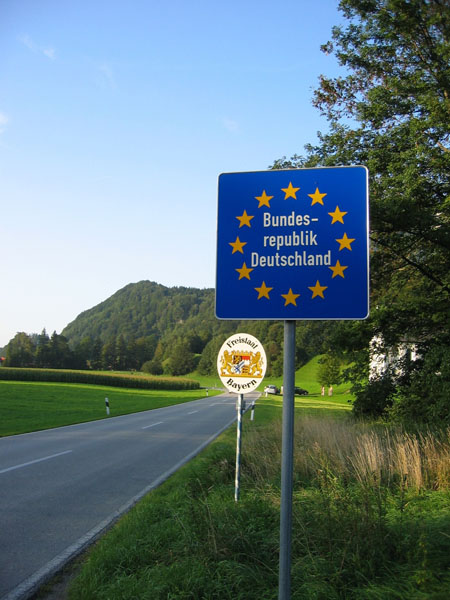
Photo credit: Rock Cohen

Introduction

In two judgments delivered on 18 December 2025 - Hamoudi v Frontex (Case C-136/24 P) and WS and Others v Frontex (Case C-679/23 P) - the Court of Justice significantly clarified the scope of Frontex’s responsibility for fundamental rights violations.

By referring both cases back to the General Court for re-examination, the Court of Justice highlighted serious flaws in how the General Court approached burden of proof, causation and Frontex’s fundamental rights obligations in actions for damages against the Agency.

In both cases it emphasized that Frontex bears its own obligations to protect the fundamental rights of individuals affected during its operations. This is a positive development which was long overdue. Frontex, like any other EU Agency, must be held accountable for the consequences of its operations. EU law, in particular the Frontex Regulation in connection with the EU Charter of Fundamental Rights is unambiguous on this point, despite the Agency’s persistent attempts to argue otherwise.

In Hamoudi, the Court held that the General Court failed to adapt the burden of proof when assessing whether a pushback operation, in which Frontex was involved, had occurred and whether the applicant was present. In WS and Others, the Court underlined that causation must be assessed in concreto, taking into account the specific circumstances of each case, particularly the vulnerability of asylum seekers.

Factual background of the two cases

The Hamoudi case concerns a young Syrian who was allegedly pushed back in April 2020 by Greek authorities involving Frontex operations. As the Court noted at the time of the alleged incident two Frontex operational activities were ongoing in the geographical zone where Mr. Hamoudi claims it took place. (see factual background at para.10). Mr. Hamoudi requested compensation based on Article 340 (2) TFEU from Frontex for the non-material damage he suffered as a result of the pushback in which Frontex had been involved.

In WS and Others, a Syrian family of six, including children, was unlawfully returned from Greece to Turkey in a Frontex-coordinated joint return operation in 2016, from where they fled to Iraq. The family had expressed their desire to apply for asylum, they were nevertheless placed on the return flight without that there was a return decision by the Member State. The family requested to be compensated for the harm suffered on the same basis as in Hamoudi.

Three conditions under Article 340 (2) TFEU

To establish the non-contractual liability of Frontex under Article 340 (2) TFEU, applicants must satisfy three cumulative conditions: (1) unlawful conduct, (2) actual damage and (3) a causal link between the two.

In Hamoudi, the Court of Justice examined whether the General Court had committed an error of law in its assessment of actual  damage, the second condition. In doing so, the Court of Justice was confined in its review to alleged errors of law on appeal; it could not reassess the facts or evidence as established by the General Court. In WS and Others the Court of Justice focused on whether the General Court had erred in law in its analysis of the existence of a causal link between the alleged unlawful conduct and the damage (the third condition). Upon referral, the General Court will have to reassess the facts and evidence examining whether all three conditions of Article 340 (2) TFEU are met in light of the rulings of the Grand Chamber.

Difficult (factual) assessments will still need to be made by the General Court upon referral. The good news is, however, that the Court of Justice has set out clear parameters for the General Court including active investigation duties as the blog will explain below.

Responsibility for own conduct & What the principle of sincere cooperation really means for Frontex

While the Court of Justice rejects the joint and several liability claim in WS and Others as inadmissible, it does not rule out the possibility of concurrent liability of Frontex and Member States as envisaged by Advocate General Ćapeta in her Opinion (see WS and Others at paras. 85-88 and 127 and here).

In Hamoudi, the Court of Justice stressed that, under the Frontex Regulation, “Frontex is fully responsible and accountable for any decision it takes and for any activity for which it is solely responsible” (para. 66). Beyond that, the Court highlighted that the Regulation requires Frontex, in the conduct of those activities, to ensure respect for fundamental rights. (see, inter alia para. 127).

Similarly, in WS and Others, the Court of Justice made it clear that under the then-applicable Frontex Regulation and the EU Return Directive, Frontex has its own obligations to ensure and effectively monitor respect for fundamental rights during joint return operations. (see inter alia paras. 96 to 102, 130). Joint return operations should only target those persons who are subject to enforceable written return decisions and Frontex is obliged to check that they exist for any individual a Member State plans to include in joint return operations (Frontex’s so-called “verification obligation”) (see paras. 101 and 102) and here.

The Court firmly rejected Frontex’s claim that the principle of sincere cooperation under Art.4 (3) TEU could allow it to evade the specific obligations imposed by the  then-applicable Frontex Regulation, most importantly its verification obligation. Instead, the Court made clear, which is important, that the principle of sincere cooperation requires Frontex to help ensure that Member States comply with EU law, especially fundamental rights. (see paras. 107 and 108)

While the Court of Justice’ s statements on Frontex’s legal obligations in both  cases may seem obvious, their significance lies in the fact that the Court explicitly rejects Frontex’s attempts to shield itself from responsibility, even for its own decisions and activities (see in detail the criticism of this here).

Adapting the burden of proof (Hamoudi)

Relying on Article 47 of the Charter, the Court of Justice held that the General Court applied the rules on the burden of proof and the taking of evidence in a manner incompatible with the right to effective judicial protection in the context of an alleged pushback involving Frontex. Article 47 of the Charter required an “adaptation” of the burden of proof. Individuals who claim to be a victim of a pushback involving Frontex cannot be reasonably expected to produce conclusive proof. It is sufficient to present prima facie evidence that a pushback occurred and that they were present during the incident. (paras. 104 and 110)

The Court of Justice also rightly recognized that, at the time of the facts, victims of pushbacks are in a highly vulnerable position, making it very difficult - or even impossible (probatio diabolica) - for them to gather the necessary evidence.  (para. 88 and see here in detail).  Ignoring this reality would risk granting Frontex de facto immunity (para. 105).

In future cases, the General Court will need to take the applicants’ vulnerability into account when assessing whether damage has been established under Article 340 (2) TFEU – and, as the blog explains also when evaluating the causal link between the unlawful conduct and the damage.

Testimony of a pushback victim can constitute prima facie evidence (Hamoudi)

In Hamoudi, the Court carefully assesses the probative value of the testimony of a pushback victim and concludes that the General Court ought to have concluded that Mr. Hamoudi’s witness statement was “sufficiently detailed, specific and consistent” to constitute prima facie evidence that he had been a victim of a pushback operation. (see paras. 119 and 122). The mere fact that a witness statement contains several statements which are insufficiently specific with regard to essential points of fact does not, in itself, justify the conclusion that it cannot amount to prima facie evidence (para. 120)

Similarly, the Court held that the fact that a person claiming to be a victim of a pushback cannot recall the exact date of their journey to Europe, or cannot clearly identify other victims as witnesses, is not sufficient to undermine the probative value of that person’s witness statement for determining whether it constitutes prima facie evidence (para. 122).

The ruling makes clear to the General Court that an applicant’s witness statement may, on its own, constitute prima facie evidence. This is welcome news for applicants who face serious practical difficulties in obtaining additional evidence (which the Court acknowledged in para. 109).

The Court of Justice also relied on a press article - the Bellingcat article – which it treated as merely corroborative, allowing the prima facie evidence provided by the applicant’s witness statement to stand on its own (see para. 125 and also this article).

Contextual evidence (Hamoudi)

Unlike the ECtHR the Court of Justice’s ruling unfortunately does not address contextual evidence such as reports by the UN or NGOs. In the recent G.R.J. and A.R.E. cases, the ECtHR relied on such material to conclude that there is a systemic practice of pushbacks in the Aegean See. The General Court should similarly consider this type of evidence in future cases, as it can be crucial in establishing the facts surrounding pushbacks and Frontex’s involvement.

Evidence in Frontex’s hands (Hamoudi)

The Court emphasised a crucial point regarding proving pushbacks: due to Frontex’s monitoring role, its operational data-collection tasks, and its obligation to ensure compliance with EU fundamental rights, the Agency “must have” relevant information“ at its disposal” (paras. 127 and 133) to establishing whether pushbacks occurred.  This is even more so, when incidents take place in areas and at times where Frontex is on the ground, like during the rapid border intervention in the Aegean Sea and Joint Operation Poseidon.  (paras. 96 and 97).

In this context, the Court made clear that the Agency cannot simply claim it had no knowledge about an alleged pushback without a proper explanation why this is so (see para. 127).

Evidencing Pushbacks: The General Court’s duty to investigate (Hamoudi)

The Court of Justice rightly criticised in Hamoudi that Frontex had failed to cooperate voluntarily (para. 148) whilst it “must have had at its disposal” the relevant information. In this regard, the Court drew the correct conclusion by making clear to the General Court that it must actively use its investigation powers instead of accepting evidentiary gaps caused by Frontex’s lack of cooperation. The General Court failed to use all procedural tools at its disposal to obtain relevant operational information from Frontex which is responsible for upholding fundamental rights during joint operations. (para. 133)

The General Court can request parties to produce all documents, provide information or appear in person, and even seek evidence on behalf of applicants who face difficulties accessing it (paras. 81 and 82).  Claims of pushbacks cannot simply be dismissed for insufficient evidence. The Court must order, in particular at the request of the applicant, measures to clarify the facts.

This has concrete implications for the proceedings now returning to the General Court. Mr. Hamoudi had requested a number of investigative measures (see paras. 135-141) but they were unlawfully rejected (see paras. 142, 150). On referral, the General Court must fully use its powers to obtain all information from Frontex and importantly should draw appropriate conclusions if Frontex continues to withhold evidence.

From Prima Facie Evidence to Proof (Hamoudi)

The Court of Justice in Hamoudi did not go so far as to say the burden of proof should be reversed (cf. Advocate General’s Norkus’ Opinion). However, it made a crucial clarification: when the General Court, for example on referral, concludes that prima facie evidence of a pushback with Frontex involvement has not been successfully rebutted, whether through the applicant’s testimony at a hearing, evidence from other parties, or the Court’s own investigation, then the fact in question must be treated as proven (para. 132).

In this context, it is appropriate for the General Court to draw inferences if Frontex continues to be non-cooperative and fails to provide requested information. The General Court may, for instance, attach special significance to withheld evidence or question the credibility of Frontex’s account of events. (see here regarding cases before the ECtHR). 

Assessing causal link to damage (WS and Others)

In WS and Others the Court of Justice clarified the causal link between unlawful conduct and damage, namely the costs related to the family’s temporary residence in Turkey, flight to and residence in Iraq. In exceptional cases the connection between the conduct and the harm may remain “unbroken”, even if the affected person made a decision between the conduct and the harm suffered. The Court agreed with Advocate General Ćapeta  (see here an analysis of her Opinion), that this may be reasonable given the extraordinary circumstances faced by asylum seekers, including trauma,  displacement, and risk to safety (see paras. 156 -157 and in more detail here).

The Court emphasized that the assessment of causation cannot be considered in isolation from the factual context of the case, including vulnerability and the risk of refoulment. The General Court upon referral will need to take this factual context into account when it re-examines the causal link.

Costs of legal assistance to be linked to Frontex (WS and Others)

The Court of Justice clarified that the costs of legal assistance incurred in the context of complaints against Frontex may be linked to Frontex conduct (see 166 to 174). The complaints mechanism under the Frontex Regulation  is a tool available to those directly affected by alleged fundamental rights violations by Frontex. Here again, the Court of Justice refers to the particular vulnerability of complainants (para.171), stressing that the decision to seek legal assistance cannot be treated as merely a personal choice, it was a necessary and reasonable step. The General Court will have to take this into account when examining the causal link between the costs of legal representation relating to the complaints mechanism and any unlawful conduct on the part of Frontex.

Conclusion

All eyes are now on the General Court, which must take a fresh look at these two cases. Its room for manoeuvre is limited, given the detailed rulings by the Court of Justice in both cases. Prospects in WS and Others look relatively strong, while in Hamoudi a positive outcome is possible though meeting the causal link requirement may be challenging. What is already clear however, is that the era of Frontex’s non-accountability is over.

 A serious engagement by the General Court is now expected setting the stage for how similar claims will be treated in future litigation.

*Antje Kunst is barrister of Garden Court North Chambers, admitted to the Bar of England and Wales, and the Bar of Berlin, advising and representing individuals in a wide range of matters relating to their fundamental rights in the context of EU external action and other areas, as well as access to justice for individuals, including staff cases. She has appeared in numerous cases before both the Court of Justice and the General Court of the Court of Justice of the European Union, including litigation involving EU bodies, agencies and missions operating under the EU’s external action framework.


Thursday, 11 September 2025

The Shifting Frontier: The Advocate General’s Opinion in Joined Cases C‑50/24 to C‑56/24 (Danané)


Vasiliki Apatzidou, Doctoral Researcher at Queen Mary University of London, Associate Tutor at the University of London.

Photo credit: Rock Cohen, via Wikimedia Commons

Introduction

Border procedures – the swift processing of asylum applications before granting legal entry into the territory – is one of the concepts that have dominated policy debates in the EU the last years, especially as the EU Pact on Migration and Asylum mainstreamed these procedures making them obligatory in some cases. As the implementation of the new EU asylum legislation is taking shape, CJEU’s interpretations will be decisive. The Advocate General’s recent opinion in Danané (Joined Cases C-50/24 to C-56/24) has reignited one of the most delicate debates regarding border procedures: where exactly does the “border” end?

Summary of the Opinion

In his Opinion of 26 June 2025, the Advocate General addressed two questions referred by the national court of Belgium under Article 267 TFEU. First, whether the “border procedure” under Article 43 of the recast Asylum Procedures Directive (APD) must necessarily be carried out at the physical external border or in transit zones, or whether Member States may designate inland facilities as “places at the border”. Second, what legal consequences follow once the four-week maximum duration for the border procedure has expired, in particular regarding the continuation of detention and the transition to the ordinary procedure.

In his opinion, he argued that nothing in the Directive requires border procedures to be conducted strictly at a border crossing point or transit zones. Member States may lawfully designate inland facilities as “places at the border”, provided this is transparent and grounded in national law. What matters is compliance with the legal framework—the four-week limit, procedural safeguards, and the automatic transition from the border to the regular procedure once time runs out. In such cases, detention may continue in the same facility (in what is physically the same location) on the basis of a different ground for detention under the recast Reception Conditions Directive, and with an individual assessment including a necessity and proportionality assessment. While authorities may continue processing the case as a priority, they must ensure the full procedural guarantees envisaged in the regular procedure.

A Critical Analysis of the Opinion

At first sight, the location of border procedures is supposed to be straightforward. The EU Asylum Procedures Directive (Article 43) allows Member States to examine an asylum claim “at the border or in transit zones” before granting entry into the territory. The underlying logic is clear: these procedures are exceptional, time-limited, they must be concluded within four weeks, and they should be used at the borders for an exhaustive list of grounds, particularly claims that are considered manifestly unfounded. If a decision is not reached by then, the person should be admitted into the territory to pursue the regular procedure with a fuller set of rights (See C‑924/19 PPU, FMS and others). In this way, border procedures symbolically and legally mark the threshold between “outside” and “inside”.

However, in this specific case, the Advocate General takes a pragmatic view. He argues that it does not matter whether the facility where an asylum seeker is detained during border procedures is physically located at the border. A Member State can lawfully designate an inland detention centre as a border procedure site, provided this is done transparently under national law. For him, what counts is the procedural framework: the four-week time limit, the guarantees for applicants in border procedures, and the automatic transition into the regular procedure once time runs out. Geography, he suggests, should not tie the hands of Member States struggling with capacity constraints.

This approach undoubtedly offers administrative convenience. Airports, ports, transit zones and land borders are not designed to host large detention facilities. Hence, moving applicants inland could allow governments to manage asylum seekers more effectively. Yet, in this way, the opinion stretches the original concept of the border in troubling ways, shifting this deep into the territory, as I have argued in another analysis.

First, this risks turning the border into a moving – shifting barrier. If the very same detention facility is deemed a “border” centre on Day 1 and an “ordinary” reception centre on Day 29, the symbolism of non-entry collapses. The border no longer corresponds to a physical threshold, but to a shifting legal barrier applied at the convenience of the state. This undermines the idea that border procedures are exceptional and geographically confined.

Second, the blurring of lines could weaken safeguards against prolonged detention. On paper, the four-week limit remains intact: once it expires, the applicant moves into the ordinary asylum procedure. But if nothing changes in practice—same cell, same guards, same walls—the distinction between border detention and reception detention risks becoming meaningless. For the applicant, the procedural transition is invisible (as only the legal basis changes), while the deprivation of liberty continues uninterrupted.

Third, the opinion could encourage Member States to internalise the border within their own territory. If inland centres can be designated as border sites, governments may effectively shift the “frontier” inward, applying restrictive screening and asylum regimes far from the actual crossing point. This not only distorts the purpose of border procedures but may also normalise an approach where border procedures will be implemented not only at or close to the actual border, but even in locations in the mainland far away from the border crossing point.

By relocating the border inland, the opinion risks diluting the exceptional nature of such procedures. The Court of Justice will now have to decide whether efficiency outweighs legal certainty. If it sides with the Advocate General, we may enter a new phase where “border” no longer means border, but simply wherever the state declares it to be. That would be a quiet yet profound shift in European asylum law—one that moves the frontier not only inward, but also away from the very idea of the border as a fixed point of entry.

A New Legal Framework on the Horizon

This debate will soon be reshaped by the Asylum Procedures Regulation (APR), adopted as part of the EU’s Migration and Asylum Pact and expected to be implemented from the summer of 2026. Unlike the current Directive, the APR explicitly allows border procedures to be applied not only at border crossing points but also in designated locations within its territory (See Article 54 APR). At the same time, it extends the maximum duration: an asylum application can now be examined in border procedure for up to 12 weeks (Article 51 APR), with possible extensions of another 8 weeks in crisis situations.

In other words, what the Advocate General currently justifies through interpretation will soon be hardwired into EU law. As border procedures are mainstreamed and, in certain cases, made obligatory under the new framework, the “border” will no longer be a fixed geographic line but a flexible administrative construct, movable according to state needs. Whether this development ultimately enhances efficiency or risks undermining the very concept of border procedures as a limited and exceptional mechanism is a question that Europe will now have to confront.

Conclusion

The Danané opinion illustrates how the meaning of the “border” is shifting from a fixed geographical threshold to a flexible legal concept defined by administrative choice. While this approach may accommodate the practical realities of managing asylum flows, it raises questions about whether border procedures can retain their exceptional and time-limited character once detached from geography. This dynamic reflects a wider logic of the Pact: borders shift outward through externalization and inward through legal fictions of non-entry, reshaping the link between territory and rights. The decision of the Court will determine if borders remain thresholds of protection, or become shifting spaces of control and exclusion where legal safeguards gradually erode.


Tuesday, 17 June 2025

Advocate General Ćapeta’s Opinion in WS and Others v Frontex before the Grand Chamber: The End of Frontex’s Shielding? Joint Liability of Frontex and Member States in Return Operations


Antje Kunst*

* Antje Kunst is an international lawyer and barrister of Garden Court North Chambers, admitted to the Bar of England and Wales, and the Bar of Berlin, advising and representing individuals in a wide range of matters related to fundamental rights within the CFSP and other fields. She has appeared in numerous cases before both the Court of Justice and the General Court, within the Court of Justice of the European Union.  

Photo credit: Asurnipal, via Wikimedia Commons


Introduction

On 12 June 2025 Advocate General (AG) Tamara Ćapeta, following a hearing by the CJEU Grand Chamber in February 2025, rendered an important opinion (‘Opinion’) on the appeal of WS and Others v. Frontex,  in Case C-679/23 P against the General Court’s judgment of 6 September 2023.  The General Court’s judgment has been rightly heavily criticised (see for example here, and here). Two authors went as far as stating that the shielding Frontex from meaningful responsibility is not only harmful to victims of fundamental righta breaches committed by Frontex, but that it also undermines the institutional framework of EU agencies and affects the legal credibility of the Court (see here).

The clarity that was lacking in the General Court’s judgment is made up for by the AG, who addressed the issues directly and even offered two possible readings of what the General Court may have intended to find, including that it might have failed to attribute the unlawful conduct to Frontex. (see paras. 60-67 and 84 of the Opinion)

As outlined  here WS and Others v. Frontex involves a Syrian refugee family with four children, who are ethnic Kurds. They arrived on the Greek island of Milos in October 2016 by boat with the intention of claiming asylum. Even though they formally declared their interest in applying for international protection, just six days later, they were deported by flight to Turkey in a joint return operation conducted by Greece and Frontex. Because of the fear of being returned to Syria by the Turkish authorities (para. 59 of the GC’s judgment), the family decided to flee from Turkey to Iraq, where they reside to this day.

The applicants filed a claim for compensation, alleging that Frontex had violated its own obligations under the then-applicable Frontex Regulation (the 2016 Frontex Regulation) and several fundamental rights under the EU Charter during the return operation.

The significance of the case lies in the fact that, for the first time, the Court of Justice examines the joint liability of Frontex and Member States for breaches of fundamental rights arising from joint return operations. There is also an opportunity for the Court to develop its case-law on the causal link between the alleged unlawful conduct of an EU agency -specifically Frontex- and the damage suffered by individuals. This blog post focusses on these two issues.


Admissibility of the action

Any credible claim that fundamental rights have been violated deserves access to an effective judicial remedy. In cases like this, that remedy is a compensation claim under Article 340(2) TFEU to make good any damage caused by EU institutions, bodies and agencies.

Despite Frontex’s objections on four grounds, the AG rightly concluded that the claim is admissible (see paras. 42- 55 of the Opinion). This includes the General Court’s failure to assess relevant facts like the existence of a return decision which are arguments of points of law. If the Court of Justice agrees, which is expected, it would set an important precedent, opening the door for similar actions against Frontex to be heard in the future.


Frontex has its own obligation to verify under the 2016 Frontex Regulation

The AG makes it clear: Frontex has its own independent obligations under EU law when it takes part in joint return operations. That includes a duty to verify whether a valid return decision exists for each person put on the plane (paras. 68–83 of the Opinion).

Crucially, she stresses that Frontex -like all EU bodies- must uphold fundamental rights while carrying out its tasks. It is a legal obligation under Article 51(1) of the EU Charter of Fundamental Rights. So, when Article 34(1) of 2016 Frontex Regulation sets out Frontex’s duty, it is simply restating what EU law already requires (para. 72 of the Opinion).

The AG takes a close look at the 2016 Frontex Regulation and shows that Frontex’s responsibilities during return operations are clearly spelled out therein.

First, Article 28 of the Regulation ties Frontex’s operations directly to the 2008 EU Return Directive, which strictly prohibits returning individuals without an enforceable return decision. Second, Article 4(h) of the Regulation sets out the same point. This is supported by consistent case law from the Court of Justice. The idea is simple but crucial: the existence of return decision helps ensure that the return does not violate the principle of non-refoulement.

The AG makes an important -if obvious- point: the 2016 Frontex Regulation clearly intends that joint return operations coordinated or organised by Frontex must only involve individuals who are the subject of individual, enforceable return decisions.

She goes on to conclude that Frontex bears its own responsibility in this process- again an obvious point despite Frontex's consistent denials. By verifying that return decisions exist for everyone on board, Frontex is fulfilling its legal duty to ensure respect for fundamental rights, including the principle of non-refoulement, in the performance of its tasks, as required by Article 34(1) of the 2016 Frontex Regulation.

Consequently, the General Court erred in law that there could not be a causal link between the allegedly unlawful conduct of Frontex and the damage suffered ( see para. 83 of the Opinion)


Joint and several liability of Frontex and the host Member State?

In paragraphs 84–97 of the Opinion, the AG observes that the General Court may have erred in finding that Frontex and a Member State could not be held jointly and severally liable for the same damage. She clarifies the concept of joint and several liability: when more than one actor contributes to a single harm, each may be held fully liable, and the injured party has the right to claim compensation from any one of them for the entire damage (see para. 85 of the Opinion). The issue of shared liability is a much-debated topic in legal scholarship (e.g., here). Can both Frontex and a Member State be liable for separate breaches of EU law that give rise to a single harm? According to the AG, the answer is yes.

She goes on to clarify that under the EU’s integrated border management system, Member States can be held liable for any action or omission. Frontex, on the other hand, is accountable only for actions or failures that fall within the scope of its assigned tasks under EU law (para. 88 of the Opinion).

She offers an important clarification regarding the Court’s earlier ruling in Kočner v Europol (para. 90 of the Opinion), which concerns joint liability of an EU agency and Member States: that case did not establish a general principle that joint and several liability must be expressly provided for in EU legislation, as it was in Kočner.

In other words, joint and several liability can apply even when not explicitly laid down in legislation. At the same time, she distinguishes Kočner from the present case. In Kočner, it was not possible to attribute the unlawful conduct- namely, the data processing, to Europol or a Member State. By contrast, in the current case, she explains, it is possible to attribute the same omission - failing to ensure a valid return decision - to both Frontex and Greece (para. 91 of the Opinion).

She concludes correctly had either Frontex or the Member State conducted the necessary verification the Syrian family would have been excluded from the joint return operation, assuming there was no return decision. Consequently, responsibility for the damage in this case can be attributed to both, since either one had the capacity to prevent it.


Member State’s primary responsibility does not exclude Frontex’s liability

The AG rejected Frontex’s argument that the agency cannot be held liable simply because Member States bear primary responsibility for return procedures under the 2016 Regulation. She emphasizes that this cannot mean Frontex is absolved of liability for failures -here the omission to verify whether a valid return decision existed. She rightly pointed out that accepting such reasoning would effectively shield Frontex from accountability for unlawful actions or omissions during joint return operations. (para. 92 of the Opinion)

Ćapeta reaches this important conclusion: in situations where both Frontex and Member States share obligations in joint return operations, Frontex can be held liable for damage resulting from a breach of those obligations, even if a Member State may also be held liable for the same damage (para. 93 of the Opinion) This position should be adopted by the Court of Justice; otherwise, Frontex will continue to hide behind a Member State to evade liability.


Causal link - broken through own decisions?

The AG disagrees with the General Court’s conclusion that the harm suffered by the appellants -their forced relocation to Türkiye, flight to and eventual settlement in Iraq- was the result of their own choices breaking the causal chain, and not any action or omission by Frontex. She finds this correctly to be an error of law.

Regarding factual causality, the AG refers to the ‘but for’ test and to the General Court’s finding that the alleged unlawful conduct being a conditio sine qua non for the damage to arise is not sufficient to establish a causal link.  

The AG is of the view that the ‘but for test’ is fulfilled in the present case on the assumption that there was no return decision: had Frontex fulfilled its duty to verify whether a valid return decision existed, it might have discovered that none was in place. The appellants likely would not have been included in the joint return operation and would not have suffered the alleged damage. (see paras. 103 and 106 of the Opinion).  In this context the AG notes that, from an early stage, the Court’s case law has imposed limits on the ‘but for’ test when assessing liability, particularly by excluding the liability of EU institutions or bodies for damage deemed too remote (so-called legal causality) (para. 109 of the Opinion).

As set out here, in the present case, however, the damage is not too remote: Frontex’s operation constitutes the most proximate and direct cause of the harm suffered by the family.

As the AG explains, a finding of damage of being too remote often comes into play when others, sometimes even the injured party, have contributed to the harm (paras. 110-112 of the Opinion). In such cases, the causal chain may be considered broken, and liability may not attach. The AG refers to past case law where the injured party’s own actions or decisions were seen as breaking the chain of causation, predominantly in market cases where the injured parties were economic operators. But in this case this reasoning must not apply (paras. 114 to 116 of the Opinion).

A Syrian Kurdish family - two parents and their four children - fled Syria at the height of the war. What followed was a serious breach of their fundamental rights, most notably the principle of non-refoulement. As the AG points out, the family was undeniably in a position of vulnerability.

After being returned to Turkey, they eventually made their way to Iraq - a place they considered safer. While that move may have technically been their own decision, it cannot be called a ‘free choice’. As AG Ćapeta puts it, it was a ‘difficult life-choice decision’.

On that basis, the Court of Justice should follow Ćapeta’s reasoning and find that the factual chain of causation was not broken by the appellants’ actions. Without the unlawful omission by Frontex, they would never have been forced to make such a difficult decision in the first place.


Conclusion: The Shielding of Frontex Should End

The AG’s Opinion should mark the beginning of the end of Frontex’s shielding from accountability in EU joint return operations. It is now up to the Court of Justice to carry this principled stance forward. Based on the questions raised by the judges during the oral hearing, there is a strong indication that the Court will overturn the General Court’s judgment - though perhaps not entirely.

The Court may well agree with the AG that a final ruling is not yet possible and that the case should be referred back to the General Court for a fuller factual assessment. Nonetheless, a clear and thorough judgment will be essential - not only to guide the outcome of this case, but also to provide legal clarity for similar future cases. What emerges already from the facts presented and the Court’s existing case law is this: the EU judiciary must eventually take the necessary step of establishing Frontex’s non-contractual liability for the unlawful deportation of the family and award appropriate damages.


Wednesday, 8 May 2024

Restoring the Borderless Schengen Area: Mission Impossible? Summary of a new report


Professor Steve Peers, Royal Holloway University of London

Photo credit: BlueMars, via Wikimedia Commons

My European Policy Analysis report on the amendments to the Schengen Borders Code, published today by the Swedish Institute of European Policy Studies (SIEPS), assesses the likely impact of the recently agreed amendments to the Schengen Borders Code. This blog post is a summary of the main points of the report.

The context of the report is the concerns about the reintroduction of border checks at the internal borders of Schengen countries in recent years for long periods by a number of Member States. The EU has embarked upon a strategy to ‘save Schengen’, in part by amending the Schengen Borders Code to change the rules on internal border checks (among other changes), but also by agreeing major changes to EU asylum law alongside a number of other measures, for instance in the area of further police cooperation. The amendments to the Borders Code, along with most of the other proposals (including the asylum law changes), have now been agreed (on the asylum law changes, see the series of analyses on this blog beginning here). The report assesses the details of the Border Code amendments in the broader context, analysing whether they are likely to ‘save Schengen’ and whether they raise human rights concerns in the process.

Introduction 

The Schengen system, initially in the form of the Schengen Convention agreed in 1990 but largely replaced by EU measures since, is intended to abolish internal border checks between (most) EU Member States, as well as four associated non-EU countries. This abolition is linked to harmonised checks on external borders with non-EU countries, a common short-erm visa policy for non-EU visitors, and a Schengen Information System listing non-EU persons to be denied entry and objects and persons to be stopped or tracked.

The Schengen Convention rules on internal and external borders are now set out in an EU Regulation known as the Schengen BordersCode, the most recent version of which dates back to 2016. Although the Code does not abolish internal border checks absolutely, their reimposition is meant to be strictly limited. Nevertheless, there have been many resorts to internal border checks in recent years, in particular due to concerns about migration control and security.  

The response has been a plan to ‘save Schengen’, in particular by means of amending the Borders Code along with other changes to EU law. To what extent will the recently agreed amendments achieve that end – and do they raise human rights concerns in attempting to do so?

Internal Border Controls

The report details the current practice of Member States, which as noted already has entailed recent frequent resort to border checks for long periods. It then describes the current legal framework, including the case law.

In particular, the case law has taken a mostly deferential approach to Member States imposing checks on the territory near borders, as an exercise of ‘police powers’, if this does not have an ‘effect equivalent to border checks’.  According to the CJEU, it is sufficient if there are some safeguards in place to ensure that such checks are targeted, even if their purpose is to combat irregular migration.

The current Borders Code allows internal border checks as such for up to 30 days, or for a longer period if the duration of the relevant event is foreseeable, in the ‘event of a serious threat to public policy or to internal security’; but the ‘scope and duration’ of the reintroduced checks ‘shall not exceed what is strictly necessary to respond to the reintroduced checks’. The reintroduction of controls may be continued for further renewable periods of up to 30 days, ‘taking into account any new elements’. But the maximum time to reintroduce border controls is six months, or two years in ‘exceptional circumstances’, where there is an EU-wide threat (this was triggered in response to the refugee crisis, but the two year period has expired).

According to the CJEU’s judgment in NW, interpreting these provisions strictly as a derogation from the general rule of abolition of border controls, the six-month time limit on the reintroduction of internal border controls that applies where there are no extraordinary circumstances could only be triggered again where there was a serious new threat.  There are more specific rules, depending on whether the reintroduction of border checks is foreseeable, urgent, or constitutes ‘exceptional circumstances’

New Amendments

The recently agreed amendments to the Borders Code, likely to be formally adopted later this spring and apply soon after, aim to address Member States’ concerns. They address a number of issues besides internal border controls, although some of those other issues are related to the broader challenges facing the Schengen system, for example changes to the Borders Code as regards border surveillance, and rules on responses to future public health crises such as the covid pandemic.

This report looks in more detail at the changes on four key issues: the instrumentalization of migrants; the definition of border checks; fast-track returns to other Member States, and the reintroduction of border controls.

Cases of instrumentalisation

The ‘[i]nstrumentalisation’ of migrants is defined (by cross-reference to a recently agreed asylum law, discussed here) as ‘where a third country or a hostile non-state actor encourages or facilitates the movement of third country nationals or stateless persons to the external borders or to a Member State, with the aim of destabilising the Union or a Member State, and where such actions are liable to put at risk essential functions of a Member State, including the maintenance of law and order or the safeguard of its national security’.

The preamble clarifies the definition further, stating that ‘[s]ituations in which non-state actors are involved in organised crime, in particular smuggling, should not be considered as instrumentalisation of migrants when there is no aim to destabilise the Union or a Member State’. Furthermore, ‘[h]umanitarian assistance should not be considered as instrumentalisation of migrants when there is no aim to destabilise the Union or a Member State’.

The amendments provide that ‘in particular’ Member States can temporarily close border crossing points or limit their opening hours in instrumentalisation cases. However, any limitations must be ‘proportionate’, and must take ‘full account of the rights of’ those with free movement rights, non-EU citizens with a legal right to reside, and non-EU citizens ‘seeking international protection’. The revised code will also have a new rule, subject to the same guarantees, that ‘Member States may, where a large number of migrants attempt to cross the external border in an unauthorised manner, en masse and using force, take the necessary measures to preserve security, law and order’.

Defining internal border checks

The agreed amendments, taking account of the case law, take a deferential approach to the exercise of police powers on the territory, including in border zones and for the purpose of immigration control, along with checks on public health grounds.

Fast-track returns

A new clause will provide for the fast-track transfer to another Member State of non-EU citizens ‘apprehended in border areas’, where the non-EU citizen was ‘apprehended during checks involving the competent authorities of both Member States within the framework of bilateral cooperation’, which may include ‘joint police patrols’; and ‘there are clear indications that [they have] arrived directly from another Member State’, as further explained, if it is ‘established that the third‑country national has no right to stay on the territory of the Member State in which he or she has arrived’.

However, this process cannot be applied to people with international protection, or to applicants for asylum; according to the preamble, the Dublin rules (which are themselves about to be revised) ‘should apply’ to asylum seekers.

Where the new fast-track transfer rules will apply, as a derogation from the usual obligation in the EU Returns Directive (the law which sets out general rules on irregular migration) to issue a return decision, the Member State which stopped the person may transfer them immediately to the Member State from which they arrived ‘in accordance with’ a process set out in a new Annex to the Code. This Annex will require the authorities to give reasons for the transfer by means of a standard form handed to the person concerned. There will be a right to appeal the transfer, but it will not have suspensive effect, and in the meantime the person concerned will be transferred within 24 hours.

The reintroduction of internal border checks and controls

There will be a series of amendments to the existing rules on reimposing internal border checks in the Borders Code. In particular, the rules on reintroducing border controls in cases requiring ‘immediate action’ will be amended, referring instead to ‘unforeseeable’ events, and allowing border controls to be reintroduced for a one-month period with extensions up to three months, instead of the current ten days with extensions up to two months.

In ‘foreseeable’ cases, national decisions to reintroduce internal border checks could, under the agreed text, be renewed and apply for a maximum period of two years, rather than six months at present – although in a ‘major exceptional situation’, a Member State could in future also apply two further extensions of six months each.

In the event of a public health crisis, internal border checks can be indefinitely renewed for six-month periods. The current ‘exceptional’ procedure for border checks for up to two years due to an EU-wide crisis will remain without amendment.

Assessment and conclusions

The report notes that in part the changes will entrench the status quo, because they either take account of the case law issued beforehand or while the proposal was under negotiation (on checks on the territory and on public health).

But some of the agreed amendments are genuinely new, most notably fast-track returns of irregular migrants (although not asylum-seekers) between Member States, longer renewals of national internal border control, potentially indefinite border controls on public health grounds (if authorised by the Council), and the instrumentalisation of migration. In effect these amendments circumvent CJEU case law as regards the application of the Returns Directive when border controls are reintroduced (for instance, the recent ADDE judgment), which as it stands prevents the instant return of non-EU citizens to other Member States.

As for the new provisions on instrumentalization, could they circumvent the case law requiring the application of asylum law in such cases? At first sight, the prospect of closing border posts might evade the obligation to consider asylum applications, by making them impossible to  lodge. However, applications might still be lodged by those entering illegally, and in any event the prospect of closing border posts will be explicitly subject to a requirement to take full account of the rights of asylum-seekers. Member States’ power to take ‘necessary measures’ to respond to entry by force will also be subject to this requirement. Also, the entire Borders Code is ‘without prejudice’ to the rights of refugees and asylum-seekers. It requires Member States to act in ‘full compliance’ with the EU Charter, the Refugee Convention, and ‘obligations related to access to international protection […] in particular […] non-refoulement’ in both cases. Therefore there is no plausible argument that the new provisions will legalise illegal ‘push-backs’ by Member States (see both ECHR case law and CJEU case law on this). 

The changes to the rules, for instance allowing for longer periods of legally authorised reintroduction of border controls, raise the question of how limited these controls will be in practice. There are no specific benchmarks available for the abolition of reintroduced border controls, and even if there were it is likely that such abolition – like the extension of the Schengen zone itself – would be determined by political rather than legal factors; it might be more difficult politically to abolish internal border checks the longer they have been applied. While there are legal constraints on the maximum time limit of the reintroduction of those controls, as recently emphasised by the CJEU, it might be wondered – in light, for instance, of frequent allegations of illegal push-backs at the external borders, and the current apparent practice of exceeding the current time limits anyway – whether Member States are sufficiently concerned to observe the rule of law in this field.

Nevertheless, the report concludes that it might be useful to attempt to introduce such benchmarks, at least politically, if the intent is to give an impetus to the aim of ending internal border checks across the Schengen area. It also makes the case for the Commission to produce guidance to ensure that the application of the rules on external border controls are consistent with human rights and asylum law obligations, taking account of case law of the CJEU and the European Court of Human Rights.


Monday, 19 April 2021

Frontex accountability: an impervious path


Laura Salzano, PhD student in Constitutional Law, Barcelona University


Since its creation in 2004, Frontex’ role and responsibilities have been some of the most debated issues among EU and human rights observers. Reasons for such attention are many: misuse of power, lack of transparency and non-cooperative behavior are just some of the allegations addressed to the Agency by professionals as policy experts and lawyers, academia, activists and NGOs.


Such criticisms are not only exogenous to the EU: the Frontex Consultative Forum (established in 2012, it assists the Executive Director and the Management Board in fundamental rights matters) expressed serious concerns in its annual reports for many consecutive years. It disclosed that the Management Board undermined the Fundamental Right Officer’s independence by appointing a former Adviser of the Executive Director as Fundamental Rights Officer ad interim; more seriously, it denounced the Agency’s reluctance to provide the needed human resources to the Fundamental Rights Office and to limit the Forum’s access of information. Also, it brought the ineffectiveness of the Individual Complaint Mechanism to the public’s attention: in 2018 only 3 incidents for alleged violations and 10 complaints were reported: an incredibly low number considering the 1500 officers deployed along the EU’s external borders.


Despite the almost total absence of incident reporting, the media revealed many instances in which the Agency’s officials were implicated in acts of physical violence towards refugees through the use of pepper spray, batons, and of dogs to hunt migrants. These deficiencies on human rights are due to its regulatory framework: while Frontex has been progressively granted a higher degree of power in the management operational tasks, its accountability did not grow accordingly. In fact, its competences and powers were strengthened by the 2016 Regulation and then again in 2019 (as discussed here and here).


This latter revision created the first EU uniformed service: the European Border and Coast Guard standing corps. The shift from mere assistance to Member States to operative powers was not accompanied by the setting up of a redress mechanism for violations of human rights. This brought the EU Ombudsman to recommend back in 2013 the establishment of an instrument enabling those whose fundamental rights were breached by Frontex to complain. While no action was immediately taken within the Agency, such recommendation was embedded in the 2016 Regulation and then enhanced in 2019. The current mechanism now provides the possibility of lodging a complaint for violations resulting from actions and omissions (Article 111, para. 2) but, as observed  by the Consultative Forum, it substitutes a proper independent judicial review and therefore does not satisfy the right to an effective remedy as enshrined in Article 47 of the EU Charter of Fundamental Rights. To assess this and other issues (i.e., the independence of the Fundamental Rights Officer) the EU Ombudsman has undertaken a strategic inquiry, still pending.


More recently, Frontex has come back under the spotlight of political tensions after the publication of an investigation revealing the Agency’s involvement in push-backs at the Greek-Turkish border. Whereas the notion of “push-backs” is not defined under EU law, it is commonly used to describe the set of actions aimed at pushing back migrants and asylum seekers at borders or immediately beyond them - with the purpose of preventing them to reach the protected frontier - without a proper assessment of their status and rights. Such actions often put migrants' lives at serious risk and raise issues with regard to the principle of non-refoulement, protected at EU level by the Art. 19 of the EU Charter.


Such serious events triggered a response from the European Commission which, for the first time, took action to investigate the allegations by calling for an urgent meeting. At the moment though, no concrete action has been undertaken yet and when reporting to European Parliament last December 1st, Frontex’ Executive Director was urged to resign.


As said, allegations of push-backs were the main subject of the LIBE Committee’s hearing held on  December 1st. In that occasion, for all the six incidents reported by the media, the Agency denied its involvement using several arguments.


The first one lies on the legal interpretation of the prevention of departure. As stated by the Agency, those events reported as illegal pushbacks by the media, could instead be interpreted as interceptions under Regulation 656/2014 (Sea Borders Regulation). According to it, if there is evidence to believe that a vessel is involved in smuggling of migrants, States may, inter alia, warn and order the vessel not to enter and alter its course towards a destination other than the territorial sea. As explained, the Regulation frames two kinds of actions that can be undertaken at borders lawfully: interceptions at sea and search and rescue activities. The issue is quite significant, since these operations take place in a grey and evolving area of the law while having the potential to highly impact migrants' human rights. Despite the fact that lawful and unlawful conducts are separated by a fine line, the European Commission's Schengen Borders Code (SBC) handbook restates which legal safeguards border coast guards should always respect, e.g. allowing anyone in need of international protection to access it. In any case, the European Commission, responding to a specific request from the Fundamental Rights and Legal Operational Aspects of Operations in the Aegean Sea, clarified that the criteria of the well-known N.D. N.T. case do not apply to the present case. Predictably, it specified that being that judgment related specifically to a land border, it cannot be indiscriminately applied.


The second argument concerns competence. As the Director declared, full technical command lies within the host Member State: vessels, airplanes and all the deployed means were subject to the sole command of Greek authorities. On the other hand, the Agency enjoys wide supervisory powers, while Member States retain responsibility for the management of the section of their external borders (Art. 7, Reg. 2019/1896). The Management Board establishes - following a proposal from the Executive Director - technical and operational strategies. Moreover, Frontex liaison officers - who act as representatives of the Agency at borders and monitor and assist Member States in their operation - respond to it, as enshrined in Article 31. Also, Frontex exercises such power by means of the vulnerability assessment (Article 32), aimed at establishing Member States' ability to respond to challenges at external borders. Again, the assessment methodology is decided by the Management Board on a proposal of the Executive Director. Such a complicated picture is made even more difficult since the responsibility is shared between a multitude of public actors, usually involved in border control operations: the Host State (where operations take place); the Participating State(s) (other Member State(s) participating in the operation); Frontex’ standing corps. This directly leads to the unaccountability of the Agency: as illustrated by Prof. Fink, “national courts lack the competence to rule on the legality of Frontex’s conduct”, while the ECHtR has no jurisdiction on the EU and before the ECJ the “judiciary is split between a national level that adjudicates on the legality of national conduct and an EU level that adjudicates on the legality of EU conduct.”


The third argumentation revolves around the geopolitical context. There is no doubt that the situation at the Greek-Turkish border is a tense one, primarily due to the known border dispute. It was reported that EU Member States are often threatened by F16 planes of the Turkish military forces - thus raising the need to protect Member States’ security - falling in the framework of hybrid threats. In this case, provision of Article 41 on “critical impact level” applies. In fact, the Executive Director shall recommend any possible action needed to address the criticality. In case of situations requiring urgent actions, the European Parliament shall be informed without delay (Art. 43), while Art. 46 bounds the Executive Director to terminate activities if conditions to conduct them are no longer fulfilled. On the contrary, MEPs were informed only on December 1st. In any case, the issue raised deserves attention: working at EU external borders entails carrying out operations in highly sensitive geopolitical contexts. Nevertheless, according to its Regulation, the Agency is only accountable to the European Parliament and to the Council, surely not fully prepared to deal with external affairs, security and defense - being these the core competences of the EU External Action Service.


European Union borders management suffers from a specific vulnerability when it comes to the rule of law. Those whose rights are violated are mostly left with unclear, burdensome and inadequate mechanisms. A necessary starting point would be amending the Regulation to define a clear chain of command to identify anyone involved in the concerned action or omission, from the person who physically carried out the action - or did nothing to avoid it and should have - to the Executive Director. As argued by Prof Fink, only an effective ex post remedy accessible to individuals would close the accountability gap, allowing for damage compensation and a clearer identification of the public liability.


Barnard & Peers: chapter 26

JHA4: chapter I:3

Photo credit: Rock Cohen, via Wikimedia Commons