Professor Steve Peers
It’s nearly the end of this long
referendum campaign. If you’re still an undecided voter, or wavering about your
choice, or if you know someone who is either of those things, I’d like to set
out the arguments why I believe you should vote to stay in the European Union.
I’ll start out by setting out the
case for a Remain vote, then discuss the counter-arguments made by the Leave
side.
The case to Remain
In my view, there are a series of
reasons to stay in the EU: economic benefits, security, workers’ rights and the
environment. I’ll take each of these in turn.
Economic issues
EU membership gives the UK access
to the world’s biggest market, plus 50 more countries which the UK has trade
deals with via the EU. It might be possible to renegotiate that access from
scratch if we left the EU – but it might not. Why take the risk that it isn’t?
The only way to guarantee market
access to the EU and 50 other countries is a vote to Remain. So it’s no wonder
that the large
majority of British businesses support the UK’s EU membership, and are
worried about their prospects if we vote to Leave.
Loss of that guaranteed market
access wouldn’t just affect those whose jobs are linked to trade with the EU. It
would also affect the broader economy, due to the impact on investment and because
the government would have less to spend on public services in a smaller economy.
Many people are suspicious of
economic forecasts. But the risks of a Brexit vote have already manifested themselves
in the last few weeks. The value of the pound and stock markets (which include
pension assets) dropped when a Leave vote seemed more likely, and increased
again when the odds of a Remain vote went back up. There are reports of capital
flight from the country. There’s surely a reason that the Bank of England has
drawn up crisis
plans in the event of a Leave vote – but no such plans in the event of a
Remain vote.
Let’s look further at those
economic forecasts. It’s true that many forecasters failed to predict the 2008
crash. But one who did, Nouriel Roubini, has also warned of
the economic effects of a Leave vote. And the forecasting record of the few
economists on the Leave side is not great either: Patrick Minford predicted
that the UK would lose millions of jobs when the minimum wage was first introduced.
In fact, it’s striking to note
that some pro-Brexit economists also
predict less economic growth for some time following Brexit, although they have
no reason to lie about that – just the reverse. Andrew Lilico expects less
economic growth until 2030:

And Patrick Minford argues that
Brexit can only work if the UK mostly
eliminates manufacturing – hardly a pleasant prospect for British
workers in manufacturing jobs, and their families and communities.
Security
EU membership comes with a host
of laws regarding police and criminal law cooperation. As I discuss here,
those laws have helped the UK get hold of far more fugitives for trial in the
UK, and also remove more criminals for trial abroad. The amount of data
exchanged between police services on alleged terrorists or other criminals has
increased too. Moreover, the UK’s justice system is not threatened by EU law in
this field: we have an opt-out which the government has frequently used.
Countries outside the EU have
access to only a small fraction of these EU measures, and there would be legal
complications if the UK sought to renegotiate access to police data exchange
after Brexit. There’s clear proof of this – even a non-EU country like the USA has
faced repeated legal and political challenges trying to obtain such access in
practice.
Again, the only way to guarantee being
part of these laws is a vote to Remain – while a vote to Leave would remove the
UK from much of this cooperation between police and prosecutors.
Workers
Despite some attempts to deny it,
it’s clear (as I discuss in detail here)
that EU laws have increased the level
of protection for workers’ rights – including equal treatment of women in the workplace – above the level
it would otherwise be in the UK. 60% of EU cases involving equal treatment of
women in the UK, and 62% of other EU cases involving workers’ rights in the UK,
have led to increased protection.
These rulings have improved
rights as regards (among other things) pregnant workers and maternity leave,
equal pay for work of equal value, paid holidays for more workers, and the
protection of occupational pensions when an employer goes broke. It’s no wonder
that the large
majority of trade unions support the UK’s EU membership.
Many senior figures on the Leave
side have explicitly admitted they want to scrap these protections. Indeed,
Nigel Farage says that women who have had children are ‘worth less’ to their
employers. So, again, the only way to guarantee these rights is a vote to
Remain. A Leave vote would risk the future of these employment and equality law
protections, by putting their fate in the hands of people who are implacably
opposed to them.
Environment
There is a raft of EU laws protecting
the environment: from air pollution, to clean beaches, to nature protection,
among many more. It’s no wonder that the Green party and environmental NGOs support the UK’s
EU membership.
On the other side, the pro-Brexit
environment minister has admitted
that there are many EU environmental laws he would scrap in the event of a
Brexit. The businesses backing the Leave side have drawn up a hit list of dozens of environmental
laws they want to rip up.
So, again, the only way to
guarantee these rights is a vote to Remain. As with workers’ rights, a Leave
vote would hand over environmental protection in this country to those who have
admitted their intention to reduce protection.
What about the case to Leave?
What are the risks to Remain?
The Leave side have argued that
there are a number of risks to remaining in the EU. As I point out in detail here,
these arguments are unfounded. The UK has a veto over tax laws, defence,
foreign policy, future enlargement of the EU, the basics of the EU budget
(including the EU rebate), trade deals with non-EU countries (including the
controversial planned ‘TTIP’ deal with the USA), and transfers of powers to the
EU. Turkey is not about to join the EU:
it has agreed only one out of 35 negotiating chapters in 11 years of
negotiations. The UK has an opt out from the single currency, bail outs of Eurozone
states, joining Schengen and EU asylum and criminal law.
You may not trust British politicians
to keep these safeguards. But in the large majority of cases, it’s not up to
them to decide on that – it’s up to us, the voters. British law already says
that in the case of any transfer of powers to the EU, including the creation of
an EU army or joining Schengen or the single currency, another referendum would
be needed to approve the decision, as well as our government and parliament
voting in favour.
Economic
Is there an economic case to
leave the EU? It’s true that the EU has common rules on trade with non-EU
countries, so the UK would in theory be able to sign separate trade deals with
those countries where the EU has not done a deal yet.
The problem is that this theory
would be hard to put into practice. As discussed in detail here,
the UK would have to start from scratch negotiating trade deals with those
non-EU countries which already have a trade deal with the UK, via the EU.
(These include the majority of Commonwealth countries, as I discuss here).
Some of these EU-wide trade deals are very advantageous to the UK – for instance
our exports to Korea have hugely
increased since the EU trade deal with that country. The head of the World Trade Organisation has
also warned
that this would be a difficult task.
In the meantime, the UK would
have to renegotiate access to its largest trading partner – the EU. It’s true
that both sides would have an economic interest in such a deal. But nevertheless,
trade deals take years to negotiate, either with the EU or non-EU countries. There
are plenty of cases where a deal is never struck at all, despite the economic
interests on both sides.
Moreover, the Leave side say they
want a free trade deal with the EU, not continued participation in the EU’s
single market. That doesn’t bode well for the UK’s trade with the EU after Brexit,
because (as explained here)
a single market gives better access to services markets – and the UK has a big
net surplus in services exports.
When asked about economic issues,
those on the Leave side have often said ‘I don’t know’ or ‘so what’. Some have
expressed indifference to a negative impact a Leave vote might have on the
economy, or said that an economic downturn is a ‘price worth paying’ for leaving
the EU.
A good example of this attitude was
Nigel Farage’s attitude in one of the debates to the pharmaceutical industry – a
huge
UK employer (see the graph) with big net exports to the rest of the EU. He was indifferent to
what might happen to this industry if the UK left the EU, referring to the UK’s
‘domestic market’ and ‘alternative medicine’ instead.

While Boris Johnson has promised
to apologise if leaving the EU causes a recession, that would be cold comfort
to anyone losing their job. The Leave side has no coherent economic plan for
what happens after a Leave vote and appear indifferent to the prospect of
economic loss if we leave.
On a related point, it’s true
that the UK is indeed a net contributor to the EU budget. But the Leave side
has exaggerated the amount the UK pays. As discussed here,
the British rebate money is never sent to the EU, and the UK has control over
the EU money that it sent back to the UK. In all, the net contribution is 1% of
public spending, or 12p per day for the average taxpayer:

That amount of money will not
save the NHS or end austerity. Anyway, as the independent Institute of Fiscal
Studies has pointed
out, even a small drop in economic growth as a result of Brexit would have
a much bigger impact for the UK government’s budget – and therefore taxpayers –
than the UK budget contribution to the EU.
Sovereignty
The Leave side have argued that
the UK needs to leave the EU to be a ‘sovereign’ country. But as pointed out here,
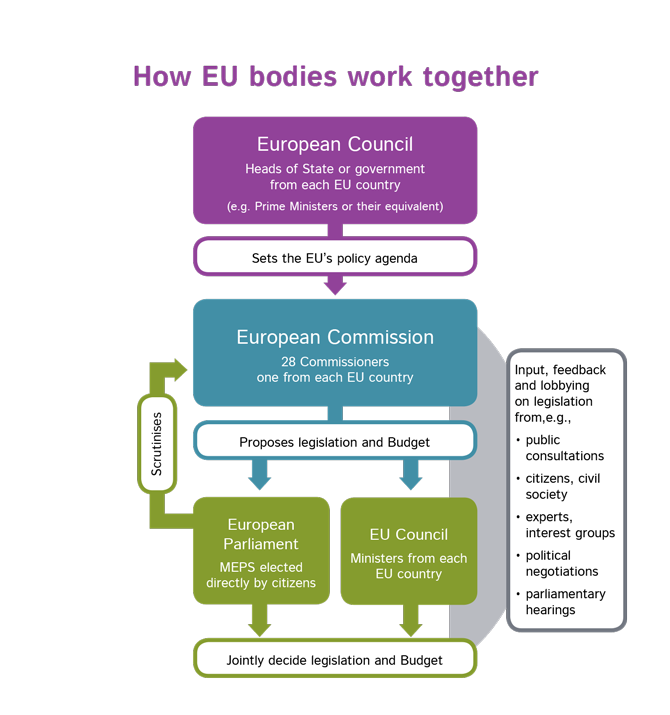
decisions on new EU laws aren’t made by EU Commissioners, but by elected
ministers from each EU country and elected Members of the European Parliament.
Moreover, the UK has voted in favour of 95% of EU legislation:

As for the proportion of UK laws
which come from the EU, the House of Commons has estimated that it’s
only 13%. That doesn’t include EU regulations, but as pointed out here,
most EU regulations aren’t laws in the ordinary sense, but administrative
decisions. So if you counted also all the administrative decisions made in the
UK as well (like every approval of longer pub opening hours, or home extension),
the proportion of British laws coming from the EU would still be small.
Anyway, the key test for
sovereignty is not the percentage of UK laws that come from the EU, but the
percentage of UK laws that were imposed on the UK against our will by the
EU. It’s ridiculous to say that UK laws which were already on the
books, or which we agreed to change at the same time as other Member States, are
an invasion of sovereignty.
Applying this test, since the UK voted
for 95% of EU law, the percentage of UK law imposed against the UK’s will is
only 5% of those 13% of national laws which come from the EU – or 0.65% of the
statute book. Even if you believe the claims of some on the Leave side that 60%
of UK laws come from the EU, the percentage of our laws that were imposed
against our will by the EU would only be 3%. So the sovereignty issue has
simply been hugely exaggerated by the Leave side.
Immigration
The Leave side have argued
against the level of immigration to the UK. But as I have pointed out in detail
here,
the majority of those coming to the UK are non-EU citizens, where the UK
controls the numbers. That’s demonstrated by this graph:

EU law does govern the number of
EU citizens who come to the UK. But they can’t stay unless they have a job or
are self-sufficient. The UK can (and does) deny them social benefits until they
have worked here for a time; and the UK’s renegotiation deal will allow us to
deny them key in-work benefits as well. The UK can (and does) expel or refuse
entry to EU citizens who pose a security risk or who have a criminal record too.
Non-EU citizens do try to enter
the UK from the EU, but they would do that even after Brexit, since it wouldn’t
alter the law in any way on this point. In fact, after Brexit the UK would no
longer be part of the EU’s Dublin system for sending asylum-seekers back to other
EU countries, so in some respects migration control would be harder, not
easier.
There’s a clear trade-off between
EU migration and the economic benefits of EU membership. As the Leave side
points out, countries like Norway and Switzerland are wealthy outside the EU.
But they’ve also signed up to free movement of people with the EU, and have a
greater share of migrants in their population than the UK does.
Is there a left-wing case to leave the EU?
Some on the left-wing side of
British politics believe there is a left-wing case to leave the EU (a so-called
‘Lexit’). There’s an obvious flaw in their logic: there’s no ‘Lexit’ box on the
ballot paper. A Brexit vote tomorrow would not deliver a left-wing government
to office. Rather, as Owen Jones,
Paul
Mason and George
Monbiot have pointed out, it would shift power to those on the right wing
of the Conservative party who favour austerity and loathe
the NHS.
Although, as noted above, those
same people have announced
their intention to scrap environmental and employment laws after Brexit, Lexit
supporters plan to rely on the kindness of Tories to protect those rights. Never
in the course of human history have so many left-wingers had so much faith in
their traditional opponents – with so little reason to do so. If you want a
vision of the future after Brexit, imagine Iain Duncan-Smith fist-punching –
forever.

Conclusion
Of course, the UK has many problems.
But the question is, which of those problems would actually be solved by leaving the EU? Our EU
contribution accounts for 1% of public spending, and EU laws which we didn’t
vote for make up a tiny proportion of our statute book.
Rather, it was our government that
decided to implement austerity cuts. Our government decided to reorganise the
NHS. Our government brought in a bedroom tax, and planned cuts to disability benefits,
while cutting income tax for high earners. Our government nearly tripled
university tuition fees (in England). Our government reduced trade union
rights, hiked industrial tribunal fees, and encouraged zero-hour contracts –
and sets the level of the minimum wage.
Our government sets rates of
income tax, national insurance contributions, inheritance tax and company tax,
and controls what local governments charge as council tax. EU law sets minimum
rates of VAT and excise tax, but the government voted for those laws (it has a
veto on EU tax law), and anyway our government has set the rate of those taxes
well above the EU minimum.
Our government decides on how
much to spend on pensions, on other benefits, on the NHS, on schools, on roads,
on housing, and on foreign aid – on everything except the 1% of the government
spending that goes to the EU. Our national debt stems from our government’s
decisions on how much to spend, compared to how much to tax.
Simply put, our government
controls nearly every decision that affects the UK, including the majority of migration
to the UK. There’s no point voting to Leave based on any of those decisions
which are within our country’s control.
The case to Remain in the EU is
that it enhances our country’s strengths. Membership gives us a guarantee of
trade with our largest market, and 50 other countries besides. It guarantees
continued cooperation on policing and criminal law, and continued protection of
workers’ and environmental rights.
Outside the EU, there are no
guarantees – only risks. The economic risks that trade and investment are
reduced. The security risks that we have less cooperation with police and
prosecutors in the EU. The social and environmental risks of fewer protections
for workers and the environment.
And this would all be for an
illusory gain of sovereignty: when our EU contribution accounts for 1% of
public spending; when we vote for 95% of EU laws; when at most 3% of our laws
were imposed upon the UK against its will by the EU. In effect, the Leave side
want to cut down a forest because they don’t like one tree.
The best way to ensure economic
growth, while retaining other benefits of EU membership, with only marginal
impact on our sovereignty, is to vote to Remain in the EU.
Photo credit: newlovetimes.com