Wednesday, 16 December 2015

The Reform of Frontex: Saving Schengen at Refugees’ Expense?


Steve Peers

Years ago, shortly before the creation of Frontex (the EU’s border control agency) and the big EU enlargement of 2004, I discussed the future of EU borders policy with a senior German civil servant. Anxious about the forthcoming enlargement of the EU (and, in time, Schengen), his vision was that every Lithuanian or Polish border post would be jointly staffed by a friendly German.

Yesterday’s proposals from the European Commission don’t precisely reproduce that vision – but they do embody the same doubt that Member States (in the south, rather than the east) can be fully trusted to patrol the external border. Given that Frontex has been created in the meantime, it’s the agency itself – flanked by reserves from national border agencies – which would be sent in to help patrol the borders of Member States, albeit only in certain cases.

This is only one of a batch of proposals made yesterday. I’ll sum them all up, but focus on this one, as it’s the most important. Overall, though, the proposals are flawed, in two contradictory ways: they simultaneously seek to do too much in the area of border controls (where the Frontex proposal exceeds EU powers and is politically unprincipled) and too little in the area of asylum (since there is no significant attempt to address humanitarian or protection needs within the EU). In short, they seek to save the Schengen system, at the expense of refugees.

Overview

There’s a Commission communication issued yesterday which tries to sum up all the new proposals. But in an even smaller nutshell, here’s what the Commission has tabled. The flagship proposal is a Regulation which would replace the existing Frontex legislation, creating a new ‘European Border and Coast Guard’ (EBCG) consisting of national border guards plus the agency.  This is accompanied by two proposals for minor consequential amendments to the Regulations establishing the EU’s Fisheries Control Agency and Maritime Safety Agency, whose work would be coordinated with the EBCG.

Next, an amendment to the Schengen Borders Code would increase checks at the external borders on EU citizens and, to some extent, non-EU citizens, for security purposes. A fifth proposed Regulation attempts to make expulsion and readmission more effective, by creating a uniform document to be used during removals of irregular migrants to their country of origin.  

There are non-binding measures on border control issues too. The Commission has adopted a Handbook for use operating the EU’s ‘Eurosur’ system of maritime surveillance. It has also released its latest regular report on the Schengen system in practice.

In the area of asylum, there’s only one proposal for a binding measure: a Decision which would exempt Sweden from the EU’s system of relocation of asylum-seekers (which I previously discussed here), for a period of one year. There’s a non-binding Commission Recommendation for a voluntary humanitarian admission programme of refugees from Turkey. Finally, there are Commission reports on the operation of the ‘hotspots’ for immigration control in Greece and Italy, and on the application of the recent plan to manage asylum and migration flows coming through the Western Balkans.

The new European Border and Coast Guard

As noted already, the proposal would replace the existing legislation establishing Frontex, which was first adopted in 2004, then amended in 2007 and 2011. (I previously produced a codified text of the Regulation – see here). To compare it with the text of the rules it replaces, see the Annex to the proposal. There would be no change to the separate legislation, adopted in 2014, which regulates Frontex actions as regards maritime surveillance (see my comments on that law here).

It should be emphasised that the legislation would not apply to the UK or Ireland, because they don’t participate fully in Frontex. In fact, according to CJEU case law, they can’t participate fully in Frontex unless they join the Schengen system fully – which is hardly likely, to say the least (it would require a referendum in the UK). However, the current loose cooperation between Frontex, the UK and Ireland would be retained, particularly for joint expulsions.

These new rules would – if agreed – significantly transform the status and role of Frontex. I won’t examine every detail for now (I might come back to the finer points during or at the end of the negotiations). Rather, my focus here is on the key aspects of the proposal. Keep in mind that this proposal is far from a ‘done deal’, since it has to be approved by a qualified majority in the Council (the UK and Ireland don’t have a vote, due to their opt-out) as well as the European Parliament. Already press stories suggest that many Member States oppose some key features of the proposal.

The first key feature of the law is the relationship between Frontex and national border forces. At present, the current Regulation states that ‘the responsibility for the control and surveillance of the external borders lies with the Member States’. Frontex is merely tasked with the ‘coordination’ of national forces.

But the proposed Regulation would, in effect, promote Frontex from the job of tea lady to the role of chief executive officer. The new law would not just upgrade the EU agency itself, but create a ‘European Border and Coast Guard’ consisting of national forces and the Agency. The Agency will adopt an ‘operational and technical strategy for the European integrated border control management’. National authorities then adopt their own strategies, but they must be ‘coherent’ with the Agency’s strategy. To put the strategy into effect, the Agency will not only be ‘reinforcing, assessing and coordinating’ national forces, but also taking control of them when Member States are not able to do so effectively.

The current tasks of Frontex – training, risk analysis, research, operational support, border surveillance, and support for expulsions – would all be retained and considerably enhanced. For instance, Frontex would have powers to send liaison officers to Member States, to check the ‘vulnerability’ of external border controls, to create a ‘return office’, and to gather and analyse more personal data. It would also have powers to send staff to third countries to participate in operations, not just (as at present) liaison officers. It would have more staff and funding, as well as reserve forces from Member States to call upon for border control or joint return operations. Most significantly, it would be able to send forces to an external border, in certain cases, without a Member State’s consent.

Is this power compatible with the limits on the powers of the EU? Article 72 TFEU states that the Justice and Home Affairs (JHA) Title of the Treaty ‘shall not affect the exercises of the responsibilities incumbent upon Member States with regard to the maintenance of law and order and the safeguarding of internal security’. This Article must apply to border control as well as policing, since there was an equivalent clause in the border controls and immigration Title of the Treaty before it was merged with the policing rules by the Treaty of Lisbon. It obviously does not rob the EU of all power to adopt laws regulating borders, since Article 77 TFEU goes on to confer powers to adopt laws on ‘the checks to which persons crossing external borders are subject’ and which are ‘necessary for the gradual establishment of an integrated management system for external borders’.

But the JHA Title specifically restricts EU powers regarding intelligence agencies, and bans coercive powers for Europol (the EU police agency) and prosecutorial powers for Eurojust (the EU prosecutors’ agency). In my view these restrictions are particular applications of the general rule set out in Article 72, which must mean that while the EU can establish rules on border controls and regulate how Member States’ authorities implement them, it cannot itself replace Member States’ powers of coercion or control, or require Member States to carry out a particular operation.  This is consistent with Article 4(2) TEU, which requires the EU to respect Member States’ ‘essential state functions, including ensuring the territorial integrity of the State, maintaining law and order and safeguarding internal security’, and with the requirement that any common EU defence would have to be agreed unanimously and ratified by national parliaments.

So the EU does not have the powers to send Frontex or its reserve forces to other Member States without their consent, or to require Member States to deploy those reserve forces without their consent either. Moreover, this is politically problematic for many Member States, who have historic concerns about foreign forces coming on to their territory without consent, stemming from the Cold War, the Second World War, and earlier history besides. While Frontex and its reserves should not be regarded as an ‘army’, due to their limited size and functions, they will nonetheless be perceived as such. So this aspect of the proposals is not only legally suspect, but politically ill-judged.

What to make of Frontex’s other enhanced powers, which Member States are rather more likely to accept? The key issue here is the accountability of Frontex for human rights abuses. The agency has fought a long battle with the EU Ombudsman to evade any accountability for individual cases, but it would finally lose that war, if this proposal is accepted. Individuals (or someone acting on their behalf) could make a complaint about human rights abuses, but it would be rejected if it was ‘anonymous, malicious, frivolous, vexatious, hypothetical or inaccurate’. Each complaint would go through the Frontex Fundamental Rights Officer, who would decide on admissibility and then either forward the complaint to the Frontex Executive Director or a national border force. If the complaint is well-founded it will be followed up, possibly by disciplinary action.

However, the proposed process is inadequate. The Executive Director, who will decide on the merits of admissible claims, is obviously not independent of Frontex. There is no reference to a remedy if the complainant believes that his or his complaint has been wrongly rejected as inadmissible or not well-founded. Even where Frontex considers the complaint well-founded, the remedies are ineffective: there is no reference to damages, or a possible criminal prosecution in the most outrageous cases. Furthermore, the new rules are limited in scope, as they do not apply to national border guards, who are responsible for alleged cases of illegal push-backs and assaults upon migrants. To address this, the other proposals released yesterday should be amended to require Member States to hold independent investigations with effective remedies in any case where national border guards are alleged to have acted in breach of fundamental rights.  

There is also a need for specific rules regulating Frontex (and national authorities’) action as regards the ‘hotspots’ for migrants at external borders, to clarify that they are not making decisions on the merits of asylum applications or issuing return decisions, and that only national authorities can make such decisions with full respect for the safeguards and content of EU and national law. (For more on the lack of clarity regarding the ‘hotspots’, see Frances’ Webber’s analysis here).

Other new measures

The most significant other new measure is the proposal for changes to the Schengen Borders Code. At present (see codified text here), Member States must check EU citizens at the external borders (either on entry or exit), to ensure that they hold an EU Member State’s passport which is not registered as lost or stolen. But there is no obligation to check them in security databases, except on a ‘non-systematic basis’. As for non-EU citizens, they must be more thoroughly checked on entry, including the use of security databases, but on exit the consultation is only optional, and security checks need only be carried out ‘wherever possible’.

Both sets of rules would be amended by the new proposal. EU citizens would have to be checked in security databases, both on entry and exit. But if this ‘would have a disproportionate impact on the flow of traffic’ at land and sea borders, Member States could decide to carry out such checks on a ‘targeted’ basis. There is no such derogation for air borders, which will also be subject to separate legislation (recently agreed in principle) concerning the collection of passenger records (Member States will also apply this law to internal Schengen flights). Also, the enhanced border checks won’t be recorded as such in a database, although that would happen in future if recent plans to include EU citizens in the future ‘smart borders’ rules are put into effect. As for non-EU citizens, the current derogation relating to exit will be abolished, and there will always have to be a check in security databases, regardless of any disproportionate impact on traffic.

So overall, checks on EU citizens in security databases would no longer be the exception to the rule (as at present); they would be the rule – subject to exceptions. The exceptions are relatively limited and the proposal does not accept that pressure at air borders could also be ‘disproportionate’. Surely that is a possibility, since if checks add several seconds each to a check of hundreds of disembarking passengers, a back-up could swiftly ensue. Given that data on air passenger movements will soon be recorded anyway, and that the Schengen Information System can’t be used to deny entry to EU citizens, the only practical use for the new rules would be in catching someone who was meant to be arrested, perhaps on the basis of a European Arrest Warrant, or who should be placed under surveillance. But in the latter case it might be awkward to arrange for the surveillance to start without tipping off the person concerned that it’s happening. The proposal might prove useful in detecting people subject to potential arrest due to suspicion of receiving terrorist training (see the separate recent proposal on this point), but is it really necessary for that purpose that it apply at all air borders?

Overall, it may be questionable whether any increase in security that may result from this proposal is proportionate to its impact on passenger movements. There would be a stronger case to amend the Borders Code to allow Member States to check certain flights or border crossings systematically following a risk assessment. This may give rise to concerns about discrimination, but there are already distinctions based on nationality as to who needs a visa, and it would have to be specified that all those on the particular flight must be checked – not just those who ‘appear Muslim’. Checks on all flights could only be justified if it were clear that 'foreign fighters' were returning to the EU via other countries too.  

As for the other proposals, the Regulation on a standard travel document for expulsion would not change the substantive rules on expulsion; time will tell if it leads to non-EU countries accepting more expelled persons.

The real problem is with the lack of ambition of the asylum measures. As noted above, the only binding measure suggested yesterday would exempt Sweden from the EU’s relocation rules. This is largely a cosmetic gesture, since only a tiny fraction of the 160,000 who were meant to be relocated – which anyway is not a huge proportion of those entering Greece and Italy – have in fact been relocated. In the meantime, the capacity of Greece and other States to register migrants, process asylum applications, and ensure basic living conditions for the persons concerned is clearly under immense strain.

What the EU really needs is a new strategy to deal with these protection and humanitarian needs. Is there anything it can do to make the relocation programme work? Failing that, can it assist Member States to process asylum applications, or do more than it is doing to ensure basic living conditions are satisfied? Why the focus on empowering Frontex, and no parallel attempt to empower the EU’s asylum support agency to play a greater role to address some or all of these issues?

Furthermore, pending a full review of the EU’s Dublin system (to be completed early next year), the Commission could at least have issued a recommendation to Member States on how to apply the existing Dublin rules on family reunion, and to widen the admission of family members to admit siblings, and the relatives of EU citizens or non-EU citizens who are legally resident other than as refugees or asylum-seekers.

As Thomas Spijkerboer and Tamara Last have pointed out, there is no shortage of migration controls in the EU. The death toll of migrants and refugees has built up over the decades in which visa requirements were imposed and carriers were sanctioned for letting those without authorisation get on a flight or a ferry. Bolstering Frontex may have an impact on the management of those who arrive, but solves neither the underlying problems in the country of origin or the huge pressure placed on national asylum systems – or the human misery that accompanies it.

Barnard & Peers: chapter 26

Photo credit: https://nobordersnortheast.wordpress.com/2011/05/03/invitation-anti-frontex-days-of-action-warsaw/

Tuesday, 15 December 2015

The reform of the General Court: unleashing the forces of change


Daniel Sarmiento, Professor of EU Law at the University Complutense de Madrid*

The reform of the General Court (doubling to two judges per Member State in three stages by 2019, with the parallel abolition of the seven-judge Civil Service Tribunal) is a reality now. The Council and the European Parliament have green-lighted a reform (taking effect from Christmas Day) that is destined to become a landmark in the history of the EU’s judiciary. For good or for worse, the new General Court, the product of a constitutional reform under the cover of a reform of the Court’s Statute, is here to stay. (For the background to the change, see comments by Steve Peers here).
There are many critics of the reform, including some Member States. The supporters seemed to be for a time a silent minority, but they have successfully convinced the sceptics and the European Parliament finally gave way to the many objections being brought by MEPs, academics and even some members of the General Court. (For criticism of the change, see Laurent Pech and Alberto Alemanno here and here; on the difficult negotiations, see Steve Peers here). As for me, I raised some objections as to the principles underlying this reform. In a previous post I argued that a transformation of the EU’s judiciary like the one we are about to see required a Treaty reform. However, my objection was (and is) not based on the legality of the reform, but on the means and procedures used, which, I believe, do not reflect the importance of the measures being taken.
But the reform is now part of our lives and we should start learning how to cope with it, as lawyers, as academics, as judges or as civil servants. The Court of Justice of the European Union will undergo a momentous change, so the quicker we get used to it, the better.
The change will start, of course, at the General Court itself. Fifty-six judges are a lot of people, and they will certainly not be your average Joe. Fifty-six highly competent lawyers, chosen through a very complex and demanding procedure, both political and technical, from which not everybody comes alive or in one piece. Fifty-six judges with their armies of référendaires, outnumbering by far the référendaires of the Court of Justice, thus becoming the most numerous professional community (together with jurist-linguists) inside the Institution. And despite the huge overall number, it is possible that the power, presence and authority of each individual judge will diminish. In a 56-judge jurisdiction, individual voice is a rarity. Authority and power will depend on the ability of each judge to act efficiently, not necessarily on their intellectual prestige. In very big houses, housekeepers, not charming armchair thinkers, reign supreme.
Specialised chambers at the General Court will become a reality, too. There are already plans to have a chamber for staff-cases, but soon it will be inevitable for specialised trademark chambers to appear too. The haunting myth of a specialised competition chamber will probably be postponed, but if staff and trademark specialised chambers become a success, then the door will be open for further experiments. IP lawyers will be happy to hear this, but only if the appointment process works correctly. If judges end up taking turns in order to have a say at both the “fun” chambers and the “boring” chambers, rotations will be lethal for coherence and expertise. If référendaires end up attached to specialised chambers (and not to judges) in order to ensure a certain stability in the case law, judges might end up questioning who is running the place. But if specialised chambers are not an option, who will trust a jurisdiction with, say, fifteen three-judge chambers, to ensure the coherence of the law?
A 56-judge General Court might finally push the Court into giving away its jurisdiction in preliminary references procedures in some specific areas, as provided by Article 256.3 TFEU (the new rules require a report on this issue in two years’ time). It could make sense to have a specialised Community trademark chamber also hearing references of interpretation concerning Directive 2008/95, on the approximation of laws of the Member States relating to trade marks. And why not VAT references? The Court of Justice is still bombarded with VAT references from national courts that can perfectly be handled by the General Court. The review procedure would not be dead after all, and it could be revived in order to guarantee a certain degree of supervision over the General Court’s preliminary rulings. The inertia and dynamics of an enlarged General Court might be too powerful to stop, and we could soon find ourselves with specialised chambers at the General Court hearing preliminary references. I have no objection to that, but we should be aware of the forces that are being awakened by the current reform.
On a different note, the new General Court will have (or it certainly should have) the tools and staff to rule swiftly on a very high number of cases every year. This means that the appeals on points of law will skyrocket in the years to come. The Court of Justice has taken measures to face this challenge, and in the recent years there is a clear tendency to make good use of Article 181 of the Rules of Procedure. This provision allows the Court of Justice to strike out an appeal by way of a reasoned order if it is manifestly inadmissible or unfounded. I have a feeling that this procedure will become the standard practice when the Court of Justice handles appeals against decisions of the General court, and its use will probably develop into a sophisticated type of discretionary remedy. The Court of Justice will not be able to process the amount of appeals being brought by unhappy parties against decisions of the General Court, and therefore its practice will become more and more principled-oriented. Appeals will not become a remedy for parties, but a sort of individually-brought review procedure with the purpose of guaranteeing the unity and coherence of EU Law. In an overburdened appellate court, appeals will not be a remedy to ensure the effective legal protection of individual litigants. Once again, I have no objection to this model (in fact, it exists in many Member States), but we should all be aware of its impact. Decisions of the General Court will need to be carefully made, because the parties will hardly have another shot before the Court of Justice.
This brings me to another related point: the need of external control of EU courts. If direct actions end up being dealt in a single-instance jurisdiction, with appeals left only for principled cases carefully chosen by the Court of Justice, it will be essential for the EU to accede to the European Convention of Human Rights. Private parties will not tolerate a judicial system in which crucial decisions for their lives, welfare or property, are solved by a sole jurisdiction against whom there is only a discretionary appeal. Strasbourg scrutiny will become crucial if the EU wants to prove that its judiciary is, as it self-proclaims itself, “a complete system of legal remedies and procedures”. However, the resistance of the Court of Justice to accept the conditions of accession to the ECHR will not help when, in the near future, its appeals become more and more principled, and the judgments of the General Court more and more crucial for litigants. In an ironic twist of fate, the reform of the General Court which was pushed so hard by the former President of the Court, Vassilios Skouris, might end up becoming the Union’s fast-speed train towards accession to the ECHR, which Skouris was so concerned about.
Lastly, this reform will also force a revision of the Court of Justice of the European Union as an Institution. So far, it has been clear that the Institution and its President were one thing, and the Court of Justice, the General Court, the Civil Service Court and their respective Presidents quite a different one. The tensions between the Court of Justice and the General Court during the negotiations of the last reform have brought to the day of light the need to clear up who is in charge. A 56-judge General Court will be a very powerful player if it ever decides to act in unison. The President of the Institution, not of the Court of Justice, could have a tough time trying to find its own voice in such a crowded house. His colleagues at the Court of Justice are the ones who have elected him (and to whom he is accountable every three years), but he is the President of an Institution that also represents the 56 judges at the General Court. I can imagine the current President, a natural consensus-builder, managing successfully to represent both jurisdictions before other Institutions. However, future Presidents might not have the same abilities as the current one. If institutional malaise is to be avoided in future years, serious consideration should be given to the Court’s role as an Institution.
The reform of the General Court is the first step in the transformation of the EU’s judiciary. It will unleash the forces of change, whether we like it or not. But if those forces are wisely managed, it could be the Institution’s chance to become the judicial hegemon that many wish the Court to become. Wisdom and care, in very high doses, will be needed more than ever in the years to come.
*This post previously appeared on the Despite our Differences blog
Barnard & Peers: chapter 10

Photo credit: G. Fessy, CJEU

Monday, 14 December 2015

Enforcement Priorities Paper on Article 102 TFEU: Is a Title Enough to Overtake Constitutional Rules and Fundamental Rule-of-Law Principles?


Konstantinos Sidiropoulos
DPhil Candidate at University of Oxford – Prof Steve Weatherill
Foundation for Education and European culture scholar

Introduction
There has been an intense debate around the optimal standard regarding abuse of dominance control in the EU. In an attempt to address the multiple complaints against the approach adopted to unilateral conduct control, in the early 2000s, the European Commission initiated a review of the law and practice of the relevant provision (see the EAGCP Report and the Discussion Paper). The recurring objective of the review was to inject more economic thinking into the enforcement of what is now Article 102 TFEU (see e.g. here and here). In this context, the ‘traditional form-based analysis’ of the EU Courts was contrasted to a allegedly superior ‘more economic approach’ to abuse of dominance.
In December 2008, the Commission adopted a guidance paper declaring its enforcement priorities when dealing with exclusionary abuses under Article 102 TFEU (‘Enforcement Priorities Paper’). This represents the culmination of the debate that crystalised the Commission’s modern approach to abuse of dominance control.

Legal Status
The Enforcement Priorities Paper is a soft law instrument of sui generis nature which is said to operate as a statement of prosecutorial discretion. The said paper is of sui generis nature with regard to both its form and its substance.
From a formal perspective, it is a ‘novel instrument’ in that it has not been adopted in the form of a Notice or of Guidelines, but as a Communication containing ‘guidance on enforcement priorities’. This is neither a legal act envisaged in Article 288 TFEU nor an instrument recognised by the case-law as containing ‘rules of practice’ (see e.g. Dansk Rørindustri at para 209). Inevitably, this raises doubts as to whether the Priorities Paper may be taken into consideration pursuant to the Grimaldi judgment (para 18). 
            The Priorities Paper is also a novelty from a substantive perspective. Its content is said to be about enforcement priorities, and not about substantive guidelines, i.e. it allegedly explains where the Commission will focus its resources rather than interpreting the law (paras 2-3). This label is due to the fact that the Commission was restricted by the EU Courts’ jurisprudence in its attempt to evolve its policy with regard to Article 102 TFEU. Producing substantive guidelines was not an attractive option, because this would mean that it could do no more than describe the current state of the law (see the European Parliament’s report at points K, L and N), and this would stand at odds with the Commission’s economics-based agenda. Under these circumstances, the adoption of a document that would claim to set enforcement priorities was seen as a wise way for the Commission to suggest that the existing law is unsatisfactory, while not directly challenging the interpretation of the jurisprudence.
At a superficial level, the constitutional question of whether the Commission has the authority to indicate ex ante which categories of practices it will prioritise when enforcing Article 102 TFEU was answered in the affirmative, by virtue of the judgment in Automec, where the GC held that ‘setting priorities within the limits prescribed by the law […]  is an inherent feature’ of the Commission’s administrative activity (para 77). Nevertheless, Automec cannot be regarded as an authority for the adoption of the Enforcement Priorities Paper for two reasons. To start with, its title is misleading because nothing is really prioritised. The Priorities Paper is drafted as substantive guidelines and mentions all the categories of exclusionary conduct that have been found to be abusive in the jurisprudence. Additionally, the recognition by the EU Courts of the Commission’s discretion to prioritise cases is not unlimited.  Above all, the Commission must act within the limits prescribed by the law; it must respect, inter alia, the interpretation given to Article 102 TFEU by the CJEU, since the latter is entrusted with the monopoly in the interpretation of EU law by virtue of Article 19(1) TEU in conjunction with Articles 267(3) and 344 TFEU. In this connection, the Priorities Paper is inconsistent with the case-law in several respects.
Consequently, the Priorities Paper is not about setting priorities in the way that it is understood in Automec; it is about providing substantive guidelines. Neither the caveat in para 3 of the Priorities Paper which states that it ‘is not intended to constitute a statement of the law’ nor the title of the document may affect this conclusion. Moreover, the attempt by certain distinguished lawyers in the Commission to reshape the objective of the Commission’s review, arguing that the case-law and the Priorities Paper do not overlap (see e.g. here at p. 7), is not persuasive.
Even so, the Priorities Paper is deprived of legally binding force. Nonetheless, it could be argued that, being a soft law instrument, it stipulates ‘rules of conduct which are designed to produce external effects’ according to the Archer Daniels Midland judgment (para 91). These effects comprise two interrelated aspects, namely that they operate as instructions on the Commission’s administrative practice, and that the Commission cannot depart from these soft rules in an individual case without giving reasons for doing so. However, two aspects of the Priorities Paper prevent it from producing the legal effects of all other soft law instruments. First of all, it departs from the case-law. For such a non-binding text to produce legal effects, not only must it be in conformity with primary and secondary EU law (see e.g. Dansk Rørindustri at para 252), but it must also be consistent with established jurisprudence (see e.g. Dansk Rørindustri at para 261).
Secondly, the CJEU recognises legal effects to soft law instruments only to the extent that this serves the promotion of the protection of legitimate expectation and the principles of equal treatment and legal certainty (see e.g. Dansk Rørindustri at para 211). The Priorities Paper however does not produce legitimate expectations and is unable to serve the principles of equality and legal certainty. To start with, it cannot give rise to legitimate expectations, since it does not give precise assurances that a firm’s conduct will go unpunished if it does not fall within the scope of its provisions (para 3). Reliance on the principle of the protection of legitimate expectations is unacceptable if no precise assurances are given by the authorities that they will act in a particular way (see e.g. the GC’s judgment in Intel at paras 161-166). In addition, a dominant firm cannot invoke the right of equal treatment to protest that the Commission did not focus its resources on pursuing another’s firm exclusionary behaviour, because the announcement that intervention against certain practices will be an enforcement priority does not imply the lawfulness of other behaviours that have been found to infringe Article 102 TFEU according to the case-law. Finally, the Priorities Paper fails to serve the principle of legal certainty; if anything, it has led to more confusion than clarity.     
            All in all, the Priorities Paper has no particular legal status. It has no binding legal force, and cannot produce any legal effects either, because it does not serve the enforcement of any of the general principles of EU law. Therefore, neither the Automec judgment nor the Grimaldi judgment may act as authorities for the Priorities Paper to be taken into consideration, since it does not meet the requirements laid down in either of them.

Practical Significance
Despite the fact that the Priorities Paper lacks legal status, it may still be of decisive practical significance. In fact, the tension between its content and the case-law may be irrelevant for the undertakings and their legal advisers when deciding to consult it. This is because it indicates the Commission’s threshold for intervention. From a practical standpoint, if the Commission decides to pursue cases on the basis of a particular test, companies and their legal advisers would immediately attempt to understand it and bring themselves into line with it.
            Nevertheless, the practical significance of the Priorities Paper is obscured for several reasons. First, there are few bright-line rules. The principles are subject to significant exceptions, which are not sufficiently explained. Second, the paper provides no safe-harbours, which in turn reduces the overall level of guidance that it provides. Third, the purpose of guidelines is to enhance transparency and accountability, provide a clarification of the law, ensure consistency of enforcement and increase legal certainty (see e.g. Tréfilunion SA v Commission at para 142). This purpose was disregarded by the Priorities Paper, which is couched in terms of theoretical economics with minimal awareness of the practical consequences for companies. Finally, the Commission itself does not comply with its ‘guidance’ (see the Intel decision).

Compatibility with the Principle of Loyal Cooperation
The principle of loyal cooperation lies at the heart of the European integration process, and the CJEU has from an early stage recognised it as being a general principle of Union law (see e.g. the ERTA judgment at para 87). The principle governs the entire Union competence, including competition policy (see e.g. Case C-344/98 Masterfoods at para 56). Moreover, as the post-Lisbon Treaty formulation emphasises, the principle of loyal cooperation has a mutual nature (Article 4(3)(a) TEU), and governs both the relations of the Member States with the EU institutions, and the relations between the various EU institutions (Article 13 TEU).
The adoption of the Priorities Paper, as well as its content, run counter to both these manifestations of the principle of loyal cooperation.

Loyalty Between the EU Institutions
To the extent that the Commission’s new approach to abusive exclusionary conduct is incompatible with the case-law, the Commission disregarded its duty of loyalty toward the CJEU. By derogating from established jurisprudence by means of guidelines, the Commission exceeded the limits of the powers conferred on it by the Treaties. Thus, it did not practise mutual sincere cooperation as required by Article 13(2) TEU. Additionally, the choice of the Commission to name the document ‘enforcement priorities’ aggravates its infringement, in the sense that it was a manœuvre aiming at relaxing the tension between the approach adopted in the Priorities Paper and the one followed in the case-law.
Likewise, the Commission disregarded the principle of sincere cooperation as regards its relations with the Council. Specifically, the Commission’s Priorities Paper functionally amended the framework of Article 102 TFEU in several respects, thus circumventing the Council’s legislative responsibility in the area of competition law (Articles 103(1) in conjunction with 289(2) and (3) and 290(1)(b) TFEU). The Commission requires delegated authority to adopt acts in this area, which may only concern non-essential issues (Article 290(2) TFEU). Otherwise, the Commission acts ultra vires, contrary to Article 17 TEU, which sets out its responsibilities. In this context, the Commission also breached the principle of institutional balance.

Loyalty Between EU Institutions and Member States
The Commission also violated the duty of sincere cooperation in the context of its relations with the Member States. This is so, despite the fact that the Commission states in the Frequently Asked Questions accompanying the initial adoption of the Priorities Paper that the said paper has been discussed extensively with the NCAs (question 9).
This is because of the parallel competence that the Commission, the NCAs and the national courts share as regards the application of Article 102 TFEU (Articles 4-6 of Regulation No 1/2003), which entails that they must apply the relevant rule in close cooperation in order to avoid inconsistent and/or contradictory decisions (Articles 11(1) and 15 of Regulation No 1/2003). As such, in principle, NCAs and national courts must take the Priorities Paper into account (see Grimaldi at paras 18-19; Commission Notice at para 8). Yet, they must respect the EU Courts’ case-law pursuant to the principle of supremacy of EU law. Therefore, NCAs and national courts may take into account the Priorities Paper exclusively to the extent that its approach is in conformity with the CJEU’s jurisprudence. As if that situation were not complicated enough, the hybrid approach that the Commission follows in its post-Priorities Paper decisional practice further perplexes things, since NCAs and national courts cannot take decisions running counter to Commission decisions (see Article 16 and recital 22 of Regulation No 1/2003). This state of uncertainty endangers the uniform application of Article 102 TFEU at the national level.

Compliance with Fundamental Rule-of-Law Principles: Analysis of Rebates as an Example
Even more disturbing is the content of the Enforcement Priorities Paper, which at times does not integrate economic and legal analyses in a manner that would ensure compliance with fundamental rule-of-law principles, such as the legal certainty and the nullum crimen, nulla poena sine lege principles (Article 49 CFREU; Article 7 ECHR). The observance of these principles is of utmost importance in the context of the enforcement of Article 102 TFEU, which is performed through fines that may be skyrocketing, as was the case in Intel.
            The Priorities Paper’s approach to rebates granted by dominant firms offers a prime example of this (see paras 37-45). The ‘as-efficient competitor’ test (‘AECT’) advocated in that paper for the assessment of rebates is the epitome of a purely theoretical economic tool; although it is a sophisticated test which is grounded on robust economics, it cannot have any practical functionality (for a list of objections against this test, see here). In other words, it is a perfect test on paper that makes perfect sense with perfect numbers. The problem, however, is that there is no such thing as perfect numbers.
            For instance, this test requires a dominant firm to estimate ex ante the units that its client would potentially purchase from its competitors. The only possible way to do this is to ask its client, who is very likely to mislead the dominant firm. Similarly, under the test proposed by the Priorities Paper, a dominant firm must evaluate ex ante the pricing and range of products that a competitor has the capacity to produce. This depends on information on rivals’ costs and sales, which the dominant firm cannot be expected to possess. Furthermore, the AECT is assuming a single competitor and a single customer. But what if the dominant firm has, for example, thirty competitors; is the dominant firm required to conduct this complex analysis thirty times for each of its clients? This would be an impossible task. Hence, this test can only operate in retrospect and with access to confidential information. It is an unworkable test for a company that attempts to self-assess its practices.
            It appears that the Commission, in its zeal for injecting more economic analysis into the enforcement of Article 102 TFEU, was oblivious to the absurdity of bestowing a self-standing role for economics in the interpretation of this provision. Indeed, any argument in favour of a more economic approach to abuse of dominance is vulnerable insofar as it is not properly integrated with legal reasoning. In this connection, legal reasoning is, by definition, about categorical thinking, and hence, formal. Only formal rules can ensure that Article 102 TFEU will be enforced properly in light of its goal, namely the maintenance of effective competition within the internal market. Indeed, effective competition can only exist if the players in the market act in an environment where they can assess in advance and at reasonable cost whether their conduct violates Article 102 TFEU.
            All in all, no matter how theoretically sound the economic arguments for using the AECT may be, this test is not appropriate for the assessment of rebates under Article 102 TFEU. This is, inter alia, because the test fails to guarantee the observance of fundamental legal principles.

Conclusion
Overall, the Enforcement Priorities Paper is flawed, both constitutionally and as a matter of substance. Constitutionally, the Commission does not have carte blanche as regards the interpretation of Article 102 TFEU; that is, the Commission is constitutionally incompetent to alter the interpretation given to the law by the CJEU. Thus, the Commission, by adopting the Priorities Paper, acted outside its remit and breached a plethora of general principles of EU law. Moreover, the Priorities Paper’s approach to rebates illustrates that its substantive analysis is incompatible with fundamental rule-of-law principles. In this connection, the selected title cannot remedy or conceal these deficiencies. It seems to me that keeping the Priorities Paper alive would be akin to contempt of the CJEU and would cause unnecessary confusion.


Barnard & Peers: chapter 17 

Wednesday, 2 December 2015

Can Schengen be suspended because of Greece? Should it be?


Steve Peers

A leaked Council document (see separate blog post) suggests in effect that the Schengen system should be suspended for up two years, due to ‘systemic deficiencies’ in the control of external borders by Greece. That would allow any Schengen States which wish to do so to maintain or introduce border checks on their ‘internal’ borders with each other. Probably not all Schengen States would take this opportunity, but many would (especially since a number of them already do so). This follows a recent press report in the Financial Times (paywalled), which states that some Member States are considering threatening to throw Greece out of the Schengen system, due to its management of refugees and migrants at the external borders.

It’s possible that the general threat to suspend Schengen is intended as a threat to suspend Greece only, but is simply badly drafted. Or perhaps the idea is to threaten to suspend the whole of Schengen, and pin the blame on Greece. Either way, in my view, this threat is seriously mistaken, for both legal and political reasons.

The Legal Framework

In principle, the Schengen system can’t be scrapped completely without amending the EU Treaties, since the Treaties refer to it several times. Instead, there are two types of possible suspensions: short-term (up to three months) and long-term (up to two years). The leaked Council document refers to use of the long-term suspension.

The short-term waiver rules have always formed part of the Schengen system. They allow individual Member States to reimpose checks on internal borders  for a short time, for reasons of public policy and public security. Over the years, those provisions have often been invoked by Member States, usually for a few days during an international summit or football tournament. This autumn, they have been invoked more often and for longer periods, as a response to the refugee crisis affecting the continent. Since this reintroduction is only allowed for a maximum period of six months, there is an upcoming legal problem if Member States with to prolong these controls past next spring.

But a newer, different set of rules apply to suspending a Member State from the Schengen system. As a response to the ‘Arab Spring’ of 2011, and a spat between Italy and France over responsibility for some Tunisians, the Schengen rules were amended in 2013 in order to provide for the collective reimposition of internal border controls for up to two years. Those amendments need to be read in conjunction with the rest of the rules which they amended. So I suggest you read them in the codified version (showing the amendments), which is set out in an Annex to the report which I wrote for the SIEPS thinktank on the revised rules.

These amendments were generally understood as providing in effect for the possible suspension of individual Member States from the Schengen system. However, that is not expressly set out in the rules, and the leaked Council document clearly intends something broader, since it refers explicitly to continuation of existing border checks, ie between Germany and Austria, not (only) between other Member States and Greece. But the role of individual Member States is still relevant, because this collective suspension of Schengen can only be triggered if there are ‘serious deficiencies’ in how one Member State applies the Schengen external borders rules.

The process would start with a Commission recommendation following a Schengen evaluation, according to the separate rules (also amended in 2013) on the process of assessing whether Schengen states comply with their obligations. If the Commission finds in its report that there are ‘serious deficiencies’ in a Member State complying with its external border control obligations, then it can recommend that this country take ‘specific measures’, including accepting assistance from the EU’s border agency, Frontex, and submitting plans for Frontex to assess.

If there is not enough action on settling these problems within three months, the process can escalate. In ‘exceptional cases’ where there is a ‘serious threat to public policy or public security’ in the Schengen area or parts of it, the Council can recommend ‘as a last resort’ to Member States that they reimpose border controls against that Member State for periods of six months, renewable up to the two-year maximum. It’s arguable that this process can be fast-tracked and be applied even without giving the Member State three months to fix its problems.  Since Member States would have to vote in favour of it in the Council (by a qualified majority), it can be assumed that most Member States would then follow this recommendation. The Council has to act on a proposal from the Commission, but Member States can request the Commission to make such a proposal.  

In adopting this recommendation, the Council has to assess whether it will ‘adequately remedy’ the threat to public policy, as well as the ‘proportionality’ of the measure in relation to the threat. This must be based on detailed information, and consider the EU assistance which was provided or which could have been requested, the likely impact of the deficiencies in border control upon the threat to public policy or public security, and the impact on the free movement of persons.

The legality of suspending Schengen and/or sanctioning Greece

It’s not clear exactly where we stand in the process as regards Greece. The Commission has recently adopted a Schengen evaluation report, but it’s not public. It’s not even clear if that report concerns Greece (all Schengen states are evaluated). So it would take a while (three months after a formal finding of ‘serious deficiencies’, which hasn’t happened yet as far as I know) before Greece could be sanctioned, unless the process is fast-tracked.

Indeed, the Council document seems to be aiming to fast-track the process. It wants the Council already to request a Commission recommendation to suspend the abolition of border controls for up to two years. Since (as far as I am aware) there’s not even a finding of Greek ‘serious deficiencies’ yet, there’s obviously not yet a three month period during which those problems continued. And the Council document doesn’t even attempt to assess whether the substantive criteria apply; the intention simply seems to be to find some way to justify a longer period to continue the internal border checks which Member States have reintroduced recently.

If the current threats get to the stage of a Council Recommendation that border controls be reimposed, it’s not clear if Greece could sue the Council in the EU Court of Justice (since technically Recommendations are not binding), or would have to sue Member States for following the Recommendation instead. Individual travellers could also sue Member States in national courts for imposing border controls, indirectly challenging the legality of the Recommendation; national courts could then send the issue to the Court of Justice.

Procedural issues apart, is there a substantive case for suspending Schengen rules and reimposing border controls, because of ‘serious deficiencies’ due to Greek control of the external border? In my view, there are serious doubts that there is such a case, for two main reasons.

First of all, according to the Financial Times article, other Member States are annoyed because Greece did not accept the support of Frontex, register enough asylum-seekers, or request humanitarian aid to assist them. While the failure to request support from Frontex is referred to in the EU border controls legislation, the other issues are not. And for very good reason: because the failure to control the numbers of refugees at the external borders is NOT a breach of the Schengen rules.

This assertion may seem surprising, because the critics of the EU’s response to the refugee crisis – on either side of the argument – often assume that EU law requires refugees and asylum-seekers to be refused entry at the borders. From one side, the EU is criticised for letting refugees and asylum-seekers in, and therefore ‘not protecting its borders’. From the other side, the EU is criticised for establishing a ‘Fortress Europe’.

Both sides are clearly wrong – at least, on this specific legal issue. This follows from the Schengen Borders Code itself, which expressly exempts refugees from the rules on penalising non-EU citizens for unauthorised entry across the borders, and includes an exemption from the usual conditions on border crossing if the non-EU citizen is claiming asylum. It equally follows from the EU’s asylum procedures Directive, which requires Member States to process not only asylum applications made on the territory, but also those made at the border. (Of course, Member States don't always fully comply with their EU legal obligations).

So it’s really the border crossing rule itself which is controversial, not Greece’s failure to apply it. There’s a political problem with the rule in practice, either because (from one side’s perspective) it is no longer keeping out enough people, or (from the other side’s perspective), it is too difficult for genuine refugees to reach EU territory without the risk of drowning or paying money to smugglers.

But for the purposes of finding that there are ‘serious deficiencies’ in Greek control of the external border, the point is that Greece is not failing in any obligation to stop asylum-seekers crossing the external borders – quite simply because there’s no such obligation. Just the opposite. Of course, due to the sheer scale of the numbers involved, it’s difficult for Greece to operate an effective asylum system, but that failure is subject to a wholly separate process. Indeed, the European Court of Human Rights and the CJEU have already said that Member States cannot send asylum-seekers back to Greece, because the asylum system has effectively collapsed there. The Dublin III Regulation sets out rules which apply in the event that the Dublin system has to be suspended for those reasons, and the EU has recently adopted Decisions (discussed here) to relieve the burden on Greece a little by relocating some asylum-seekers from that country.  

Of course, some of those who cross the Greek border do not apply for asylum immediately, or later fail in their asylum applications. According to UNHCR statistics, about half of those recently arriving in the Greek island of Lesvos (the main destination) are coming from Syria and Iraq (countries with high refugee recognition rates) and half are coming from other countries, with lower recognition rates. In that context, it is legitimate to suggest that Greece ought to accept assistance from Frontex and other EU agencies, and that Frontex in particular has a role coordinating the fingerprinting and registration of people when they first arrive. (Fingerprinting of irregular migrants and asylum-seekers isn’t a panicked authoritarian response to the refugee crisis, as is sometimes suggested, but a long-standing EU law obligation, going back to 2003).

The second problem is the link between the Greek ‘deficiencies’ and the reimposition of border controls, either against Greece or between other Schengen states. There’s certainly no link between the deficiencies and the borders between Greece and other Schengen States, since none of those are land borders, and (would-be) asylum-seekers and refugees travel by land between Greece and other Member States. So checking people flying between Greece and other Schengen States would be hugely disproportionate to the relevant deficiencies.  

What about border controls between other Schengen States? These are the controls that the Council document expressly wants to continue. Here there is a link between the people originally entering via Greece and later trying to cross the Austria/Germany border, for instance. But again, the real deficiencies are with the EU’s asylum system, not Greek border controls, since EU rules provide for admission of asylum-seekers. Asylum-seekers move on to other Member States because the Dublin rules were not drawn up with today’s increased numbers of asylum-seekers in mind, and Greece can’t manage the numbers that it would be responsible for under the rules. That’s certainly a problem – but that problem is not caused by Greek deficiencies in external border controls. The EU has to use the legal instruments available under its asylum policy to try to fix it.

Political context

Although it’s not evident from the face of the document, the political context of the Council paper may be an attempt to convince Greece to agree to further measures relating to border control. That’s evident from the Financial Times article, which conveys several Member States’ allegations against Greece (summarised above). In turn, the Greek government has defended itself and made counter-allegations against the EU, which are summarised in a Guardian article.

In some ways, this resembles the attempt by some Member States this summer to coerce Greece to leave the euro ‘temporarily’. As I argued at the time, this process did not have a shred of legality, unless we use the creative argument that Greece had never legally joined the euro.

However, there are differences as regards Schengen. There is on paper a process to suspend Schengen rules temporarily; the only question is the correct interpretation of those rules. Undoubtedly some will not share my interpretation above, and would argue that defects in the asylum system are implicitly part of the assessment of whether there are 'serious deficiencies' in external border control. In the absence of case law to date, it’s an open question which of us would be correct. It’s also an open question whether the Commission – which has made much of its strong support for Schengen – would be willing to suggest a suspension for two years.

Even if it’s legal to threaten Greece this way, is it wise? The EU was heavily criticised for trying to strong-arm Greece as regards the euro – although technically it wasn’t the EU institutions making the threats last summer, but rather the parallel ‘Eurogroup’ bodies which are not an ordinary part of the EU’s political system.

Far better for the EU to redouble its efforts to help both Greece and the people concerned, by ensuring that there are decent reception centres and living conditions in the country, by making greater effort to ensure that the relocation system works, and by working with Turkey to genuinely improve the living conditions of refugees there, so that fewer of them want to leave (more on that recent EU/Turkey deal in a later blog post).

As regards Schengen itself, if a temporary suspension is strongly desired, it might be better to provide for it by means of a legislative amendment to the Schengen Borders Code (with a ‘sunset clause’ providing for its expiry, since permanent suspension would violate the Treaties) rather than by the indirect means of threatening Greece. Or an amendment to the rules on checks near the internal borders could justify some occasional checks in the event of dysfunctional applications of EU asylum rules, if fixing those rules proves politically impossible – as well it might.


Barnard & Peers: chapter 26

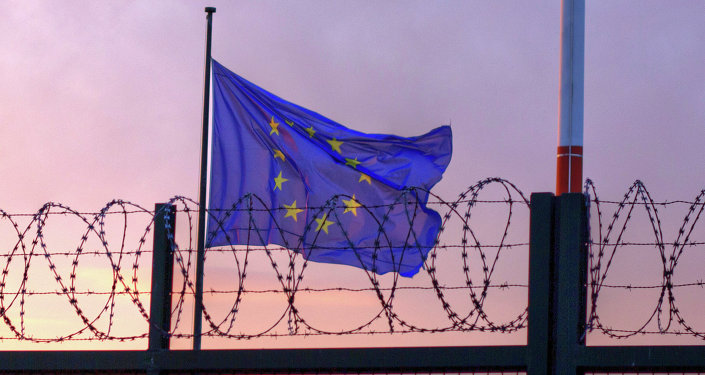
Photo credit: dialoguereview.com

Leaked document reveals EU plans to suspend Schengen for two years


Comments by Steve Peers

The following is Council document 14300/15, dated 1 December 2015. It's entitled 'Integrity of the Schengen area', and addressed to Coreper (the body consisting of Member States' representatives to the EU) and the Council - presumably the Member States' Justice and Home Affairs ministers meeting Thursday 3 and Friday 4 December. (For a more official version of the same document, see here).

The first three parts are relatively unexceptional (for some discussion, see here), but part 4 calls for the start of a process to officially allow the reimposition of internal border controls in the Schengen area for up to two years. Legally, this has to be triggered by 'serious deficiencies' in the border control of a particular Member State.

This has been reported as a plan to suspend Schengen as regards Greece. But the wording of the document suggests a much broader intention - applying to the whole of Schengen. This intention is clear from the reference to continuing in force the border controls that many Member States have imposed this autumn, which can only be imposed for a maximum period of six months. The purpose of using the 'serious deficiencies' clause, instead of the normal clause on suspending Schengen, is clearly to allow a much longer suspension period. It may be that not every internal border would be subject to checks, but the intention seems to be to issue a blank cheque to this effect.

More on the legal details (and whether this is even legal at all) in the parallel blog post.

Document follows:

INTRODUCTION

The migratory and refugee crisis has put the application of the Schengen acquis and of the asylum acquis under severe pressure during the last years, with an unprecedented influx of migrants over the last months. In this context, several Member States have temporarily reintroduced border control at their internal borders, with reference to a serious threat to public policy or internal security as provided for by the Schengen Borders Code. Temporary controls at internal borders have also been carried out by a Member State for reasons related to terrorism, following the attacks in Paris on 13 November 2015. In addition, some Member States have taken specific measures to reinforce the control at their external borders.

In its Conclusions of 9 November 2015 on measures to handle the refugee and migration crisis, the Council has identified a number of measures to implement fully the orientations already agreed by the European Council [1]. These measures address a wide range of issues, including in particular reception capacities, hotspots, relocation, return, readmission, resettlement,  lack of cooperation of migrants, contingency planning, the functioning of the Schengen area, external and internal borders, smuggling in human beings, visa policy, a common information strategy and the use of the Integrated Political Crisis Response (IPCR).

In the Conclusions adopted on 20 November 2015 on Counter-Terrorism after the Paris terrorist attacks by the Council and Member States meeting within the Council it was agreed to implement reinforced measures for the purpose of fighting terrorism, including strengthening controls at external borders[2].

Under point 9 of its Conclusions of 9 November 2015, the Council decided "to conduct at the December Justice and Home Affairs Council, on the basis of the 8th bi-annual reporting by the Commission, a thorough debate on the functioning of the Schengen area (1 May 2015 - 31 October 2015) and on the lessons learned from temporary reintroductions of controls at internal borders".

In Coreper on 26 November 2015 the Commission indicated, however, that the said 8th bi-annual report would not be ready for the meeting of the JHA Council in December 2015, but would be integrated in the future border package. The Presidency concluded that Ministers would be invited to hold a debate on the functioning of the Schengen area on the basis of a Presidency paper.

With a view to preparing this debate, the Presidency issued a questionnaire on lessons learned from temporary introductions of controls at internal borders [3]. The Presidency has prepared the present paper in the light of replies from Member States, having in mind also major issues that have been raised during recent months regarding the functioning of the Schengen area, with a focus on border controls.


ISSUES FOR DISCUSSION

The Presidency invites the Council to hold a debate on the functioning of the Schengen area and to address in particular the following issues related to internal and external border controls.

1. Consultations between Member States – Based on the information available to the Presidency, it appears that, in situations where some Member States have applied recently Article 25 of the Schengen Borders Code to reinstate temporarily controls at internal borders, there has not been sufficient prior consultation with other Member States.  The same has been noticed for technical reinforcement of borders between border crossing points, for changes in national policies leading to filter migrants at border crossing points and for organizing the transit of migrants from one border to next.  This has severely hindered the possibility for neighbouring countries to prepare themselves for changes in migratory routes and for all Schengen countries to handle migratory flows in a coherent manner.

In addition, procedures approved by Coreper in March 2015 for improved information sharing on temporary reintroduction of border controls at internal borders have not been fully respected in all cases.

The Presidency proposes that:
-           even in emergency situations falling under Article 25 of the Schengen Borders Code and requiring immediate action, a Member State deciding to temporarily reintroduce internal border controls should make all efforts to inform neighbouring Member States sufficiently in advance to allow neighbouring Member States to adjust to the new situation and, where possible, to cooperate to reduce the negative impact of the reintroduction of internal border controls;
-           Member States reconfirm their commitment to fully apply the procedures for improved information sharing on temporary reintroduction of border controls at internal borders agreed in Coreper in March 2015. [4]


2. Securing external borders – A number of irregular migrants entering the EU, or exiting an EU country to re-enter later in the EU, pass through the so-called "green land borders" (the parts of the land borders between border crossing points). According to Frontex, more than 1,2 million illegal border crossings have been detected at the EU external borders for January - October 2015, an increase of 431% compared with the corresponding period in 2014. In addition, a number of illegal crossings have not been registered. The exact figure is unknown.

Also in the context of the fight against terrorism, the Council concluded on 20 November 2015 that control at the external borders which are most exposed should be strengthened "in particular by deploying, when the situation so requires, rapid border intervention teams (RABITs) and police officers in order to ensure systematic screening and security checks". 

In view of the critical situation that the EU is currently confronted with, the Presidency proposes that:
-           considerably more efforts should be made to prevent illegal border crossings (entry and exit) through the external "green land borders" and to ensure that external borders are crossed only at the border crossing points referred to in Article 4, subject to the exceptions in Article 4(2), of the Schengen Borders Code;
-           RABITs are deployed as necessary for that purpose. This is at present  particularly relevant for external land borders in relation to the Western Balkan countries route;
-           A Frontex operation at the northern borders of Greece be deployed without delay to address severe difficulties encountered with neighbouring countries.

3. Increasing checks regarding illegal migration – Irregular migrants who have entered the Schengen area and have not been registered at their arrival should not be able to stay in that area undetected for long periods of time.

The Presidency proposes that:
-           the possibilities for checking persons inside the Schengen area, including by the use of relevant databases, are fully exploited to ensure that irregular migrants are detected and registered and their cases processed.

4. Addressing serious deficiencies in external border controls – Several Member States have recently reintroduced temporarily internal border control pursuant to Articles 23-25 of the Schengen Borders Code. Under these provisions, a Member State may not implement such controls for more than a total period of six months. A prolongation of this situation would require the adoption by the Council, upon a proposal from the Commission, of a recommendation in accordance with Article 26 of the Schengen Borders Code. Such recommendation may be adopted in exceptional circumstances to address a situation where a Schengen evaluation has identified persistent serious deficiencies relating to external border control and the measures referred to in Article 19a of the Schengen Borders Code are not effective. Where in such cases the overall functioning of the area without internal border control is put at risk, and insofar as the exceptional circumstances constitute a serious threat to public policy or internal security within the area without internal border control or within parts thereof, the period for the reintroduction of internal border control may be extended up to a total maximum of two years.

On this basis, the Presidency:
-           proposes that the Council invites the Commission to consider presenting a proposal as appropriate pursuant to Article 26 of the Schengen Borders Code for a Council recommendation that one or more Member States decide to reintroduce border control at all or at specific parts of their internal borders;
-           considers that, at the same time, all possible measures should be taken aimed at strengthening the normal functioning of the Schengen area, in particular by reinforcing the control of external borders.

Photo credit: Sputniknews.com
Barnard & Peers: chapter 26