Showing posts with label gender-based persecution. Show all posts

Monday, 7 October 2024

Setting Gender-Based Asylum Straight: The Court of Justice’s Landing Point


Salvo Nicolosi and Türkan Ertuna Lagrand, University of Utrecht


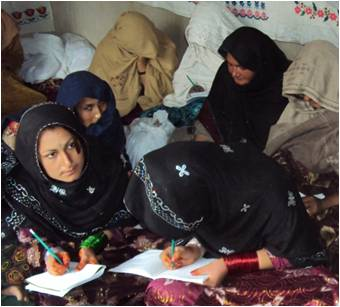
Photo credit: USAID, via Wikimedia Commons


Just a couple of weeks after the Taliban regime in Afghanistan announced a new decree prohibiting women from being heard when speaking outside their homes, on 4 October, the Court of Justice of the European Union (CJEU) delivered its judgment in the joined cases of AH and FN (C‑608/22 and C‑609/22). The ruling constitutes the landing point of a recent stream of case law through which the Court has developed a gender-sensitive approach to refugee protection. In this regard, it is worth recalling that in WS (C-621/21), the Court recognised that women in a country can be considered ‘a particular social group’, while in K, L (C-646/21), it emphasised the importance of gender equality in defining such group. In AH and FN, instead, the Court addressed the issue of whether women subjected to a series of restrictive, state-imposed or state-supported measures, solely based on their gender, could be granted refugee status without the need for an individual assessment of their personal circumstances.

This case law is of particular importance not only because, as recently highlighted by scholars, judgments of the Court of Justice addressing gender-related elements of asylum cases are scarce, but also for the impact that the progressive stance of the Court could have on national authorities and more broadly the development of international refugee law with reference to gender-based asylum claims. After a brief account of the facts of the case, this short blog post reviews the Court’s reasoning in an attempt to explain to what extent the Court has expanded substantially and procedurally the scope of international protection for women who are victims of systematic discrimination in their country of origin. 

The Factual and Procedural Background

AH and FN are two Afghan nationals who have applied for international protection in Austria. The Federal Office for Immigration and Asylum refused to recognise their refugee status, but granted the applicants subsidiary protection on the ground that they would face economic and social difficulties if they returned to Afghanistan. The applicants unsuccessfully appealed to the Federal Administrative Court of Austria, claiming first that they had adopted Western values and a Western-inspired lifestyle, and second, that after the Taliban regime came to power in 2021, women in Afghanistan have faced widespread persecution. Accordingly, the applicants appealed before the High Administrative Court arguing once more that the situation of women under the Taliban regime alone justified the recognition of refugee status. The High Administrative Court thus decided to refer two questions to the CJEU. The first question concerned the substantial aspect of whether the accumulation of the measures taken by the Taliban regime in respect of women is sufficiently serious to be classified as an ‘act of persecution’ within the meaning of Article 9(1)(b) of the Qualification Directive 2011/95. The second question, more procedurally, concerned whether an Afghan woman may be granted refugee status without an individual assessment of her situation being carried out, despite the fact that Article 4(3) of the Qualification Directive underlines that ‘the assessment of an application for international protection is to be carried out on an individual basis.’   

The Added Value of the Court’s Reasoning

The Court’s judgment in AH and FN followed the insightful Opinion of Advocate General Richard de la Tour, which we discussed in a previous post, as well as the previous rulings, which we also discussed here and here. Based on these judicial precedents, the Court’s reasoning provides an important interpretation of EU asylum law, particularly regarding the concept of systematic discrimination, as well as the procedural requirement of individual assessment.

Systematic Discrimination

As is known, the concept of ‘discrimination’ is of paramount importance to determine the existence of persecution to seek recognition as a refugee. However, not all discrimination amounts to persecution. In this regard, the Court follows a helpful explicative approach that will offer clear guidance to national authorities while implementing the relevant EU asylum rules. In its reasoning, the Court offers a nuanced interpretation of Article 9(1) of the Qualification Directive, distinguishing between discriminatory acts that, on their own, qualify as ‘acts of persecution’ under Article 9(1)(a), and those which, when considered cumulatively, meet the threshold of ‘acts of persecution’ under Article 9(1)(b).

To this aim, the Court indicates as examples of the first category of discriminatory acts measures such as forced marriages - which the Court compares to a form of slavery prohibited under Article 4 of the ECHR - or the lack of protection against gender-based violence and domestic violence - which the Court defines as a form of inhuman and degrading treatment prohibited by Article 3 of the ECHR (paragraph 43). In the second category of discriminatory acts the Court includes measures against women that restrict access to healthcare, political life and education and the exercise of professional or sporting activity, restrict freedom of movement or infringe the freedom to choose one’s clothing (paragraph 44).

In line with the Advocate General’s Opinion, the Court affirmed that while discriminatory measures against women in this second category may not individually qualify as persecution, their combined and systematic application does. Thus, when considered collectively, these measures reach the severity necessary to be classified as acts of persecution under Article 9(1)(b). From this perspective, the Court promotes the integration into EU asylum law of the notion of systematic discrimination. This notion is particularly supported by the Court’s view that those measures, as also stressed by the Advocate General, reflect the establishment of a social structure based on a regime of segregation and oppression in which women are excluded from civil society and deprived of the right to lead a dignified daily life as guaranteed by Article 1 of the Charter of Fundamental Rights of the EU (paragraph 46).

Individual Assessment 

Regarding the individual assessment, the Court’s reasoning is especially progressive because, following the suggestion of the Advocate General, it allows a gender-sensitive interpretation of Article 3 of the Qualification Directive, according to which Member States may adopt more favourable standards, including by easing the conditions for granting refugee status (paragraph 55). From this perspective, the Court essentially showed sensitiveness about an emerging national practice resulting in the recognition of women from Afghanistan as refugees without further examination of the individual situation.

As we previously noted,  Sweden announced in December 2022 that any asylum-seeking woman or girl from Afghanistan should be recognised as a refugee. Similarly, in Denmark, as of 30 January 2023 all women and girls from Afghanistan have been granted asylum solely because of their gender, while the Finnish Immigration Service announced in early 2023 that ‘all Afghan women and girls are granted refugee status.’ Domestic practices across Europe remain, however, inconsistent. For instance, the Federal Administrative Tribunal of Switzerland recently ruled that the collective persecution of women and girls cannot be presumed solely based on gender and that Afghan women do not face collective persecution giving rise to automatic recognition of refugee status. In this context, the Court’s judgment in AH and FN plays a crucial role in harmonising domestic practices within the EU, particularly regarding the recognition of refugee status for women who are victims of systematic persecution in their country of origin.

The novelty of the Court’s ruling thus lies in the departure from a settled case law establishing, based on Article 4 of the Qualification Directive, that ‘every decision on whether to grant refugee status or subsidiary protection status must be based on an individual assessment.’ Such a departure is, nonetheless, operated by the Court through an appropriate systemic interpretation of EU asylum rules in light of international human rights law. This is confirmed by the Court’s strong reliance on the UNHCR Statement issued on 25 May 2023 in the context of these preliminary ruling proceedings, which emphasised the need for protection due to the persecutory measures imposed by the de facto authorities in Afghanistan, specifically targeting women and girls based on their gender. Additionally, the Court’s references to the Council of Europe Convention on Preventing and Combating Violence against Women and Domestic Violence (Istanbul Convention) and the Convention on the Elimination of All Forms of Discrimination against Women (CEDAW) further underscore the importance of these international treaties, which the Court recognises as ‘relevant treaties’ within the framework of Article 78(1) TFEU.

Concluding remarks

In this last episode of a series of developments towards a more gender-sensitive EU asylum law, the Court’s reasoning is particularly noteworthy for its significant broadening of protection standards under EU law. Notably, the Court emphasised that country of origin information may suffice as a basis for asylum determinations when discriminatory practices against women reach a point where they are effectively excluded from society and deprived of their right to a dignified life. In such cases, the Court considered it unnecessary to establish a specific and immediate risk of persecution for individual applicants (paragraph 57), underscoring a shift towards a more flexible and context-sensitive approach. This approach promises further progress in a wider spectrum of asylum claims where the applicant’s statements are not supported by evidence about their personal situation, which is often observed in applications based on sexual orientation and gender identity.

In sum, the Court’s case law has confirmed that women in a country can constitute a ‘particular social group’ that systematic persecution can arise from the cumulative impact of state-imposed measures infringing upon women’s fundamental rights and that, in such cases, no individual assessment of the applicant’s circumstances is required. By expanding refugee protection for women facing gender-based persecution, the Court not only offers significant guidance to national authorities but also contributes to the progressive evolution of international refugee law. Its approach underscores the need to integrate fundamental human rights principles, such as equality between women and men, as already emphasised in K, L (C-646/21), to ensure that women subjected to systematic oppression receive the protection they need.

It now remains for national authorities to apply the Court’s approach and ensure consistent protection across the EU for women fleeing the Taliban regime.

Thursday, 13 June 2024

A Further Step to Gender-Sensitive EU Asylum Law: The Case of ‘Westernised Women’


Türkan Ertuna Lagrand, Assistant Professor, and Salvo Nicolosi, Senior Assistant Professor, University of Utrecht

Photo credit: Mystslav Chernov, via Wikimedia Commons


Gender-based asylum claims have been gaining momentum in EU law. On 11 June 2024, the Court of Justice of the European Union (CJEU) published its most recent judgment in the case of K, L v Staatssecretaris van Justitie en Veiligheid (C-646/21) concerning the interpretation of ‘membership of a particular social group’ under Article 10 (1) (d) of the Qualification Directive with reference to ‘westernised women’ who, because of the identity and lifestyle they have acquired in the host country, namely the Netherlands, fear persecution if they were returned to the home country, namely Iraq. The judgment follows the ruling in WS (C‑621/21) in which the Court last 16 January 2024 recognised that women in a country as a whole may be regarded as belonging to ‘a particular social group’, leading, as analysed here, to the recognition of refugee status.

Following this thread, this post aims to shed some more light on the Court of Justice’s contribution to a more gender-sensitive reading of international refugee law. To this aim, drawing from the judgment in K, L, attention will be paid to the axiological dimension of the concept of ‘equality between women and men’ and its use by the Court for the purposes of constructing the ‘particular social group’ under EU asylum law. A short synopsis of the case will be first provided.

The Factual Background

The judgment is the landing point of a case originating from a reference made on 25 October 2021 by the Tribunal of the Hague. The main proceedings concerned two minor sisters (10 and 12 years old) who left Iraq in 2015 together with their parents who unsuccessfully applied for international protection in the Netherlands. In 2019, the applicants lodged subsequent claims for international protection, which were rejected as manifestly unfounded. On 28 December 2020, they appealed to the referring court in The Hague. At the time of the hearing before the referring court, the applicants had been continuously resident in the Netherlands for over five years and were both still minors. They argued that, due to their long stay in the Netherlands, they have adopted Western norms, values and actual conduct and, because of this, they fear persecution if they were returned to Iraq.

The referring court, therefore, asked the CJEU whether third country nationals who have lived in a Member State for a significant part of their life during which they developed their identity by adopting Western norms, values and actual conduct, may be considered members of a ‘particular social group’ within the meaning of Article 10 (1) (d) of the Qualification Directive, because (applying the definition of ‘particular social group’ in the Directive) they have ‘a common background that cannot be changed’ or characteristics that are ‘so fundamental to identity that a person should not be forced to renounce’ them. (The UN Refugee Convention, as applied in EU law by the EU Directive, defines a ‘refugee’ as someone outside their country of nationality or (if stateless) habitual residence, who is unable or unwilling to avail themself of the protection of that country owing to a well-founded fear of persecution on various grounds, including ‘particular social group’; but unlike the EU Directive, the Convention does not elaborate further on the meaning of the term).

In his Opinion, Advocate General Collins, first of all, rejected the application of the terms “Eastern” and “Western” in the context of moral codes and values as projecting a false dichotomy that constitutes part of a divisive dialogue. He underlined that ‘“the East” and “the West” are vast regions with a multitude of religious traditions, moral codes and values’ making terms such as “a Western lifestyle” or “Westernised women” ‘largely meaningless’. More importantly, by setting the centrality of ‘gender equality’ within EU law, the Advocate General provided a valuable background against which the Court could frame its ratio decidendi.


The axiological dimension of gender equality in the Court’s Judgment

In its reasoning, the CJEU reiterates the approach followed in the previous case of WS in which the Court declared the Istanbul Convention and the UN Convention on the Elimination of All Forms of Discrimination Against Women (CEDAW) as being relevant treaties under Article 78 (1) TFEU according to which EU Asylum law, including the Qualification Directive, is to be interpreted. In pursuing such an approach, the Court provides a broad and rights-based interpretation of gender equality, explaining that, in light of Articles 1, 3 and 4 (2) of the Istanbul Convention as well as Articles 3, 5, 7, 10 and 16 of CEDAW, equality between women and men includes the right of every woman to be protected from all forms of gender-based violence, the right not to be forced to marry, to choose whether to adhere to a religion, to hold one’s own political views and to make one’s own life choices, especially in terms of education, career or activities in the public sphere.

While relying on these international law sources, the Court contributes to upholding the axiological dimension of gender equality, as ensuing from Articles 2 and 3 (3) TEU enshrining gender equality as one of the EU’s core values and fundamental objectives. In this connection, concurring with Advocate General Collins, it is worth mentioning that EU primary law contains a number of provisions that establish an obligation to mainstream equality and non-discrimination. This is the case of Article 8 or Article 10 TFEU, which, as clarified by the Court itself in VT (C-304/21, para. 34) set out obligations on the Union, not on the Member States. It is equally noteworthy that the Court clarified that the provisions of the Qualification Directive must be interpreted in a manner that is consistent with the EU Charter’s rights, including Article 21 (1) of the Charter, which prohibits any discrimination based on, inter alia, sex.

This axiological dimension of gender equality is especially significant because it constitutes an attempt to frame equality as a ‘central concern.’ In other words, by insisting on the value of gender equality, the Court was not only able to expand the interpretation of refugee law concepts, as will be explained below, but sent a clear message about gender mainstreaming, which has been very challenging to implement, as noted by Timmer.


Equality and the construction of the ‘particular social group’

Even if partly calibrating the emphasis permeating the Advocate General’s Opinion, the Court used this axiological framework to acknowledge that women, who have spent most of their lives in the Netherlands, will have been influenced by the value of gender equality. This value constitutes an indelible part of their identity and reflects core values, principles, and fundamental rights deeply rooted in the EU legal tradition.

Accordingly, the Court finds that the fact that a female third country national identifies herself with the fundamental value of equality between women and men can be regarded as ‘a characteristic or belief which is so fundamental to the identity or moral integrity of the concerned person that she should not be asked to renounce it’. According to the Court, the crystallisation of such a fundamental characteristic stems from the exposure to the fundamental value of equality between women and men during a phase of life in which a young woman forms her identity. What is striking is that such a fundamental characteristic is established, as in casu, outside of the country of origin and whilst the applicant was living in the host State, waiting for the asylum application to be processed. Essentially, the Court decides that the applicants are to be seen de facto as sur place refugees, because of their actions outside the country of origin, as clarified by the United Nations High Commissioner on Refugees (UNHCR).

The Court also takes a chance to clarify the relationship with other possible grounds for persecution, such as religion or political opinion. The fact these grounds could also connect with the personal affinity with the value of equality between women and men did not prevent the Court from affirming that these women could be regarded as belonging to a particular social group. As is known, this ground requires two cumulative conditions, namely the identification of a common essential characteristic and that those sharing such a characteristic are seen as “different” from the surrounding society (or part of it). According to the Court, the latter condition is satisfied by the specific circumstances in the country of origin. In this regard, by echoing the argument made in WS, the Court reiterates that ‘it is for the Member State concerned to determine which surrounding society is relevant when assessing whether such a social group exists.’ Nonetheless, even if much more engagement by the Court with issues related to cultural differences could be necessary, the Court seems to indicate that the value of equality between women and men constitutes the element through which the Member States have to assess the perception of the group in the surrounding society.


Waiting for the next episode…

This judgment represents another episode of a series of developments towards a more gender-sensitive EU asylum law. In WS the Court has already established that women in a country as a whole may be regarded as belonging to ‘a particular social group’,  thereby ending once and for all the discussion whether the size of the group may prevent such qualification.

In K, L, by recognising that refugee status may be granted to women who identify themselves in the value of equality between women and men, the Court makes a twofold contribution. First, the Court indirectly contributes to gender mainstreaming in EU law by upholding gender equality as a core value of the EU. Following up on the previous ruling in WS, the CJEU uses the Istanbul Convention and CEDAW as ‘relevant treaties’ in the meaning of Article 78 (1) TFEU, to interpret EU Asylum Law. This is an important step in preventing legal fragmentation in the protection of women against discrimination and violence and in creating a coherent framework across legal fields at the international and European levels.

Second, the Court’s ruling in K, L opens the way to the next episode in promoting a more gender-sensitive EU asylum law. A case in point concerns the pending joined cases in AH (C608/22) and FN (C609/22). The Court will decide whether the requirement for individual assessment may be relinquished for women fleeing the Taliban regime in Afghanistan, as proposed by Advocate General de la Tour in his Opinion, analysed here. Such a case is directly related to gender equality and the systematic discrimination against women. Therefore, the centrality and axiological dimension given to gender equality by the Court in  K, L will play a crucial role in future decisions. It is legitimate to expect that when the circumstances in the country of origin reach a point where gender equality is utterly demolished, as in the case of Afghanistan under Taliban rule, even the need for an individual assessment for the recognition of refugee status could be put aside.


Tuesday, 21 November 2023

Rethinking Gender-Based Asylum: A Look at the Advocate General’s Opinion on Women Fleeing the Taliban


Türkan Ertuna Lagrand (Assistant Professor, Utrecht University School of Law) and Salvo Nicolosi (Senior Assistant Professor, Utrecht University School of Law)

Photo credit: USAIDAfghanistan, via Wikimedia Commons

Can a woman be recognized as a refugee, merely because of her gender? This has been one of the most debated questions in international refugee law, which has recently reached the Court of Justice with two joined cases in AH and FN on which last 9 November 2023, Advocate General Richard de la Tour delivered his Opinion. These joined cases relate to a request for a preliminary ruling from the Austrian High Administrative Court. The referring judge was in doubt whether, in light of Article 9 (1) (a) and (b) of the Qualification Directive, it is sufficient that a woman who is affected, merely on the basis of her gender, by the accumulation of government-imposed or supported restrictive measures can be recognised as a refugee without the need to assess the woman’s individual situation.

While awaiting the ruling from the Court of Justice, it is worth underscoring the significance of the Advocate General’s Opinion in light of three complementary dimensions, each representing crucial elements within the Advocate General’s assessment. These dimensions refer to the nature of persecution arising from discriminatory measures; the issue of whether women can be recognized as constituting a distinct social group; the need to conduct an individual assessment as the foundational basis for granting refugee status.

By addressing these three dimensions, this short post aims to flag the potential for the Court of Justice to expand the scope of protection in Europe and contribute to the progressive development of international refugee law.

Systematic discrimination against women

The reference from the Austrian Court is rooted in the rise of the Taliban regime in Afghanistan in 2021, marked by the implementation of a set of discriminatory measures specifically aimed at women in the country. As the Austrian High Administrative Court as well as experts of the United Nations have underscored, the Taliban has put in place measures severely restricting civil and political rights. Such measures consist of preventing women from travelling without a male companion, obligating them to cover their bodies; denying participation in political office and political decision-making processes; denying women access to legal means to obtain protection from gender-based and domestic violence; and lack of protection against forced marriages. Additionally, these measures have significantly curtailed social, economic and cultural rights, such as women’s right to engage in gainful employment, and women’s access to health care, education and sports. In this regard, it is worth stressing that Afghanistan is the only country in the world where girls and young women are forbidden from attending secondary school and higher education institutions.

Admittedly, the accumulation of these measures has led to a situation that the Advocate General considered of 'severe, systematic and institutionalised discrimination' against women.

The concept of ‘discrimination’ is  of paramount importance to determine the existence of persecution for the purposes of seeking recognition as a refugee. However, not all discrimination amounts to persecution. On this point,  Advocate General’s Opinion is especially illustrative as it, in light of the UNHCR Handbook, clarifies that ‘a measure of discrimination will only amount to persecution if it leads to consequences of a substantially prejudicial nature for the person concerned, such as… access to available educational facilities’.

The Advocate General concluded that while some measures individually amount to persecution under Article 9 (1) (a) of the Qualifications Directive (which states that to be considered ‘persecution’, an act must be ‘be sufficiently serious by its nature or repetition as to constitute a severe violation of basic human rights, in particular the rights’ which States cannot derogate from under Article 15(2) ECHR), others cumulatively meet the threshold under Article 9 (1) (b), due to systematic violations of human rights which are ‘sufficiently severe as to affect an individual' in a similar manner as mentioned in Article 9 (1) (a).


Women as a particular social group

Interestingly, these joined cases gave the Advocate General de la Tour an opportunity to reiterate and finetune a line of argumentation that he followed earlier this year in the case of WS. On that occasion, the Advocate General argued that women can constitute a particular social group ‘solely on account of their condition as women.’ They in fact share an innate and immutable characteristic, because of which they are seen differently by society, according to their country of origin, by reason of the social, legal or religious norms of that country or the customs of the community to which they belong (para 72). In the same opinion, Advocate General de la Tour convincingly rejected the tendency,  often followed by senior courts, according to which to use women qua women cannot constitute a relevant social group owing to the size of the group. On the contrary, de la Tour concluded that ‘the concept of “distinct identity” of a group, in that it is perceived differently by the surrounding society, cannot be interpreted as entailing a quantitative assessment.’ From this perspective, the Advocate General echoed the position of the UNHCR  reminding that other grounds are not bound by the question of size and upheld the scholarly view that have unearthed the fallacy of such an approach.

Challenging the individual assessment as the foundational basis for refugee status

Borrowing Hathaway and Foster’s words ‘it is now widely understood that where a woman has a well-founded fear of being persecuted for reasons of her gender,… refugee status ought to be recognized.’ Despite the equivocal terms of the Qualification Directive (Article 10), recognizing only that ‘[g]ender related aspects, including gender identity, shall be given due consideration for the purposes of determining membership of a particular social group or identifying a characteristic of such a group,’ there is nonetheless widespread recognition in Europe that women constitute a social group for Convention purposes. As the situation of women and girls in Afghanistan has deteriorated rapidly, Member State authorities went even further to recognize women as refugees solely on the basis of their gender without assessing on a case-by-case basis whether there is an individual a risk of persecution.

While Austria was the first Member State to officially explore the possibility of accepting Afghan women as refugees without an individual assessment, a number of other States have recognized women from Afghanistan as refugees without further examination as to the individual situation. Sweden announced in December 2022 that any Afghan woman asking for refugee status will be granted this status. After firstly declaring to  continue with an individual examination of female asylum seekers from Afghanistan, Denmark later decided to hold a ‘relaxed assessment of evidence’ and as of 30 January 2023 all women and girls from Afghanistan have been granted asylum solely because of their gender. Similarly, the Finnish Immigration Service has announced in early 2023 that ‘all Afghan women and girls are granted refugee status.’

Such a domestic practice offered the Advocate General the opportunity to explain that this practice falls within the margin of appreciation that is left to the Member States by Article 3 of the Qualification Directive to introduce or retain more favourable standards for determining who qualifies as a refugee, in so far as those standards are compatible with the Directive. In this regard, the Advocate General also referred to the ruling in LW e, in relation to which the Court- decided that such standards may consist, inter alia, in relaxing the conditions for granting refugee status and should not prejudice to the general scheme and objectives of that Directive (paras 39-40). Indeed, concurring with the Advocate General, asylum applications submitted by women and girls from Afghanistan have specific characteristics that would allow the competent authorities to deviate from the individual assessment method, in principle required by Article 4 (3) of the Qualification Directive. The discriminatory measures to which Afghan women and girls are exposed are part of a regime of segregation and oppression imposed solely on account of the women’s presence on the territory, regardless of their identity or personal circumstances. Such a circumstance makes unnecessary to establish that the applicant is targeted because of distinctive characteristics other than her gender.

Interestingly, despite these readily apparent, objective circumstances in the country of origin, the Advocate General did not approach the cases on the basis of prima facie recognition of refugee status, which as confirmed by the UNCHR, constitutes an exception to the principle of individual assessment. As argued by Zieck, prima facie recognition is in essence ‘a collective form of status determination that presumes that each individual member of a particular group qualifies for refugee status based on objective information on the circumstances causing flight.’ While particularly suited to situation of large scale arrivals of refugees, prima facie recognition may also be appropriate in relation to groups of similarly situated individuals whose arrival is not on a large scale. However, as the legal foundations and contours of this practice remains still opaque, the Advocate General might have chosen to confine his argumentation within the specific features of EU asylum law, notably Article 4 of the Qualification Directive. This was a reasonable but also particularly relevant choice as it clarifies to what extent EU asylum law allows a departure from an individual assessment, thereby offering a valuable standpoint to the Court to proceed in the same direction.

Concluding remarks

To conclude, the Joined Cases in AH and FN bear significant relevance, particularly in the near term for Member States that have already adjusted their asylum policies concerning Afghan women, and, prospectively, for those Member States poised to emulate such modifications, following an expected favourable ruling by the Court. If the Court were to adopt the analytical framework proposed by Advocate General de la Tour, this would, therefore, contribute to aligning the EU's stance with that of the UNHCR, the Human Rights Council, thereby substantially contributing to the advancement of international refugee law.


Friday, 4 March 2016

Violence against women: what will be the impact of the EU signing the Istanbul Convention?

Steve Peers

The scourge of violence against women is a serious human rights abuse and the worst form of sex discrimination. Several years ago, the Council of Europe (a body different from the EU) drew up the Istanbul Convention on this issue. It came into force in 2014, and currently applies to 20 countries, including 12 EU Member States (for ratification details, see here). Today, the EU Commission proposed that the EU sign and then conclude the Convention. What practical impact will that have on violence against women?

If the EU does sign and conclude (ie ratify) the Treaty, it will be the second human rights treaty binding the Union. The first is the UN Convention on the Rights of Persons with Disabilities. While most attention has been focussed on the EU’s attempt to accede to the European Convention on Human Rights (ECHR), which was essentially thwarted by the EU’s Court of Justice (CJEU) in 2014 (as discussed here), the EU’s capacity to sign up to other human rights treaties is also relevant. While the EU cannot sign up to older international human rights treaties, like the UN Covenants, because they are only open to States, newer treaties (like the Istanbul Convention) expressly provide for the EU to sign up to them – if it wishes.

Impact of EU ratification

Like many international treaties, the Istanbul Convention is a ‘mixed agreement’, meaning that (if the EU ratifies it), the treaty will bind both the Union and its Member States. EU ratification should have six main effects (I’ve updated this list from the previous post on the reasons why the EU should ratify).

First of all, the EU’s ratification of the Convention could provide encouragement to its Member States, as well as non-Member States of the EU, to ratify the Convention. It would increase the prominence of the Convention worldwide, perhaps inspiring changes to national law and regional treaty-making outside Europe. It should be noted that the treaty is open for signature to non-EU countries: the 19 Council of Europe countries not in the EU (8 of them have ratified it already), as well as the 4 non-European countries (plus the Holy See) which took part in drawing it up.

Do you live in a country which hasn’t ratified the Convention? You can sign up to a campaign for the UK to ratify the Convention here. Please let me know of any other campaigns in the UK or any other country, and I’ll list them with a link in an Annex to this post.

Secondly, ratification could, as regards this Convention at least, address the argument that the EU has ‘double standards’ as regards human rights, insisting that Member States, would-be EU Member States and associated countries should uphold human rights standards that the EU does not apply itself. If the EU is perfectly able to ratify the Istanbul Convention, but chooses not to, what moral authority does it have to urge any countries to do so?

Thirdly, ratification of the Convention should enhance its role in EU law, because it could more easily be used as a parameter for the interpretation and validity of EU legislation. While there’s no general EU criminal law on violence against women (on the case for such a law, see here), there are other relevant EU rules. In particular, the Commission proposal refers to EU free movement law, substantive EU criminal law relevant to violence against women, EU immigration and asylum law, and the EU law on crime victims’ rights, applicable from last autumn (on the content of the crime victims’ law, see discussion here). It should also mean that the Convention will already bind those EU Member States which had not yet ratified it, as regards those provisions within EU competence. The proposal is based on EU competence over victims’ rights, and would apply (if agreed) to every Member State covered by the crime victims’ law – meaning every EU country except Denmark.

In practical terms, that should mean that (for instance), EU law must be interpreted to mean victims receive a residence permit based on their personal situation, if the authorities consider it necessary (Article 59(3) of the Convention). That would apply to citizens of other Member States and their (EU or non-EU) family members, in all 27 Member States covered by the proposal. It would also apply to non-EU citizens in general, in the Member States which apply EU law on non-EU migration (ie the 25 Member States other than the UK, Ireland and Denmark, which have mostly opted out of such laws).  

For asylum cases, Article 60 of the Convention makes clear that gender-based violence is a ground of persecution. This is more explicit than the EU’s qualification Directive, which says that ‘gender-related aspects shall be given due consideration’, with further reference in its preamble to specific practices like genital mutilation. (Note that the UK and Ireland are covered by the first-phase qualification Directive, which has less precise wording on this issue; so the EU’s ratification of the Convention might have more influence in these countries).

As regards victims of domestic violence crimes (of any nationality and residence status), Chapter IV of the Convention, concerning support and protection, could in particular have an impact on the interpretation of the crime victims’ Directive in each Member State.

Fourth, since the CJEU will have jurisdiction to interpret those provisions of the Convention which fall within the scope of EU competence, this could promote a uniform interpretation of those provisions within the EU.  

Next, the relevant provisions of the Convention will be more enforceable if the EU ratifies it. While the CJEU ruled in the Z case that the UN Disabilities Convention did not have direct effect, and might rule the same as regards the Istanbul Convention, at least that Convention would have ‘indirect effect’ (ie the obligation to interpret EU law consistently with it), and the Commission could bring infringement actions against Member States which had not applied the Convention correctly, as regards issues within the scope of EU competence. Ensuring the enforceability of the Convention is all the more important since it does not provide for an individual complaint system.

Finally, ratification would subject the EU to outside monitoring as regards this issue, and avoid the awkward scenario of its Member States being monitored as regards issues within EU competence – meaning that the Convention’s monitoring body would in effect to some extent be monitoring whether EU Member States were complying with EU law.

Conclusion

For all the above reasons, the EU’s planned ratification can only be welcomed. It may not, by itself, prevent any act of violence from being committed, but it may accelerate a broader process of ratification (and corresponding national law reform) on this issue. And it may have the important practical impact of helping victims receive support or protection, particularly in the context of the law on crime victims, immigration or asylum.


Barnard & Peers: chapter 25, chapter 26
JHA4: chapter II:4, chapter I:5

Wednesday, 23 April 2014

Should the EU ratify the Istanbul Convention on violence against women?


Steve Peers

For many years, discussion as regards the EU and human rights has focussed on the growing role of the EU Charter of Fundamental Rights and the EU’s planned accession to the European Convention on Human Rights. This is understandable, given the importance of these developments. However, the EU’s relationship with other international human rights instruments is also worthy of further examination.

The EU is not able to sign up to older UN human rights treaties – such as the two Covenants and the Conventions relating to sex discrimination, race discrimination and migrant workers – because ratification of these instruments is only open to States. Similarly, only States can ratify ILO Conventions, although the EU sometimes coordinates its Member States’ position as regards ILO measures (see the discussion of the proposal to coordinate positions regarding new ILO forced labour measures).

However, more recent international human rights treaties do provide for possible accession by the EU, and indeed the Union has signed up to the UN Convention on the Rights of Disabled Persons (see the recent Z judgment of the CJEU). With the imminent entry into force of the Council of Europe’s Istanbul Convention on violence against women (which will come into force on 1 August 2014, after the deposit of the tenth ratification on April 22nd), the question now arises whether the EU should sign up to another human rights treaty. This post sets out the reasons why the EU should ratify the Convention at the earliest opportunity.


EU competence to ratify the Istanbul Convention


The EU is certainty competent to ratify the Istanbul Convention, if it wishes to do so. First of all, the Convention expressly provides (in Article 75(1)) for ratification by the EU, without setting any special condition in this respect.

Secondly, as a matter of internal EU law, the EU can sign up to any treaties which are (inter alia) ‘likely to affect common rules or alter their scope’ (Article 216 TFEU). Although EU law has not regulated the key substantive criminal law issues dealt with in the Istanbul Convention, the Convention does not limit itself to establishing rules concerning criminal liability, but also addresses a number of other issues. In particular, there are EU law measures concerning the Convention’s rules on: crime victims’ rights, cross-border application of protection orders (both civil and criminal), other forms of cross-border cooperation, and immigration and asylum issues (see the detailed list in the Annex).

It must be pointed out that if the EU ratifies the Istanbul Convention, it would not be replacing its Member States, but ratifying the Convention alongside them. In other words, the Convention would be another ‘mixed agreement’ which both the EU and its Member States have ratified, like the UN Disabilities Convention, (in future) the ECHR and many other treaties. The EU would not be legally obliged to adopt any more legislation affecting the issue of violence against women than it already has done. While I have argued before that there are good reasons (and legal powers) for the EU to adopt legislation establishing substantive criminal law rules in this field, this is a separate question from whether the EU ought to ratify the Convention.

Reasons why the EU should ratify the Istanbul Convention

First of all, the EU’s ratification of the Convention would provide encouragement to its Member States, as well as non-Member States of the EU, to ratify the Convention. It would increase the prominence of the Convention worldwide, perhaps inspiring changes to national law and regional treaty-making outside Europe.

Secondly, ratification would, as regards this Convention at least, address the argument that the EU has ‘double standards’ as regards human rights, insisting that would-be EU Member States and associated countries should uphold human rights standards that the EU does not apply itself. While the double standards argument can be answered as regards human rights treaties which the EU cannot ratify, it cannot so easily be rebutted as regards treaties which it can. If the EU is perfectly able to ratify the Istanbul Convention, but chooses not to, what moral authority does it have to ask non-Member States to do so?

Ratification of the Convention would enhance its role in EU law, because it could more easily be used as a parameter for the interpretation and validity of EU legislation (such as the legislation listed in the Annex, plus any future relevant measures). It would also mean that the Convention would already bind those EU Member States which had not yet ratified it, as regards those provisions within EU competence.

Furthermore, since the CJEU would have jurisdiction to interpret those provisions of the Convention which fall within the scope of EU competence, this would promote a uniform interpretation of those provisions within the EU. 

Next, the relevant provisions of the Convention would be more enforceable if they were enshrined in to EU law. While the CJEU ruled in the Z case that the UN Disabilities Convention did not have direct effect, and might rule the same as regards the Istanbul Convention, at least that Convention would have ‘indirect effect’ (ie the obligation to interpret EU law consistently with it), and the Commission could bring infringement actions against Member States which had not applied the Convention correctly, as regards issues within the scope of EU competence. Ensuring the enforceability of the Convention is all the more important since it does not provide for an individual complaint system.

Finally, ratification would subject the EU to outside monitoring as regards this issue, and avoid the awkward scenario of its Member States being monitored as regards issues within EU competence – meaning that the Convention’s monitoring body would in effect to some extent be monitoring whether EU Member States were complying with EU law.

[Update: the Commission proposed that the EU should sign and conclude the Convention in March 2016. See discussion here.]

Annex

EU competence regarding the Istanbul Convention

Articles 18-22, 25-28, 30(1), 50(1), 56, 57: crime victims Directive

Article 47: Framework Decision on recognition of criminal sentences

Article 59(1): family reunion Directive, citizenship directive

Article 59(2): Returns Directive, citizenship Directive

Article 60(1) and (2): Qualification directive

Article 60(3): Reception conditions directive; asylum procedures directive

Article 61: Qualification directive, Returns Directive

Article 62(1)(b) and (3): Crime victims Directive

Article 62(1)(d): protection orders legislation 

Article 62(1)(a) and (c) and (2): legislation on mutual recognition, et al in criminal and civil matters

Article 65: Data protection Directive; Framework Decision on data protection


Barnard & Peers: chapter 20, chapter 24, chapter 25, chapter 26