Showing posts with label Brexit. Show all posts

Tuesday, 20 May 2025

Friends with benefits: the legal elements of the reset of the EU/UK relationship


Professor Steve Peers, Royal Holloway University of London

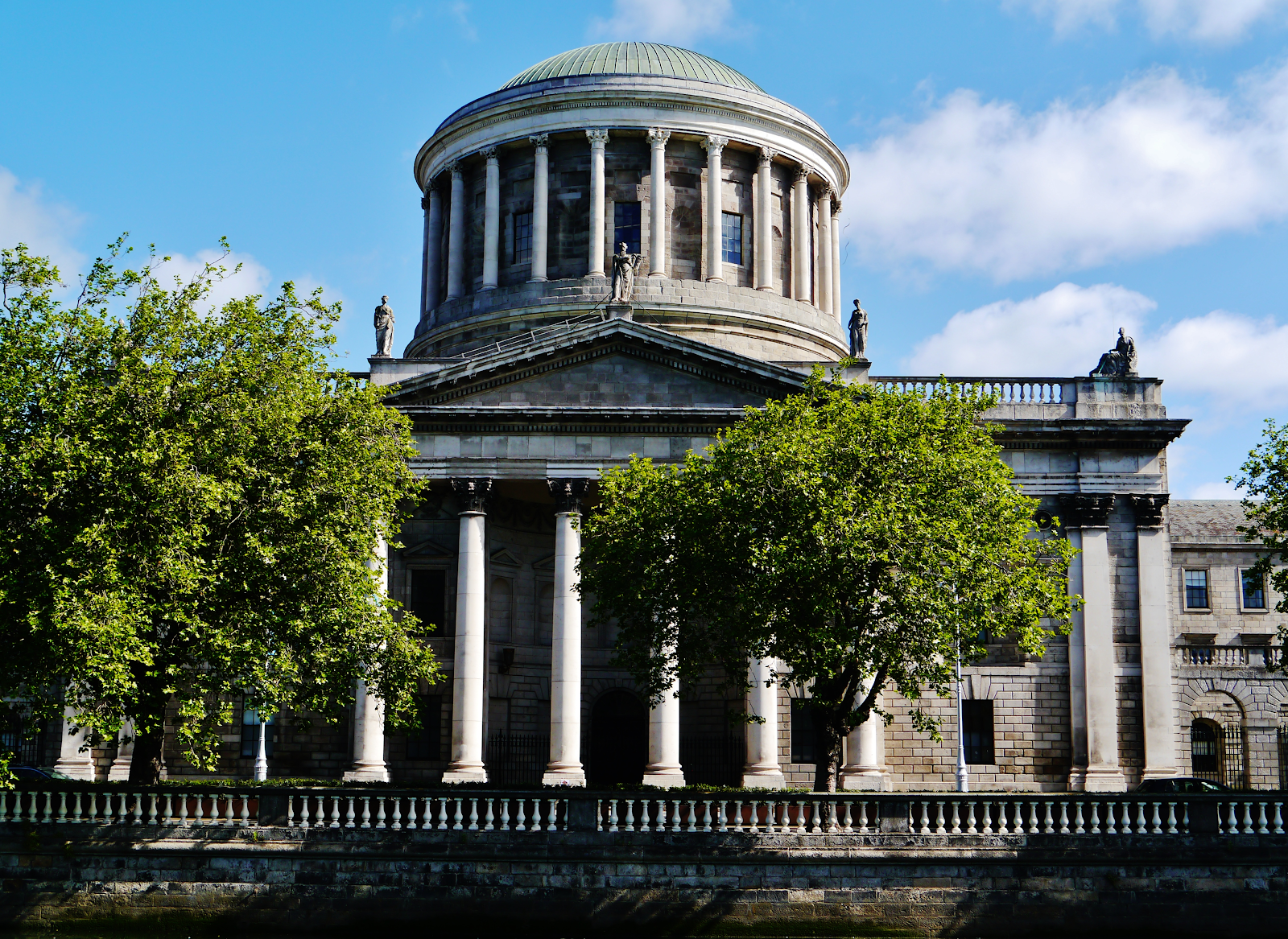
Photo credit: Julian Herzog, via Wikimedia Commons

Introduction

Advocates of Quebec’s independence from Canada have long argued that their plan would not entail complete separation from Canada, but rather a fusion of independence and continuing links that they described as ‘sovereignty-association’. Conversely, opponents of Quebec separation derided this suggestion as ‘divorce with bed privileges’. Why should one party to a marriage get to walk away – but still expect sex?

On the other hand…what if sex was never the problem? What if both sides to the relationship could agree to end the marriage as a whole, yet consent to occasional mutually enjoyable booty calls? Especially if the relationship with that cute American that one of them was always fantasising about while the couple was married was not really working out as planned.

The debate about the post-Brexit UK/EU relationship has raised similar issues, albeit with less horny analogies: ‘cherry-picking’ and ‘having one’s cake and eating it’. During the initial Brexit talks, the EU indicated that it would trade off market access against the degrees of integration which the UK would accept with the EU, comparing this to models of its relationships with other non-EU countries: Barnier’s even less sexy ‘escalator’.

This explains the nature of the UK/EU relationship, as eventually devised. First of all, though, the two sides agreed a withdrawal agreement which wound down the UK’s membership of the EU, retaining some continuing alignment with EU law, especially for the bitter ex-couple’s troubled child: Northern Ireland. That entailed continued jurisdiction for the CJEU and ongoing application of the direct effect and supremacy principles of EU law, rather than the more usual UK approach to international law, keeping it separate from the national legal order.

After the divorce, though, the parties agreed a very different type of treaty: the Trade and Cooperation Agreement (TCA), which co-exists alongside the withdrawal agreement. It explicitly eschewed any link with EU law, and therefore any CJEU jurisdiction (except as regards UK participation in EU research programmes), ruling out the ‘direct effect’ principle allowing individuals to invoke the treaty in courts to obtain rights – except as regards the social security provisions.

It proclaimed itself as the single framework for the UK/EU future relationship, with all further treaties between the two regarded as supplementary. But in fact it was itself several different treaties under a trenchcoat, containing within it a number of different rules on dispute settlement as well as separate termination and suspension rules for certain parts of the treaty.

Five years later, and a different UK government, believing there are economic benefits in closer ties – but political jeopardy in very close ties – with the EU, returned to the bottom of the Barnier escalator, hoping that closer ties could be negotiated without stepping on it. Ultimately this has proved possible, with the EU and UK willing to agree a complex compromise between both a number of substantive areas of interest and as regards the integration/market access trade-off in some particular fields.

The following blog post is an overview of the legal aspects of the reset deal – both substantively and in terms of the legal nature of what the two sides have agreed in principle.

Legal Framework

The reset arrangements are set out over three documents: a joint statement on broad foreign policy issues; a security and defence partnership; and a common understanding on development of the UK/EU relationship.  None of this is legally binding as such; but some of it is legally binding-adjacent, in the sense that it is linked to legally binding texts or indicates an intention to negotiate them. While operational cooperation can be important in practice, this blog post focusses on the issues with a link to legally binding measures.

Alongside these documents, the EU and UK have also agreed (as briefly mentioned in para 3 of the common understanding) to extend the current arrangements for fisheries and energy cooperation in the TCA. More precisely, according to the Commission’s Qs and As on the reset, the EU and UK have reached a ‘political agreement’ to extend the rules on fisheries in the TCA for 12 years, and to keep extending the rules on energy in the TCA annually. (Both sets of rules had been set to expire on 30 June 2026)

They have agreed to formalise this agreement to extend those rules ‘within one month’. [Update 20 June 2025:*] In practice, this deadline was met by means of decisions of the Partnership Council set up by the TCA and other measures adopted by 19 June 2025 (the reset agreement was dated 19 May 2025). 

Security and defence partnership

As the common understanding notes (para 6), agreeing the partnership potentially enables the UK and EU to agree on defence procurement within the context of the ‘SAFE’ Regulation on defence spending, under discussion at EU level (see the proposal here). The partnership text also refers to the UK’s participation in the EU’s military mobility project (approved under the previous UK government) and possible participation in other EU crisis management operations, along with association with training and the European Defence Academy. But it mainly provides for more frequent discussions between the EU and the UK in various security and defence fields.  

Common understanding

First of all, the much-discussed prospect of a ‘youth experience’ scheme is mentioned in para 13:

13. Therefore, the European Commission and the United Kingdom should work towards a balanced youth experience scheme on terms to be mutually agreed. The scheme should facilitate the participation of young people from the European Union and the United Kingdom in various activities, such as work, studies, au-pairing, volunteering, or simply travelling, for a limited period of time. It should provide a dedicated visa path and ensure that the overall number of participants is acceptable to both sides.

On the EU side, the Commission already proposed a mandate from the Member States (ie the Council) to negotiate a treaty to this end in April 2024; this proposal is public. The Council apparently agreed in principle on a mandate in December 2024, but does not seem to have formally adopted it; this might differ from the Commission proposal somewhat but we cannot be certain, as none of the Council texts are fully public at time of writing.

Looking at what the EU and UK have mutually agreed, the mobility will be limited in time, but the extent of this is not determined yet (the Commission had proposed perhaps three or four years). It will be on the basis of a visa (as the Commission had proposed). It appears that some form of limit on numbers will exist (the Commission had rejected this).

The agreement does not refer to a number of key issues, such as: the age range concerned (the Commission proposed 18-30); whether this will be a formal treaty, as the Commission proposed (which would need to be signed and ratified; on the EU side the Member States, via the Council, would have to agree to this, plus the consent of the European Parliament for conclusion); equal treatment in tuition fees (although not student loans), as the Commission proposed; family reunion (mentioned by the Commission); or dropping the UK’s healthcare surcharge (as the Commission proposed).

It should be noted that while some claim that ‘the UK asked for this first’, the Commission’s proposal makes clear that the UK had asked some Member States bilaterally for a youth exchange treaty; the EU preferred to respond by requesting a negotiation with the entire EU. There’s an obvious difference between separate arrangements with some Member States and a treaty open to nationals of all Member States.

If agreed, this would be the EU’s first youth exchange treaty (as distinct from whatever arrangements individual Member States have negotiated), and there’s no framework in EU law for such arrangements. Conversely, the UK has several youth exchange arrangements with non-EU countries.

[update, July 16 2025: the EU adopted its negotiation mandate for this treaty in June 2025]

Para 14 of the common understanding refers to Erasmus:

14. Furthermore, the United Kingdom and the European Commission should work towards the association of the United Kingdom to the European Union Erasmus+ programme. The specific terms of this association, including mutually agreed financial terms, should be determined as part of that process in order to ensure a fair balance as regards the contributions of and benefits to the United Kingdom. The association should be in accordance with the European Union Multiannual Financial Framework and the Trade and Cooperation Agreement.

(nb other non-EU countries are linked to Erasmus already). The reference to the TCA links the UK’s participation in Erasmus to the general rules for UK participation in EU programmes set out in the TCA already; Erasmus is not listed but Article 710 of the TCA gives the joint specialist committee set up by the agreement the power to amend the list of which programmes the UK participates in. So legally the two sides will presumably adopt something similar to the texts associating the UK with the EU research programmes; and like that negotiation, the negotiations will probably focus on the amount of the UK’s contribution. (Let’s not kid ourselves that either the EU or the UK is too high-minded to haggle over money).

Incidentally, as noted already, participation in EU programmes is the one part of the TCA which currently provides for jurisdiction of the CJEU to settle disputes (see Article 728, and my discussion of dispute settlement under the TCA); this will presumably apply to Erasmus too.

Next, there is a paragraph on touring musicians et al:

15. The European Commission and the United Kingdom recognise the value of travel and cultural and artistic exchanges, including the activities of touring artists. They will continue their efforts to support travel and cultural exchange.

Effectively this says nothing – the UK’s previous government having passed up an offer, when negotiating the TCA, to agree declarations similar to those attached to the EU’s visa waiver treaties with some other non-EU countries, which clarify that artists are not required to obtain visas during short visits to EU Member States, as they are not considered to be carrying out paid work.

On the issue of the use of e-gates, the common understanding says:

16. The United Kingdom and the European Commission will continue their exchanges on smooth border management for the benefit of their citizens, including the potential use of eGates where appropriate. They note that European Union citizens can use eGates in the United Kingdom and that there will be no legal barriers to eGate use for British Nationals traveling to and from European Union Member States after the introduction of the European Union Entry/Exit System.

Again, this is not really a commitment to anything. In practice, under the current EU border rules, which make no mention of e-gates, some Member States allow UK citizens to use e-gates before getting their passports stamped. Under the EU entry-exit system, supposedly to be applied later this year (although prior deadlines have been missed), e-gates are referred to explicitly; they will be used at least on some occasions to collect entry and exit data, with passport stamping becoming the exception. (EU legislators have just agreed on amendments to the law to roll out the system more gradually)

Moving on to economic issues, the common understanding refers to a possible agreement on the UK’s link to the EU electricity market:

18. The United Kingdom and the European Commission share the view that close cooperation on electricity is in the interest of both the European Union and the United Kingdom.

19. The European Commission and the United Kingdom should explore in detail the necessary parameters for the United Kingdom's possible participation in the European Union's internal electricity market, including participation in the European Union's trading platforms in all timeframes. Meanwhile, the current electricity trading arrangements will continue to apply.

20. Regarding its territorial scope, any agreement should be appropriately articulated with the provisions of the Windsor Framework. Any agreement should be based on a balance of rights and obligations and ensure a level playing field. In this context, it should define the relationship between the United Kingdom and European Union rules on the electricity market, as well as on State aid, the promotion of renewables and the protection of the environment, in so far as they relate to the electricity sector.

21. Accordingly, any agreement should include dynamic alignment with European Union rules where relevant, giving due regard to the United Kingdom's constitutional and parliamentary procedures and respect the role of the Court of Justice of the European Union within an arbitration-based dispute resolution mechanism, and an appropriate United Kingdom contribution to decision-shaping.

This appears to contemplate a future treaty, with a broad indication of its content – although of course the details would need to be renegotiated. Although the TCA already has rules on State aid and the environment, this text appears to consider that sui generis rules will be needed, including ‘dynamic alignment’ (ie the UK aligning with current and future EU law in this field) entailing a role for the CJEU, in which arbitrators (in the event of a dispute on EU law) will ask it questions about the interpretations of EU law.

This model is not used in the TCA – as noted above, the CJEU only has jurisdiction in the current TCA in the event of disputes about UK participation in EU programmes – but it is used in the withdrawal agreement (see discussion here), and in a number of EU treaties with non-EU countries. In practice, I don’t believe that any arbitration panel under an international agreement has ever asked the CJEU questions about EU law; and in some ways this would be less far-reaching than the CJEU’s role under the withdrawal agreement, given that some parts of that agreement (the Northern Ireland protocol; the financial settlement; citizens rights) provide for some additional jurisdiction for the Court.

A role for the UK in decision-making is likely to take the form of some kind of consultation similar to treaties with Norway et al (for instance, the EEA).

The detailed outline of a possible food standards agreement raises similar issues on dispute settlement, dynamic alignment, and a UK rule in decision-making, although it is slightly differently worded on these points:

23. The European Commission and the United Kingdom share the view that a functioning sanitary and phytosanitary area would address many of the issues raised in respect of the movement of agri-food products.

24. The United Kingdom and the European Commission should work towards establishing a Common Sanitary and Phytosanitary Area by way of a European Union-United Kingdom Sanitary and Phytosanitary Agreement (hereafter ‘SPS Agreement').

25. Regarding its territorial scope, the SPS Agreement should cover the European Union and the United Kingdom in respect of Great Britain (2). This would result in the vast majority of movements of animals, animal products, plants, and plant products between Great Britain and the European Union being undertaken without the certificates or controls that are currently required by the rules within the scope of the SPS Agreement for such movements. These same benefits would be extended to the movements between Great Britain and Northern Ireland, through the interplay of the Windsor Framework and the SPS Agreement, so long as the SPS Agreement is fully implemented. The continued application of the Windsor Framework would provide for Northern Ireland maintaining its privileged unique dual access to both the European Union Single Market and the United Kingdom internal market.

26. In terms of its material scope, the SPS Agreement should cover sanitary, phytosanitary, food safety and general consumer protection rules applicable to the production, distribution and consumption of agrifood products, the regulation of live animals and pesticides, the rules on organics as well as marketing standards applicable to certain sectors or products.

27. Within the scope defined above, the SPS Agreement should ensure the application of the same rules at all times by providing for timely dynamic alignment of the rules applicable to and in the United Kingdom acting in respect of Great Britain with all the relevant European Union rules, giving due regard to the United Kingdom's constitutional and parliamentary procedures; and where necessary to ensure the European Union's level of food, sanitary, and phytosanitary safety, through the immediate application of the relevant European Union rules.

28. The United Kingdom should be able to take targeted action to protect its biosecurity and public health, in the same way as Member States under European Union law. In addition, the SPS Agreement should include a short list of limited exceptions to dynamic alignment. An exception could only be agreed if: (i) it does not lead to lower standards as compared to European Union rules, (ii) it does not negatively affect European Union animals and goods
being placed on the market in the United Kingdom in respect of Great Britain, and (iii) it respects the principle that only animals and goods compliant with European Union rules move into the European Union.

29. The SPS Agreement should be subject to a dispute resolution mechanism with an independent arbitration panel that ensures the Court of Justice of the European Union is the ultimate authority for all questions of European Union law.

30. To ensure that it can put forward its view, the United Kingdom should be involved at an early stage and contribute appropriately for a country that is not a member of the European Union to the decision-shaping process of European Union legal acts in the fields covered by the obligation to dynamically align. The European Commission should consult the Government of the United Kingdom at an early stage of policy-making. These rights would not extend to participation in the work of the Council or its preparatory bodies.

31. The United Kingdom should have appropriate access to relevant European Union agencies, systems and databases in the areas covered by the SPS Agreement.

32. The SPS Agreement should provide for an appropriate financial contribution from the United Kingdom to support the relevant costs associated with the European Union's work in this policy area.

33. The SPS Agreement should be subject to a joint governance mechanism.

There is also a difference in territorial scope, in that a food standards agreement would not apply to Northern Ireland, the Windsor Framework/Northern Ireland Protocol addressing this issue already there. A UK financial contribution is expressly mentioned.

Again, the issues of costs, dynamic alignment, dispute settlement and decision-making are addressed as part of the section on emissions trading and the carbon border adjustment mechanism:

34. The European Commission and the United Kingdom share the view that a functioning link between carbon markets would address many of the issues raised in respect of trade and a level playing field and would give effect to Article 392(6) of the Trade and Cooperation Agreement. This link should not constrain the European Union and the United Kingdom from pursuing higher environmental ambition, consistent with their international obligations.

35. Therefore, the United Kingdom and the European Commission should work towards establishing a link between carbon markets by way of a European Union-United Kingdom agreement linking the United Kingdom Emission Trading Scheme (UK ETS) and the European Union Emission Trading System (EU ETS).

36. Regarding its territorial scope, this agreement should be appropriately articulated with the provisions of the Windsor Framework.

37. The agreement to link the UK ETS and EU ETS should create the conditions for goods originating in our jurisdictions to benefit from mutual exemptions from the respective European Union and United Kingdom Carbon Border Adjustment Mechanisms subject to compliance with the relevant provisions of European Union and United Kingdom legislation.

38. In terms of material scope, the agreement should cover all aspects of the functioning of an ETS link.

39. The sectors falling in the scope of the ETS linking agreement should be clearly defined to avoid risks of carbon leakage and competitive distortions. Among others, this scope should include the sectors of electricity generation, industrial heat generation (excluding the individual heating of houses), industry, domestic and international maritime transport and domestic and international aviation. The agreement should provide for a procedure to further expand the list of sectors to be covered by the linking agreement.

40. Within that scope, the agreement should ensure the dynamic alignment of the United Kingdom with the relevant European Union rules underpinning the functioning of the ETS link, giving due regard to the United Kingdom's constitutional and parliamentary procedures.

41. The United Kingdom cap and the United Kingdom reduction pathway will be guided by the United Kingdom's Climate Change Act obligations and Nationally Determined Contributions. They should be at least as ambitious as the European Union cap and the European Union reduction pathway.

42. The agreement should provide for an appropriate financial contribution from the United Kingdom to support the relevant costs associated with the European Union's work in this policy area.

43. The agreement should be subject to a dispute resolution mechanism with an independent arbitration panel that ensures the Court of Justice of the European Union is the ultimate authority for all questions of European Union law.

44. To ensure that it can put forward its view, the United Kingdom should be involved at an early stage and contribute appropriately for a country that is not a member of the European Union to the decision-shaping process of European Union legal acts in the fields covered by the obligation to dynamically align. The European Commission should consult the United Kingdom at an early stage of policy-making. These rights would not extend to participation in the work of the Council or its preparatory bodies.

45. The agreement should be subject to a joint governance mechanism.

[update, July 16 2025: the Commission has proposed a negotiation mandate for treaties on SPS and energy policy linkage]

There is rather less ambition as regards temporary entry and stay of businesspeople:

46. The United Kingdom and the European Commission will set up dedicated dialogues on the implementation of the Trade and Cooperation Agreement, as regards entry and temporary stay of natural persons for business purposes, including the sponsorship scheme, and the recognition of professional qualifications.

As for competition law cooperation, the common understanding refers to a recently agreed treaty, which was already foreseen in the TCA:

47. The European Commission and the United Kingdom recognise the mutual benefit of cooperation in competition enforcement. In this context and in implementing the level playing field provisions of the Trade and Cooperation Agreement, the European Commission and the United Kingdom welcome the successful conclusion of negotiations for a competition cooperation agreement between the European Union and the United Kingdom.

As it happens, the Commission has since proposed the signature and conclusion of this treaty.

Moving on to justice and home affairs, the common understanding encourages more use of the provisions in the TCA. On irregular migration, a hot topic on both sides, there are five paragraphs which effectively amount to very little:

57. The European Commission and the United Kingdom underline their commitment to deepen co-operation on challenges posed by irregular migration – including action to tackle people smuggling and to deepen information sharing to control and manage migration at our respective external borders – while remaining committed to ensuring international protection for those who need it.

Upstream Migration

58. The United Kingdom and the European Commission will deepen cooperation on the external dimension of migration across key geographies, as part of a whole of route approach. They recognise the benefit of increased mutual sharing of information, country expertise and analysis enabling better coordination. They will also work more closely in multilateral fora, processes and dialogues, including the European Union's Global Alliance to Counter Migrant Smuggling, and through exploring United Kingdom participation in the Khartoum and Rabat Processes.

Working together on practical solutions and returns

59. The European Commission and the United Kingdom should work together on practical and innovative approaches to reduce irregular migration. This includes work to share best practices and operational information on key issues like returns to third countries, and to explore possible deterrence mechanisms and other innovative solutions, in line with national, European Union and international law. This would be underpinned by closer cooperation across key networks such as the European Migration Network and agencies, including the European Union Agency for Asylum and Frontex, and respective United Kingdom authorities. They should work together to prevent irregular Channel crossings.

Bolstering United Kingdom and European Union border security including through law enforcement cooperation

60. The United Kingdom and the European Commission should bolster their operational and strategic cooperation to tackle the challenges posed by irregular migration along key routes and at external borders, including through their agencies, law enforcement and judicial cooperation, and information sharing capabilities. This includes through enhanced cooperation with Europol and its European Migrant Smuggling Centre.

Addressing challenges and abuses of visa policy

61. In addition to these enhanced efforts, the European Commission and the United Kingdom will explore closer cooperation to address challenges related to visa policy such as exchanging analysis on visa abuse by third country nationals.

It’s striking that the common understanding does not even mention the previous agreement for the UK to cooperate with Frontex, the EU border agency.

Finally, the common understanding limits its territorial scope in footnotes:

(1) : Unless otherwise provided, the territorial scope of the cooperation envisaged by this Common Understanding will be in line with the scope of Article 774 of the Trade and Cooperation Agreement.

(2) : In line with Article 520(5) of the Trade and Cooperation Agreement, the territorial scope of the SPS Agreement could be extended to cover the territories referred to in Article 774(2) of the Trade and Cooperation Agreement.

Article 774 TCA provides that in principle the TCA only applies to the UK (although note the specific references to Northern Ireland in the common understanding), while Article 774(2) provides for parts of it to apply to the Channel Islands and the Isle of Man. There is no mention of Gibraltar, which is excluded from the TCA by virtue of its Article 774(3); there is equally no mention of the separate treaty on Gibraltar that the EU and UK are negotiating. The Rock that dare not speak its name.

The overall legal relationship

As noted already, the TCA announced itself as the permanent template for the UK/EU relationship. Even though it had to co-exist with the more integrationist withdrawal agreement, the withdrawal agreement was the past and the TCA was the future, boldly going to a ‘dualist’ international law model separated from substantive EU law, its principles and its courts.

But now, the reset agreement makes little reference back to the TCA, besides the extension of the fisheries and energy provisions. Will treaties on youth mobility, and on food standards and emission standards/carbon border adjustment and the electricity market, take the form of ‘supplementary agreements’ to the TCA at all? Even if they do, they will not resemble the TCA legal framework that much – given that with the treaties on food standards, emission standards/carbon border adjustment and the electricity market, the current UK government has pragmatically accepted the integration/market access trade-off (as regards dynamic alignment and the CJEU) that the previous government rejected as ideologically unacceptable (under the TCA, that is).

And the question may also be asked whether these treaties, and the youth mobility treaty, will be subject to the principle of direct effect, ie invocability by individuals in courts, given that the social security rules in the TCA are already subject to an exception on this point.

Next, to what extent will all these treaties be connected? The extensions of parts of the TCA will remain connected to that treaty (with all its internal disconnections) of course, but will the other treaties be connected to the TCA – and/or each other? Inevitably this issue arises because some UK opposition parties have pledged to terminate the treaties concerned if they are elected to government; so the conditions for their termination will be relevant. This might also be relevant to negotiating these treaties – ie the UK (or EU) can’t have its pudding until it’s eaten its dinner.

Finally, it’s notable how many Rubicons have been crossed with this reset deal. As noted already, the UK now accepts the market access/integration trade-off. But the EU now accepts agreeing this trade-off with the UK in limited fields: the UK can have one foot several steps up the Barnier escalator, but the other one firmly on the ground. The EU has also accepted a Swiss-like complex legal relationship with the UK, having opposed it in principle for years. (In fact, the EU already conceded this point when agreeing the TCA; but that treaty hid its legal complexity better than the reset deal does). The UK has accepted an agreement with the EU as regards movement of (some) EU citizens; although it might claim this arrangement will simply resemble its youth mobility treaties with many other countries, the extent of that similarity will be dependent upon the details of the final deal. Above all, the EU, having accepted freer movement of some goods and demanded the freer movement of some people, can no longer lecture the UK on cherry-picking or cake-eating – what with all the crumbs and cherry juice smeared across the EU’s own mouth.

Wednesday, 15 May 2024

We’re all trying to find the Guy who did this … The Disapplication of the Illegal Migration Act in Northern Ireland


Professor Colin Murray, Newcastle Law School

Photo credit: Wknight94, via Wikimedia Commons


Introduction

The courtroom was anything but packed on a grey Monday morning in Belfast. There were no camera crews outside. And yet, for a small band of cognoscenti who gathered to hear Humphreys J’s decision, something significant was about to happen. The UK Government’s keystone migration legislation, the Illegal Migration Act 2023 (providing for the “outsourcing” of asylum claims to third countries), was about to be confronted with the fact that it had made extensive rights commitments specific to Northern Ireland within the UK-EU Withdrawal Agreement. Either these immigration measures were going to be found not to apply to Northern Ireland, or some violence was going to be inflicted upon the rights commitments made to Northern Ireland.

The momentousness of this moment should not have come as a surprise; the workings of Article 2 of the Windsor Framework were settled as far back as 2018, whereas other special post-Brexit provisions for Northern Ireland have been repeatedly redrawn. In 2021, its operation was described by the UK Government as “not controversial”, at a time when they were eager to see significant changes to other parts of the then Protocol. The significance of Article 2 has been highlighted many, many, many times on this blog. So how did the judgment in Re NIHRC’s Application sneak up on the UK Government?

Article 2

Article 2 of the Northern Ireland Protocol (as was) was a vital provision for the UK’s Brexit policy. It provides:

1. The United Kingdom shall ensure that no diminution of rights, safeguards or equality of opportunity, as set out in that part of the 1998 Agreement entitled Rights, Safeguards and Equality of Opportunity results from its withdrawal from the Union, including in the area of protection against discrimination, as enshrined in the provisions of Union law listed in Annex 1 to this Protocol, and shall implement this paragraph through dedicated mechanisms.

2. The United Kingdom shall continue to facilitate the related work of the institutions and bodies set up pursuant to the 1998 Agreement, including the Northern Ireland Human Rights Commission, the Equality Commission for Northern Ireland and the Joint Committee of representatives of the Human Rights Commissions of Northern Ireland and Ireland, in upholding human rights and equality standards.

Whereas trade elements related to Northern Ireland could be connected to the 1998 Agreement (better known as the Belfast or Good Friday Agreement) through the operation of cross-border bodies, the connection with regard to rights and equality law was direct. The 1998 Agreement set out a new basis for a post-conflict governance order in Northern Ireland based on the rights of everyone in the community, and in the years since the Agreement, extensive elements of those rights protections were grounded in EU law. The UK Government would have faced an uphill struggle to maintain that Brexit did not impact its commitment to the “letter and spirit” of the 1998 Agreement without providing specific rights and equality assurances in the Northern Ireland context.

In the SPUC case of 2023 the Northern Ireland Court of Appeal refined this commitment into a six stage test (para 54):

A right (or equality of opportunity protection) included in the relevant part of the Belfast/Good Friday 1998 Agreement is engaged.

That right was given effect (in whole or in part) in Northern Ireland, on or before 31 December 2020.

That Northern Ireland law was underpinned by EU law.

That underpinning has been removed, in whole or in part, following withdrawal from the EU.

This has resulted in a diminution in enjoyment of this right; and

This diminution would not have occurred had the UK remained in the EU.

Every element of this test must be fulfilled if a case based around non-diminution is to succeed.

The non-diminution commitment is not simply an international law obligation upon the UK; under section 7A of the European Union (Withdrawal) Act 2018, Article 2 appears to operate within the UK’s domestic jurisdictions with the same effect as EU law had prior to Brexit. In other words, reflecting the commitment in Article 4 of the Withdrawal Agreement to retaining the legal effect of EU law as regards the withdrawal agreement, this provision enables the courts to disapply statutes which conflict with its terms. And yet, in a bizarre hostage to fortune, when it was aware that legal challenges to the Illegal Migration Act under Article 2 were already underway, the UK Government issued assurances as part of the Safeguarding the Union Command Paper in January 2024 that ‘the Windsor Framework applies only in respect of the trade in goods’ (para 46). The new judgment undermines this claim (which, even at first glance, was always inaccurate).

The Illegal Migration Act

Section 2 of the Illegal Migration Act 2023 imposes a duty on the Home Secretary to make arrangements for the removal of the vast majority of asylum seekers who entered the UK after the Act was passed, including the sending of such individuals to Rwanda. Section 5 makes this duty applicable implicitly notwithstanding a range of international law, from the terms of the Refugee Convention to those of the European Convention on Human Rights (ECHR), which might ordinarily be asserted by the individual in question.

The 2023 Act is thus a difficult statute to effectively challenge on the basis of rights concerns. It excludes the use of the interpretive duty under section 3 of the Human Rights Act 1998 (ie the obligation to interpret domestic law compatibly with the ECHR ‘[s]o far as it is possible to do so’), leaving the domestic courts only able to declare the statute incompatible with the incorporated ECHR rights under section 4 of the Act (an outcome which does not impact the validity of the statute.) Although Humphreys J did find swathes of the Act incompatible with the ECHR rights as part of the Re NIHRC judgment, and therefore issued a declaration of incompatibility, this does not lead to any effective remedy.

The 2023 Act does not, however, negate the effect of claims made under Article 2 of the Windsor Framework insofar as it applies to Northern Ireland – a separate question from the compatibility of that Act with the Human Rights Act. And so the main arguments relating to the Act were thus channelled through the non-diminution commitment and into the way EU law still works in the Northern Ireland context, which held out the possibility of disapplication of the Illegal Migration Act.

The High Court Judgment


Disapplication of a statute is a significant outcome – as Humphreys J recognised in his decision “parliamentary sovereignty remains a fundamental tenet of our constitutional law” (para 37). But he also acknowledged that for as long as the UK was part of the EU, national law could not have legal effect insofar as it undermined EU law (the position reached in the Factortame case in the early 1990s). The issue was whether this approach continued to apply in the same way with regard to Article 2 of the Windsor Framework. For the UK Government Article 2 was simply an “an obligation of result”; it was not that the relevant elements of EU law continued to be “made applicable” in Northern Ireland law, but rather that Article 2 “set a benchmark by which rights can be measured and no diminution ensured” (para 49). The problem with this argument is that it flies in the face of the wording of Article 4 the Withdrawal Agreement and Parliament’s commitments under section 7A of the European Union (Withdrawal) Act; “its provisions … shall produce in the UK the same legal effects as those which they produce in EU Member States” (para 54). The Windsor Framework is an integral part of the Withdrawal Agreement and therefore “Factortame is still in play since the rights and obligations under the WA must prevail over any inconsistent domestic law” (para 57). There was nothing of legal significance to the UK Government’s supposed distinction between the provisions of the Agreement and EU law made applicable under it.  

The Government’s next ploy was to claim that the human rights obligations contained within the 1998 Agreement could not be applied to asylum seekers. In the Government’s view, that Agreement was all about “warring factions” in Northern Ireland, something that had no relevance to immigration policy. Remember that under the first limb of the SPUC test there must be a connection between the right being claimed and the 1998 Agreement (the whole point of the UK Government’s commitment was, after all, to insulate Brexit from claims that the 1998 Agreement was being undermined). Humprhreys J acknowledged that, in some cases, it will be a difficult task for the courts to establish the relevant connection:

Article 2 of the WF is an unusual provision in that it seeks to incorporate into law a chapter of the B-GFA which was never intended to create binding legal rights and obligations. It was the product of lengthy negotiations between political parties, the UK and Irish Governments, and contains statements of aspiration as well as legal right. A document renowned for its ‘constructive ambiguity’ does not lend itself easily to the tenets of statutory construction. (para 67)

This, however, is not one of those cases. The 1998 Agreement makes explicit commitments over the “civil rights … of everyone in the community”. A natural reading of these terms encompasses asylum seekers, and for Humphreys J, although the 1998 Agreement “did not expressly reference immigration or asylum, there is no basis to exclude such individuals from the wide compass of “everyone in the community” (para 69). The brilliance of this judgment is to directly face down the high-handed assumptions which underpinned the Government’s case. After decades of conflict, the 1998 Agreement made a commitment to ground the governance of Northern Ireland in the human rights of all; it did not treat human rights as being particularised to a sectarian context.

After these (always tenuous) arguments failed, the Government’s legal position collapsed. Most of the  public case around the Illegal Migration Act was that it was a great triumph of Brexit; the UK Government was able to put the Rwanda scheme in place because it could now depart from the requirements of the Qualification Directive, the Procedures Directive, the Dublin III Regulation and the Trafficking Directive. And so, time and again in the judgment, the Government accepted that the legislation involved a diminution of the protections mandated by these aspects of EU law; “the respondents accept that, in a category of case, the IMA, once in force, will result in a diminution of right” (para 116, see also para 133). For all the bluster that has accompanied the judgment, the UK Government knew (it did not need the court to rule) that it was acting to hollow out these EU law requirements. Indeed, it was able to do so, with regard to Great Britain, because of Brexit. It had not, however, given sufficient consideration to the implications of the specific commitments it had made in the Northern Ireland context.

It was thus straightforward for the Court to conclude that “there is a diminution of rights brought about by the enactment of the IMA” (para 117) and the remedy of disapplication of extensive provisions of the statute within the law of Northern Ireland flowed as a direct consequence of this. And who is responsible for this? Once again, Humphreys J is clear: “This outcome does not occur at the whim of the courts but represents the will of Parliament as articulated in the Withdrawal Act” (para 175).

Conclusion

The outcome in the High Court is therefore far from legally controversial. The UK Government’s efforts towards asserting that Article 2 was an obligation as to result, entirely within its keeping, was a desperate ploy, which would have denuded the entire provision of legal significance without any basis for doing so. Once this proposition was rejected, the Government’s case was lost, and it has found itself in a fluster ever since. Tom Pursglove went as far as to mislead Parliament in responding to an Urgent Question about the decision with an assertion that ‘our approach is compatible with international law’. It isn’t, and the UK Government accepted that it wasn’t when it enacted the legislation (it acknowledged, on introducing the legislation that, it could not issue a statement that the legislation was compatible with the ECHR). And yet it sticks doggedly to its claims that the court’s decision involved an unwarranted “expansion” of the 1998 Agreement.

The question remains, however, why this decision came as such a shock? Why were the media not primed and ready for a Northern-Ireland-shaped hole to be knocked in UK immigration policy? As so often in debates over Brexit, this surprise is largely the product of neglect of commitments made towards Northern Ireland. Article 2 was agreed as an essential part of closing off claims that Brexit undermined the rights elements of the 1998 Agreement, so many of which had come to be underpinned by EU law. But once this part of the deal was done, it quickly faded into the background.

The recurring crisis over trade policy consumed such attention that the UK Government lost sight of the fact that it had agreed to a higher baseline of rights commitments for Northern Ireland by comparison to the rest of the UK. When the law related to Northern Ireland is complex and unique it is all too easy for wishful thinking to become dominant in the corridors of Westminster and Whitehall. The Article 2 commitment doesn’t fit with the narrative of “take back control”, but the UK’s Conservative Government remains all too eager to present commitments it willingly made as hardships that have been inflicted upon it.       


Tuesday, 30 April 2024

High Trust Arrangements in a Low Trust Context: The Rwanda Policy’s impact on the Common Travel Area


Professor Colin Murray, University of Newcastle, and Professor Steve Peers, Royal Holloway University of London

Photo credit: Zairon, via Wikimedia Commons

Introduction

The latest spat between the UK and Ireland over the knock-on consequences of the UK’s Rwanda policy exposes the tangled web of EU law and Common Travel Area (CTA) arrangements which now cover the interactions between both countries’ immigration policies. This post considers these interactions and proposals of the Irish Government to legislate in light of the Irish High Court decision in A v Minister for Justice.

The Realities of the CTA post-Brexit

The CTA has been a remarkably durable feature of relations between the UK and Ireland for over a century. In the immediate aftermath of a bloody war of independence, both countries recognised the mutual benefits of facilitating people moving across their new borders. And even at the height of the Brexit referendum campaign, pro-Brexit campaigners lined up to downplay any concerns around the land border because the CTA would continue after Brexit. Even if it was not, of itself, capable of ensuring an open border on the island of Ireland, the CTA was generally accepted as providing an important ongoing element of UK-Ireland relations. This always underplayed how difficult it was going to be to make these arrangements work post Brexit.

The CTA arrangement has been operable for so long on the basis that it works on two levels; unrestricted movement can take place between the parts of the CTA because each part enforces broadly comparable external rules of entry. For decades, the two states aligned their immigration policy and enforced a shared list of excluded individuals. After both joined the EEC at the same time, these arrangements were augmented by a range of EU law, but Ireland and the UK continued to jointly operate opt outs to let them maintain distinct elements of immigration policy and to provide more legal entitlements to each other’s citizens than they did to other EU citizens (see here).

Post Brexit, the immediate concern was over the UK’s commitment to the CTA. Once Brexit happened, the common external arrangement would no longer be operative, because EU citizens could continue to move freely into Ireland (whereas they would face new restrictions on moving directly to the UK). They could, however, then use the CTA to move into the UK, thereby circumventing the UK’s new immigration policy.  UK ministers, however, remained confident that they could deal with this issue by immigration enforcement away from the border (by requiring banks, landlords, etc to require individuals provide proof of status before accessing services). They therefore signed up to a new CTA deal with Ireland in 2019.

The latest spat in post-Brexit relations between the UK and Ireland, however, involves the necessary corollary of some of the concerns being raised before Brexit took effect. Once the UK set about tightening its restrictions on immigration, and particularly abandoning safeguards around refugees that it had implemented under EU law, would there be a displacement effect as people turned to Ireland instead to process asylum claims. This led to the claims by Ireland’s Justice Minister, Helen McEntee, that not only was there a sharp rise in asylum applications in Ireland in recent months, that 80% of new applicants were now crossing the land border from Northern Ireland. There has not been any evidence published to support this figure (a fact emphasised by some coalition government ministers from other parties, perhaps more alive to the consequences of ramping up these tensions for the CTA).

Groups like the Irish Refugee Council have pointed out that simply because the number of in-country applications has risen, this does not mean that all of those individuals have crossed the land border (people in the country on a different immigration status can make decisions to apply for asylum on the basis of a change in the circumstances of their home country, for example). But the impression that the UK Government’s Rwanda policy has had a direct knock on impact on Ireland, which needs to be addressed, has become central to ministerial thinking.

The position in Ireland

EU asylum law framework

The problem for Ireland is how to enforce returns to the UK, especially in light of the legislation closing off of routes to claim asylum in the UK. The starting point is that Ireland is bound by aspects of EU asylum law, having exercised the possibility to opt in to parts of it. In particular, Ireland opted into the first phase asylum procedures Directive, adopted in 2005, but not the second phase asylum procedures Directive, adopted in 2013 (the ‘2013 Directive’), both of which contain slightly different rules (optional for Member States) on ‘safe third countries’ – ie countries that asylum seekers could arguably make their applications in instead, other than their countries of origin or the country where they are applying now.

The ‘safe third country’ rules in the Directives refer to non-EU countries. If the argument is that the asylum seeker should have applied in an EU Member State or a Schengen associate (Norway, Iceland, Switzerland, Liechtenstein), a different set of rules (the ‘Dublin rules’) apply instead, which determine in detail which Member State is considered responsible for the application, how transfers of asylum-seekers to give effect to the responsibility rules work, and what rights asylum-seekers have to challenge the potential transfers. Ireland has opted in to the current version of those rules – the 2013 version of the Dublin Regulation, known as ‘Dublin III’ – which states that rather than apply those rules to transfer an asylum seeker to another Member State which is responsible, a Member State can choose (as an option) to send an asylum seeker to a non-EU country instead, in accordance with the ‘safe third country’ rules in the 2013 Directive. (One way for Ireland to get around difficulties sending asylum seekers back to the UK would be to revert to the Dublin rules and try to send more of them back to other Member States under those criteria; but that will not always work, for instance because there may not be enough evidence to apply those rules, or the responsibility for the Member State which they first entered illegally to deal with the asylum-seeker may have timed out).

Ireland intends to opt in to the 2024 versions of the Dublin Regulation and the procedures law – which will now become a Regulation – after they are formally adopted, which is scheduled for May 14 (on the details of the new Regulations, see here and here). The procedures Regulation will change the ‘safe third country’ rules again. However, this will not have an immediate impact, since these new Regulations will not apply until mid-2026. So the focus here is the current law.

According to the recent Irish High Court judgment, Ireland had ‘safe third country’ rules at several points previously, but reintroduced the possibility in 2020, when an omnibus law on Brexit amended the International Protection Act 2015 to provide again for ‘safe third countries’ to be designated. Obviously this legal change had the UK in mind – given that the Dublin rules ceased to apply to the UK at the end of 2020, when the Brexit transition period expired. Indeed, the Irish government promptly used these new powers to designate the UK as a ‘safe third country’.

EU ‘safe third country’ rules

The 2005 ‘safe third country’ rules, which apply to Ireland as such, state that a Member State can apply the concept ‘only’ if ‘the competent authorities are satisfied that a person seeking asylum will be treated in accordance with the following principles in the third country concerned:’

a) life and liberty are not threatened on account of race, religion, nationality, membership of a particular social group or political opinion;

b) the principle of non-refoulement in accordance with the Geneva [Refugee] Convention is respected;

c) the prohibition of removal, in violation of the right to freedom from torture and cruel, inhuman or degrading treatment as laid down in international law, is respected; and

d) the possibility exists to request refugee status and, if found to be a refugee, to receive protection in accordance with the Geneva Convention.

The Directive goes on to state that ‘[t]he application of the safe third country concept shall be subject to rules laid down in national legislation, including:’

a) rules requiring a connection between the person seeking asylum and the third country concerned on the basis of which it would be reasonable for that person to go to that country;

b) rules on the methodology by which the competent authorities satisfy themselves that the safe third country concept may be applied to a particular country or to a particular applicant’, which must ‘include case-by-case consideration of the safety of the country for a particular applicant and/or national designation of countries considered to be generally safe’;

c) rules in accordance with international law, allowing an individual examination of whether the third country concerned is safe for a particular applicant which, as a minimum, shall permit the applicant to challenge the application of the safe third country concept on the grounds that he/she would be subjected to torture, cruel, inhuman or degrading treatment or punishment.

Next, Member States must:

a) inform the applicant accordingly; and

b) provide him/her with a document informing the authorities of the third country, in the language of that country, that the application has not been examined in substance.

Finally, if the non-EU country concerned ‘does not permit the applicant for asylum to enter its territory, Member States shall ensure that access to a procedure is given in accordance with the basic principles and guarantees described in’ the Directive.

The 2013 Directive is similar, except for adding ‘there is no risk of serious harm as defined in Directive 2011/95/EU [the EU Directive on definition of refugee and subsidiary protection status] to the list of principles that must apply in the non-EU country, and providing that the applicant must be permitted to argue that the non-EU country ‘is not safe in his or her particular circumstances’ and ‘to challenge the existence of a connection between him or her and the third country in accordance with’ the Directive.

The impact of designating a country as a ‘safe third country’ is that the application is inadmissible on the merits – on the assumption that it will be considered on the merits in the other country instead, because it is presumed that the asylum-seeker will apply for asylum in that country after being expelled there. The case will be fast-tracked, and it may be harder to stay on the territory in the event of an appeal against the decision than in some other cases.

The Court of Justice has ruled several times on the interpretation of the ‘safe third country’ rules in the 2013 Directive: Cases C-564/18, C-821/19, and C-924/19 and C-925/19 PPU, inter alia ruling that the principle does not apply to transit countries, and that Hungary had not fully provided for the guarantees related to the ‘safe third country’ concept’ required by the Directive in its national law.

The High Court judgment

The Irish High Court judgment ruled that the Irish government’s designation of the UK as a ‘safe third country’ was unlawful; but it did not rule on whether or not the UK was actually safe. This apparent paradox stems from the nature of administrative law, which often concerns itself with whether the public administration followed the correct procedure, rather than the merits of the decision – in part because courts are often more willing to review the procedure which a government applied to take a decision than the merits of that decision, which are seen as to some extent a matter of political discretion. So it’s possible that after a court quashes a government measure as unlawful on procedural grounds, the government could back and lawfully adopt the same decision again, provided that it now does so following the correct procedure. (And to knock on the head another common misconception: a minister taking an unlawful decision does not mean that the minister has committed a crime)

So why was the designation of the UK as a ‘safe third country’ unlawful? Mainly because the Irish law from 2020 providing the powers to designate such countries was not fully consistent with EU law, particularly because it did not provide the guarantees required in the 2013 Directive, which is cross-referenced in the Dublin III Regulation. (As noted above, the CJEU came to a very similar conclusion regarding Hungary’s lack of full application of those guarantees, but oddly the High Court judgment makes no reference to this case law). Also, there had not been a continual review of the position in the UK.

However, this did not mean – despite a popular misconception on this point – that the High Court judgment ruled that the UK was unsafe because of the UK’s Rwanda policy. In fact the judgment is at pains to point out that it was not reaching any conclusion on the Rwanda policy one way or another.

The Irish government’s response

The Irish government has announced plans to adopt legislation to designate the UK as a ‘safe third country’. Depending on the content, this may be sufficient to address the specific reasons why the High Court found that the previous designation was unlawful. But this is not the end of the story, because, as we have seen, the High Court did not get into the merits of whether the UK was ‘safe’ or not, particularly in light of the Rwanda policy, which has moreover developed since. Any fresh legislation could be challenged on those grounds. It’s even possible, if fresh challenges are brought, that an Irish court may want to send questions to the CJEU on this or other aspects of interpretation of the ‘safe third country’ rule. (Incidentally, as the Irish High Court did not rule on the merits of whether or not the UK was 'safe', the Irish government - unlike the UK recently - is not legislating to overturn a court judgment on whether another country is 'safe').

Furthermore, there are other elements to the EU rule, not discussed much in the High Court ruling. As noted above, there must be a ‘connection’ between the asylum seeker and the non-EU country (a point notably missing from the Rwanda policy, on the UK side), and the case law says that mere transit is not enough to create a connection. The two asylum-seekers concerned by the previous High Court judgment had been deemed to have spent enough time in the UK to have a ‘connection’, but that will arguably not be the case for all asylum-seekers who might make their way via the UK to Ireland.

Another point – also scrapped on the UK side in the Rwanda policy – is that the asylum-seeker must be readmitted by the non-EU country. The EU rules thus aim to avoid the very limbo that thousands of asylum-seekers are subject to in the UK, where their cases are inadmissible but with no country willing or obliged to decide their applications on the merits. While the High Court judgment refers to UK willingness to readmit asylum seekers previously (see para 44), the UK has now announced that it is not willing to do so, perhaps because it views the CTA arrangements as not binding. This obviously creates a further issue on the EU side (on the readmission/’safe third country’ nexus in EU law, see the pending Case C-134/23).

Immigration Policy for the whole of the UK?

As well as the Irish dimension to this argument, there is also a Northern Irish aspect. Notwithstanding the current wrangling, many question marks hang over the UK’s policy under the Illegal Migration Act 2023, as extended by the Rwanda Act 2024, and particularly over how they apply in the context of Northern Ireland. As part of the EU-UK Withdrawal Agreement the UK committed to ensuring no diminution of rights and equality protections operative in Northern Ireland law as a result of EU law because of Brexit (Windsor Framework, Article 2). It did so to avoid any claim that Brexit jeopardised the rights provisions of the Belfast/Good Friday Agreement 1998, some of which had come to rely upon EU law in practice. This concession headed off a lightning-rod argument for opposition to Brexit in the Northern Ireland context, and enabled the deal to proceed.

But now that these arrangements are in place, and operative, it means that Northern Ireland has a separate (and higher) floor of rights protections than the remainder of the UK. It is arguable that many aspects of EU law applicable to asylum seekers, and providing protections for them (including the Trafficking Directive), continue in full effect in Northern Ireland post Brexit. As pointed out in previous posts (here and here) the courts have the ability to disapply statutes insofar as they conflict with the Windsor Framework arrangements. In other words, this casts doubt on whether the UK Government’s flagship policy on asylum seekers can apply equally in all parts of the UK. The issue has already been argued before the Northern Ireland High Court with regard to the Illegal Migration Act (judgment is pending). Even if the Rwanda Act closes off many legal challenges, asylum seekers within Northern Ireland are therefore likely to try to use the Windsor Framework to challenge any deportations under these measures for the foreseeable future. 

Conclusions

Amid the tangle post-Brexit arrangements, both countries appear to be talking at cross purposes. For the UK Government, Brexit removed its obligations to comply with the Dublin III regulations and the arrangements thereunder for return of asylum seekers to other EU countries (and it cites the restrictions on it being able to enforce the return of individuals to France post Brexit as evidence of this). For the Irish Government, the Dublin III process might have been used when both countries were EU Member States, but the underlying CTA relationship sprang back into full effect (although conditioned by its own EU obligations) once the overlaying EU law was removed post Brexit. In reality, so much of the CTA relies on shared understandings and reciprocal nods, that there is considerable scope for misinterpretation. Indeed, two countries which were engaging with each other in the close collaborative relationship that the CTA requires might well have been expected to publicly make the appropriate arrangements in advance of Brexit taking effect (but that, alas, is not where UK-Ireland relations are at – see Professor Bernard Ryan here).

Elections loom in both Ireland and the UK, and many politicians in both countries have decided that there are votes to be won in looking tough on immigration. When refugees and asylum-seekers are at issue, however, it is difficult to ignore the fact that both countries process a relatively low number of asylum claims on a European level. But both countries are at loggerheads over policies which increasingly put the CTA arrangements in jeopardy and which seek to ignore the fact that conflict and persecution necessarily create more refugees. Both, it has to be concluded, would like this to be someone else’s problem.

Thursday, 1 February 2024

Saying Nothing much at all, to General Acclaim – The Windsor Framework Relaunch


Colin Murray, Professor of Law, Newcastle Law School

Photo credit: en:User:Dom0803, via Wikimedia Commons

The landing space in which to do a deal on the Windsor Framework and make it stick, second time round, was remarkably small. The hard work of agreeing with the EU an approach to the rules covering trade in goods involving Northern Ireland which would produce as little friction as possible between different parts of the UK whilst simultaneously safeguarding the EU Single Market had been done almost 12 months ago. This, however, had not brought an end to the Democratic Unionist Party’s (DUP’s) boycott of the Northern Ireland Assembly.

This meant that the UK Government had appease multiple parties as it tried to persuade the DUP that the special post-Brexit trading arrangements for Northern Ireland are not a threat to its place in the UK. It had to be seen to provide further concessions to the DUP to finally get the deal over the line, while simultaneously not doing anything that could be regarded as threatening to the EU single market access for Northern Ireland goods provided by the reworked Protocol. Looming over this difficult balancing act was the threat of Brexit’s most ardent supporters within Rishi Sunak’s own party, who remained anxious lest the new deal introduce an enhanced degree of alignment between UK law and EU law post Brexit (as unhelpfully splashed in the Telegraph).

It turns out that Sunak’s formula for performing such a complex feat has been to announce as little as possible as loudly as possible (a masterclass in the Yes, Prime Minister, “radical tie for sober announcement” approach to policy). The new Command Paper is more than twice as long as the Windsor Framework Command Paper of February 2023 and proclaims just how much it matters (derivatives of “important” appear more than 50 times in the text, buttressed by nearly 30 uses of forms of “significant”). In appreciation of how well a ship building metaphor plays in Northern Ireland, commitments are “copper fastened” fully five times in the text.  

Announcing the new package in Parliament, the Northern Ireland Secretary declared that the Conservative Party was “the party of the Union”. You could be forgiven for thinking at this point that he had not read the document, for it is repeatedly damning of the Conservatives’ record in office. The Command Paper laments that failing to respond to Unionist concerns during negotiations over Brexit had “undermined economic and political stability in Northern Ireland” (para 16) and lamented that “The decision of the then Government to drop UK Internal Market Act clauses that would have protected NI-GB trade meant that unfettered access was placed in legal jeopardy” (para 27). If only Rishi Sunak could find out who was Chancellor of the Exchequer at the time of that decision.

Such is the DUP’s fury over the undermining of their position by the Conservatives, however, that the efforts to address these concerns are a necessary part of the package, notwithstanding the deflection of blame onto “the then Government”. What is perhaps more surprising are some of the tonal slips. There are repeated reference to “the sense” or “the perception” of the Union being under threat, so as to give Sunak’s government enough cover to claim to be addressing DUP concerns without ever acknowledging that it accepts them wholesale.

The most practically significant elements of the Command Paper relate to the expansion and rebranding of the “green lane” arrangements by which goods not generally believed to be at risk of onward movement into the EU as they are moved from Great Britain into Northern Ireland are subject to a minimal regime of checks based around specific risks. These risks are identified on the basis of analysis of real-time trade flow data shared with the EU.  It is important to note that these developments were to a large extent foreshadowed in the Windsor Framework, as the operation of data sharing and risk management processes became embedded. We are less than a year on from the acknowledgment that “[t]hese protections are also not static, with specific recognition in the agreement of the need to monitor, and as necessary adapt to, other changes in the future” (Windsor Framework Command Paper, 2023, para 50). That the rebranded internal market lane has been pledged to be operative “as soon as possible” speaks to the need for the EU to accept the adequacy of the processes in meeting the UK’s obligations.

Alongside these changes come an agreement with the EU, and a draft legal text, which when concluded at the next Joint Committee meeting will enable businesses operating in Northern Ireland to have full access to goods imported into the UK under the UK’s post-Brexit trade agreements. Much as hill farmers in Tyrone are unlikely to be jumping for joy at the prospect of direct competition from New Zealand lamb, this development does close off a complaint that Northern Ireland is experiencing post-Brexit trading rules in a way that is distinct from (and for some, disadvantageous to) the arrangements for the rest of the UK.

The DUP’s Gavin Robinson was eager to draw attention to this change:

“We were told that there would be no legal change to the Windsor framework or the EU text, yet—this was part of the process of ensuring trust and commitment—colleagues will have noticed the publication just yesterday of more than 60 pages of legislative changes to text on the European perspective”

It is accurate to state that Joint Committee decisions have legal status equal to Withdrawal Agreement provisions, but this is better regarded as an outworking of the Windsor Framework rather than a change to its core text. The Windsor Framework Command Paper made it clear that this development was a priority for the UK and the EU (see para 15), it is just one that has taken some months come to fruition given the complexity of the subject matter. As the new Command Paper notes, “There is always the potential for issues to emerge, and for challenges to need to be addressed. That capacity for ongoing dialogue, and for further development as may be required, is acknowledged in the Windsor Framework and its accompanying political declaration” (para 35). No one should be jumping up to say that Brexit is finally done.

One key take away, which extends from the Windsor Framework into the new Command Paper, is that the UK Government’s focus has been on trading rules and not goods production. The DUP’s Carla Lockhart put the issue directly to Chris Heaton-Harris in the Commons; “Will the Secretary of State therefore confirm whether Northern Ireland still remains under the EU’s single market laws for the production of food and agrifood?” This drew a terse response from the Secretary of State; “May I recommend that she re-reads the Windsor framework and indeed the Command Paper?” If anyone does reread the documents they will find very little relevant to goods production, and the UK Government might be better advised not to attempt to obscure the reality that their efforts have been focused on securing (dual) market access for Northern Ireland produced goods, not attempting to reset the rules governing goods production established under the Protocol.

In parts of the Paper, the UK Government become quite shrill in their insistence about the limitations to the operation of EU law in Northern Ireland after Brexit; “The important starting point is that the Windsor Framework applies only in respect of the trade in goods - the vast majority of public policy is entirely untouched by it” (para 46). It is impossible not to see this as predominantly for the consumption of its own MPs, because the discussion is couched entirely in terms of the Windsor Framework having no impact on the Rwanda policy.

This is a strange flex in the middle of a document about trade and Northern Ireland, and amounts to an attempt to deny any general significance to the “non-diminution” of rights commitment under Article 2. The problem for these claims is that the non-diminution commitment does encompass elements of EU law like the Trafficking Directive which means that different rights protections are at issue in Northern Ireland by comparison to the rest of the UK. The Command Paper, perhaps unsurprisingly, makes no mention of the fact that the Northern Ireland Human Rights Commission is currently engaged in litigation challenging the Illegal Migration Act 2023 for what it regards as breaches of Article 2.

The new legislative protections for Northern Ireland’s place in the Union is where the document goes full Houdini. In discussing the UK Supreme Court’s Allister judgment, the Command Paper is at pains to assert that the UK Parliament is fully sovereign and has “taken back control” post Brexit (“Importantly, the Supreme Court importantly recognised the UK’s sovereignty, exercised through Parliament”, at para 51, which I guess must mean it is doubly important). But just a few pages after this reminder that nothing is “permanent or irreversible” in this Government’s account of the UK Constitution, come the supposed guarantees of Northern Ireland’s place in the Union.

The most significant of these come in the form of statutory instruments (the Windsor Framework (Constitutional Status of Northern Ireland) Regulations 2024, the Windsor Framework (Internal Market and Unfettered Access) Regulations 2024 and the Windsor Framework (Marking of Retail Goods) Regulations 2024), which, promulgated under the European Union Withdrawal Act, allow for far ranging changes to primary legislation, including the Act itself. This allows these blocks of the deal to be put in place rapidly, and Stormont restored. It also, of course, allows for the whole process to be completed with cursory parliamentary scrutiny.

The Windsor Framework (Constitutional Status of Northern Ireland) Regulations 2024 begins with an amendment to section 38 of the European Union (Withdrawal Agreement) Act 2020, asserting that the Windsor Framework operates without prejudice to the “constitutional status of Northern Ireland as part of the United Kingdom”. This is constitutional surplusage. The whole point of the legislation is to implement an international agreement, and it is therefore to be read in light of that agreement. And Article 1 of the Northern Ireland Protocol, as remixed by the Windsor Framework, affirms that it operates “without prejudice” to Northern Ireland’s constitutional status.

This Statutory Instrument then takes an interesting turn. It inserts section 38A into the 2020 Act, which purports to ban any future UK Government from ratifying any new agreement with the European Union “that would create a new regulatory border between Great Britain and Northern Ireland”. Two observations can be made of this pledge. The first is that the horse has very much bolted. The Windsor Framework provides a continuing mechanism for new and amended EU law relating to trade in goods to apply to Northern Ireland (subject to the requirements of the Stormont veto, which UK Governments can ultimately override if they disagree with a use of it). There is thus no need for any new Agreement – a process of response to change in EU law is baked into the existing arrangements and this new stricture will not apply to it. Second, anyone who seeks to put much weight on this pledge was not paying attention to the UK Government’s explanation of parliamentary sovereignty just a few pages earlier. This commitment is a gimmick, not unlike the statutory “tax lock” once promised by David Cameron.

The Statutory Instrument then sets out an amendment to section 7A of the European Union (Withdrawal) Act 2018. This is the closest that the whole process comes to a live wire, because this provision is the connective tissue which allows EU law to have legal effect within the domestic legal order insofar as it gives effect to the Withdrawal Agreement (including the Protocol). Great play has been made of this amendment as the end to the “automatic” application of EU law in Northern Ireland. But that is not what this amendment does. A large body of EU rules applies because of the Withdrawal Agreement, although the amendment of some of these rules, or the addition of new EU measures, is subject under the Windsor Framework to the operation of the Stormont Brake.

This new provision simply makes that reality explicit in the statute. This perhaps has a clarificatory function, but it suffices once again to note that this is a statute implementing an international agreement and the operation of section 7A has been assumed to operate to take account of the working of the Stormont Brake since the Brake was introduced. It is worth noting explicitly that the obligation on the law of Northern Ireland to automatically track developments in the equality directives contained within Annex 1 of the Protocol, as modified by the Windsor Framework, remains in full effect as it is not subject to the Stormont Brake.

The Statutory Instrument then amends the 2018 Act to require a ministerial acknowledgement before the Parliament of whether a Bill affects trade between Northern Ireland and the rest of the UK. This has been likened to the process under the Human Rights Act by which ministers have to make a statement on the compliance of new legislation with human rights. And there is an irony to this present government lifting and repurposing such a provision. In this instance, however, the assessment does not have to be conducted before every piece of legislation, but only where ministers think there might be an issue. Plenty of scope exists for this element to be overlooked, and it has no legal impact on the operation of a statute in which it is not included. Very soon such ministerial statements will become background noise.

The last piece of legislative reform that I will address in this piece has also been accompanied by noisy speculation; the UK Government has promised to banish from the statute book any duty to have “due regard” to the all-island economy. This is very much in the weeds of Brexit, but when Theresa May was having difficulty securing the passage of the Withdrawal Agreement legislation she was obliged to concede the Patten amendment, which became section 10 of the European Union (Withdrawal) Act 2018. This was meant to restrict any ministerial attempts to use the wide-ranging powers of delegated legislation under the Act to ignore the UK’s commitments as part of the negotiating process made in the 2017 Joint Report. Ministers had to have “due regard” to maintaining regulatory alignment which supported the “all-island economy” in their use of these powers.

This phrase is a particular bugbear of Unionism, and the Command Paper makes great play of the dangers of “the divisive and misguided political notion of the ‘all-island economy’” (para 71), but it is a stretch to say it is still playing any part in informing government policy. For one thing, new powers to implement the Protocol were created in the 2020 Act, and it is arguable that the strictures imposed on the original powers in the 2018 Act do not apply to them. Second, read in context, the commitment in paragraph 49 of the 2017 Joint Report is about the backstop. A lot of water has passed under the bridge since then; it is not relevant to interpreting the UK’s subsequent (distinct) obligations. At best, this is the cleaning up of an outdated provision on the statute book. 

For all that attention devoted to minor or inconsequential issues, a remarkable aspect of the Command Paper is the extent to which it still leaves important issues unresolved. Paragraph 121 of the Paper makes an eye-catching commitment:

“The Government can also confirm that there will be no Border Control Post at Cairnryan. While goods that do not qualify for unfettered access to the UK’s internal market - such as goods moving from Ireland via Northern Ireland - will need to comply with the formalities required of any other third country goods movements, we will develop an approach to checks and formalities on those goods that does not pose any risk to the free and unfettered movement of qualifying Northern Ireland goods.”

The commitment, however, obscures a continuing problem. The UK Government has not finalised its definition of Qualifying Northern Ireland Goods (despite talking about expanding the definition for months).

With the Border Target Operating Model now taking effect in Great Britain there remains no clarity on what the government will do to check whether goods shipments moving from Northern Ireland into Great Britain involve goods which qualify for unfettered access and those which should be checked. There is no easy answer to this issues that does not require some assessment of whether goods movements meet the criteria, but the failure to address the issue in detail in the Paper must generate suspicions that Unionists might find the approach the UK is contemplating unpalatable.

The final thirty pages of the Command Paper consists of “make weight” content, with Annex 1 addressing the history of barriers to trade which have existed since the conclusion of the Acts of Union and the creation of Northern Ireland. This content amounts to a repost to claims that the “Acts of Union are the Union” or that Article VI must somehow be “restored” or “fulfilled”. They speak to the incompleteness of the UK’s removal of barriers to trade which came with incorporating Ireland into the Union, and to the amount of times subsequent legislation has impinged upon trade.

But they also speak to an opportunity lost. These realities have been known, and discussed, for years. Successive UK Governments, however, have cultivated inaccurate impressions of the workings of the extent to which the Union operated to remove barriers to trade for their own purposes. This is not a summary that the Johnson Government, which talked relentlessly of “the provisions of the Acts of Union playing a key role in keeping markets open” (Internal Market White Paper, 2020, para 63) would have produced. Instead it is a belated effort to redress that narrative. It is also a rushed effort, with large sections of it apparently lifted from Professor Henry Patterson’s account of trade between different parts of the UK since the Acts of Union published in the Belfast Newsletter earlier this week. 

No such package would be complete without reheating some existing promises. The Castlereagh Foundation was announced in the New Decade, New Approach deal (para 26) as a means “to support academic research through Universities and other partners to explore identity and the shifting patterns of social identity in Northern Ireland”. The fact that Castlereagh’s biographer, John Bew, is the great survivor amongst special advisers to recent UK Prime Ministers is surely not coincidental to this enduring fixation with a politician best remembered for being maligned by Shelley after Peterloo, for the Castlereagh Foundation is once again promised, indeed guaranteed, in Annex 2. Given the overall tenor of the Paper, perhaps the inclusion of reheated promises was inevitable, but it does flag the extent to which the UK Government’s supposed commitments to Northern Ireland fade in and out depending on the extent to which it is in crisis. What might Shelley say of the whole thing; Very smooth, yet grim.

At this juncture, this account might give the impression that these new developments are so insubstantial as to not warrant Jeffrey Donaldson’s return to power sharing. But that is only the case because all of the heavy lifting was done in the Windsor Framework’s mitigations. Where these changes are at their most substantive, they are a continuation of developments explicitly planned as part of the Windsor Framework. Where they are window dressing, and there is a large amount of window dressing, all of this could have been asserted many months ago.

The sour taste that the whole arrangement leaves is that of a lost year in Northern Ireland’s governance. A year in which politicians in Northern Ireland could have been governing in the interests of the people of Northern Ireland and helping to address the cost of living crisis. The conclusion of needs-based funding arrangements did not have to become bound up in the story of the Windsor Framework, but the parties returning to power sharing could not contemplate governing Northern Ireland effectively without something being done to address the unsustainable pressure on its finances.

The UK Government reached a workable compromise with the EU in the Windsor Framework and the new arrangements are in large part no more than outworkings of that deal. Had Sunak been less concerned with looking over his shoulder at the threat posed by his predecessors, so much more could have been done to involve the Northern Ireland parties directly in the Windsor Framework negotiations and to arrive at something that landed first time, without the need to confect this second deal.